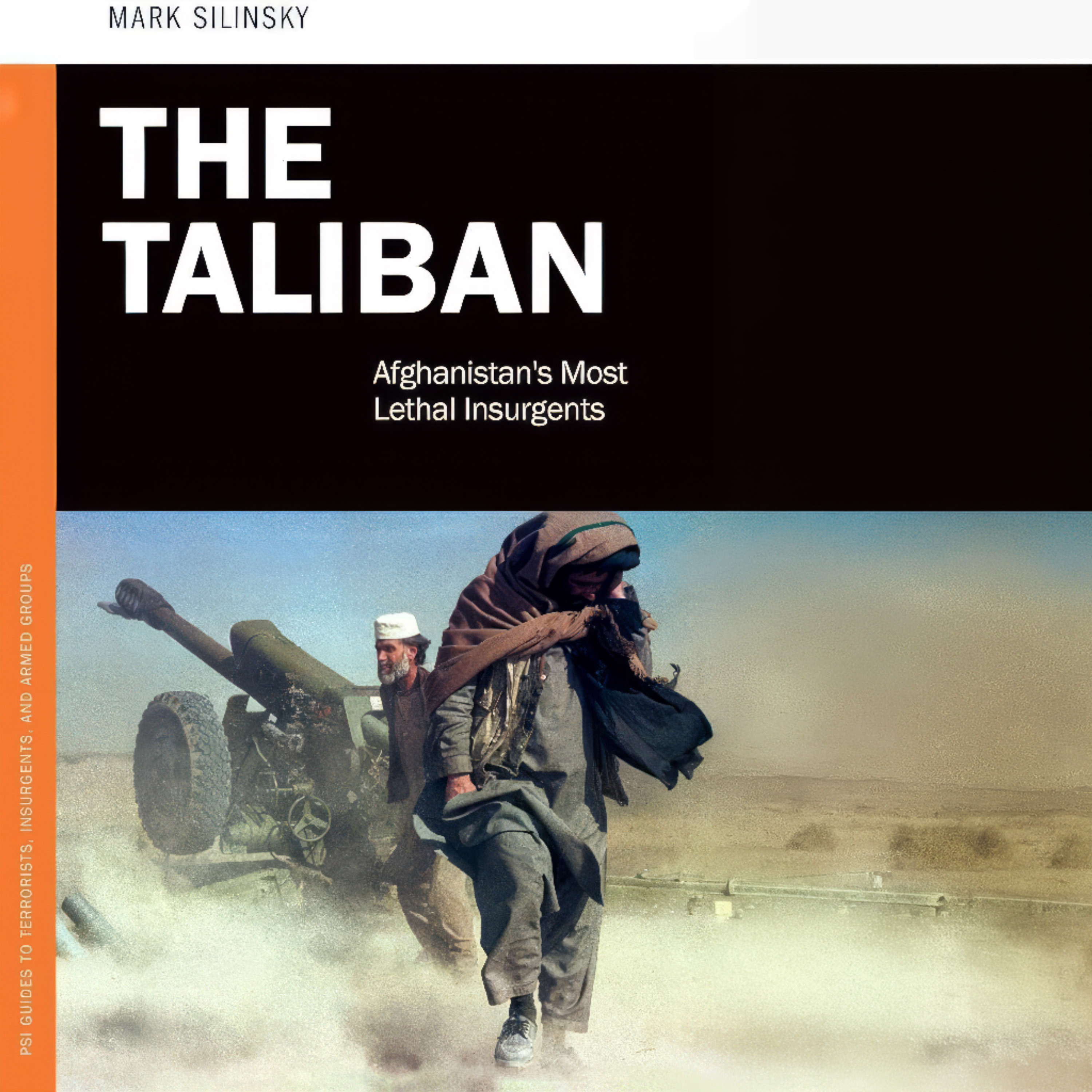
Hello and welcome to a reading from The Taliban – Afghanistan’s Most Lethal Insurgent Group, written by Mark Silinsky and published by Praeger, an imprint of Bloomsbury Publishing in New York, New York. This reading is brought to you by Kensington Security Consulting, where we bring education to national security. We begin with Chapter One: The Landscape, The People, and Islamism.
Suicide Attacks
"Children taliban leaders say they are tools to achieve God’s will, and whatever comes your way, you sacrifice it," a Taliban commander told a Western journalist. The first Taliban suicide attack happened in 2004, and these attacks continue. Volunteers for suicide missions are sometimes mentally ill, developmentally disabled, addicted to drugs, or too young to make their own decisions. Others seek martyrdom. Incentives include money given to families of suicide bombers, often from foreign supporters, and the lure of an Islamic paradise filled with virgins. Additionally, they receive praise from insurgent leaders, who often act as father figures. However, many boys and young men forced into these attacks are neither naive nor slow-witted. They are simply held captive. Usually, boys are taken from their families and placed in madrassas, where they are educated, sheltered, and fed at no cost to their families. In return, they are expected to kill themselves and others when ordered. While many madrassas deny involvement in violence, some do support it. It is estimated that there are between 10,000 and 20,000 madrassas in Pakistan. To prepare for these attacks, boys are isolated from their families. This process mirrors techniques used by cults in Western societies to cut ties to the past. In the madrassa system, boys are gradually and gently groomed to kill and sacrifice themselves. If they hesitate, they are shamed, mocked, and compared to girls. When they show enthusiasm for cruelty, the boys are praised. They are also filled with hatred toward Westerners, Jews, and Americans with particular zeal. There may be an underground, informal trade in abandoned children. Some American journalists have claimed that there is a trade in children destined to become suicide bombers, with some children costing up to $14,000 each. One example of an attempted child suicide bombing was the arrest of two 10-year-old boys wearing suicide vests in southern Afghanistan. They were caught and, given their age, pardoned. One of the boys, Azizulah, explained that the Taliban had assured him that when “the Americans fire at you (they) cannot hit you.” “They taught me how to blow my vest; they showed me how to press the button in my hand.” They ordered him to sit by the road and wait for foreign forces to come, but the police arrested him. Back in school as of early 2012, Azizulah does not want to repeat the experience. “I ask all my madrassa teachers not to teach kids to become suicide bombers.”
Almost anyone in Afghanistan can become a victim of a suicide attack. Many victims are civilians, completely disconnected from the insurgency. Suicide bombings often target broad, opportunistic targets. Hotels, such as Kabul's Serena, which cater to foreign workers, are prime targets. The Taliban considers that since all non-Muslim foreigners are the enemy, they are all vulnerable to violent attacks.
The Taliban faces a challenge in public opinion. Suicide bombings alienate some Afghans who might otherwise support the Taliban. Many see the forcing of captive, mentally disturbed, or brainwashed young men and schoolchildren—sometimes called “Omar's missiles”—as clearly un-Islamic and an unacceptable form of warfare. Before the Taliban's rise, suicide attacks in Afghanistan were almost unknown. Some tactics have become gruesome, such as booby-trapping bodies and storing the bodies of killed Coalition soldiers to exchange for money or munitions.
Attacks in bazaars and marketplaces are random. It is often unclear why the Taliban targets public gatherings that are unlikely to attract government or foreign workers. Children, adults, brides, grooms, widows, and widowers are possible targets. At the funeral of a former provincial governor, a suicide bomber disguised as a mourner killed those paying their last respects as the governor was laid to rest.
While many attacks are random, others are carefully planned and narrowly targeted. For example, an attack on the Defense Ministry in 2011 was sophisticated and involved several Taliban tactics. It included at least four planning steps. First, there was pre-operational surveillance. The Taliban has strong human intelligence capabilities. Second, there was infiltration of the ministry to gain access and information. Third, there was an attempt to impersonate Afghan government personnel. Finally, there was the suicide blast. The attacker, who was not an employee of the Ministry, gained access past the first barriers. This was one of the most heavily guarded facilities in Afghanistan.
Some suicide bombings are both narrowly targeted and indiscriminate in killing. They aim to hit a specific target while also killing innocent people. For example, a suicide attack at a wedding in Samagon Province killed top officials—a provincial member of parliament and a security director—but also killed up to 15 others attending, most with no political role. Among the dead were the bride and her father.
Not all attacks go as planned. Some children are fortunate and never hurt themselves or others. This was the case with a 9-year-old schoolgirl who was kidnapped, drugged, armed with a suicide vest, and then escaped. In a common kidnapping method, adults abduct helpless children they have never seen before. However, most girls are not abducted; instead, they are groomed to become suicide bombers. These girls are guided by trusted individuals, making them easier to manipulate and kill.
The motives behind some attacks remain unclear. For example, in mid-September 2012 in Kabul, a woman carried out a suicide bombing. Hekmatyar’s Hezb-e-Islami explained that a car bombing, which killed 12 people, was the trigger for a low-budget, amateurish film, “Innocence of the Muslims.” The bomber, identified as Fatima, detonated herself in a car near a wedding hall. Many of the victims were foreigners, which might explain the specific targeting.
Suicide bombings also occur in Pakistan. A major attack took place at the Punjab Regiment Centre in northwestern Pakistan. A young teenager, disguised as a cadet in a new blue uniform, slipped past several security checkpoints—probably with assistance from Taliban operatives. He surged into a crowd, killing 31 Army cadets and young men, and injuring more than 40 others. This was the deadliest attack in Pakistan since a Christmas Day 2010 suicide bombing, when a woman killed 43 people at a UN food distribution point in the tribal district of Bajaur.