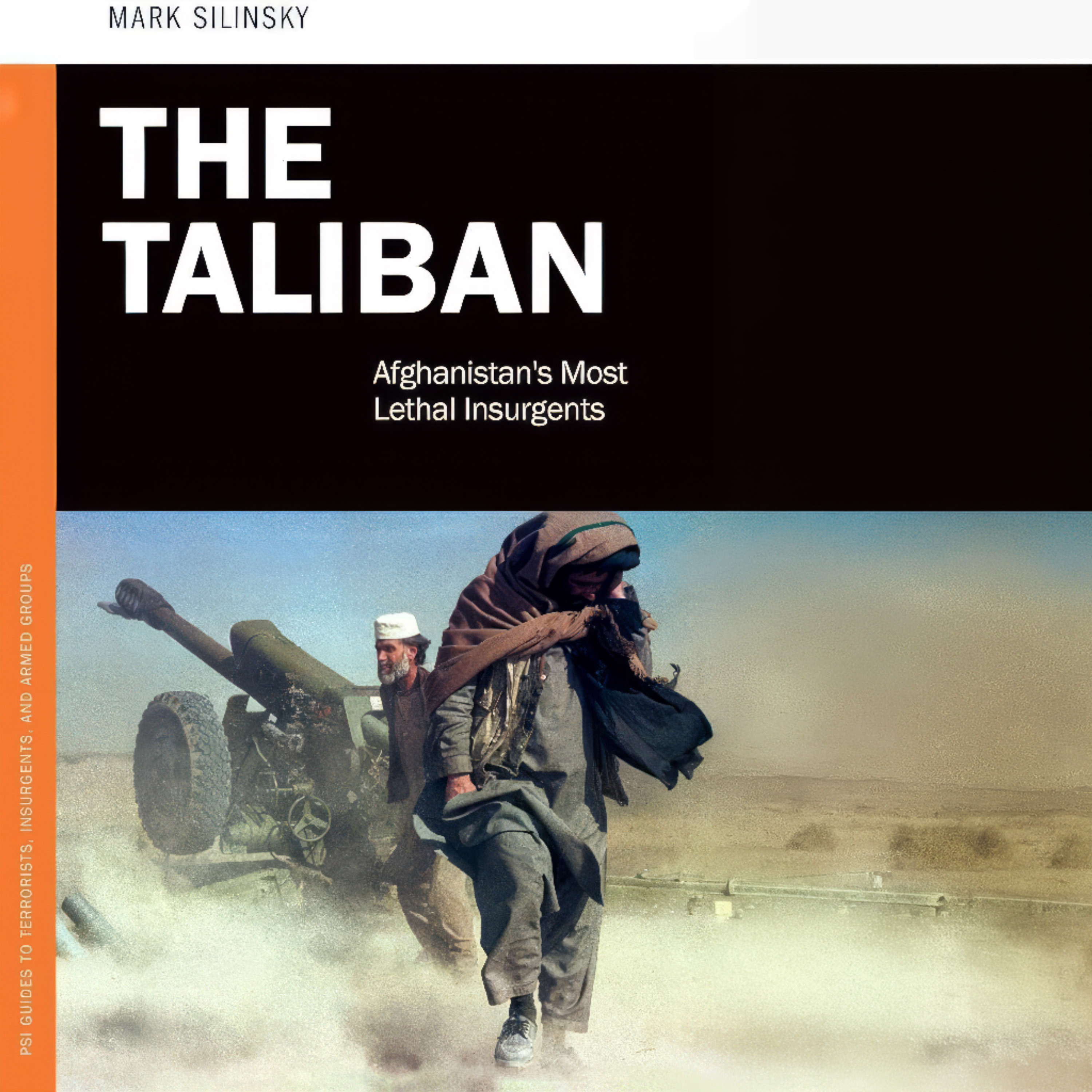
Hello and welcome to a reading from The Taliban – Afghanistan’s Most Lethal Insurgent Group, written by Mark Silinsky and published by Praeger, an imprint of Bloomsbury Publishing in New York, New York. This reading is brought to you by Kensington Security Consulting, which brings education to national security. We begin with Chapter One: The Landscape, The People, and Islamism.
Chapter five examined the fall of the Taliban. It discussed the blueprint created in Bonn to promote sustained development and ensure military and political stability in Afghanistan. It examined the Taliban’s strategy, tactics, targets, and overall rebuilding efforts. Chapter six will explore the tactics in more detail. This chapter focuses on how the Taliban fight and kill.
From the start, the Taliban used a hide-and-wait strategy. Jallaluddin Haqqani, a seasoned anti-Soviet fighter closely linked with Mullah Omar, believed that, like the Soviets he helped defeat, the Americans couldn't sustain a long war. By October 2001, the Taliban moved most of their remaining tanks and artillery out of sight from U.S. aircraft. Taliban fighters dispersed in different directions.
Tough Fighters and Four-Legged Warfare
Throughout recorded history, Afghans have been skilled and determined fighters. Although the Pashtuns have long been the dominant group in Afghanistan, they haven't been the only revered Afghan warriors. Other ethnic groups, such as Hazaras, Tajiks, and Uzbeks, have also proven their fighting skills. Early in the current war, the Northern Alliance—comprising Tajiks and Uzbeks—tested their mountain-fighting abilities against the Taliban’s military strength. Backed by U.S. tactical air support and military equipment, they performed well, especially in the mountainous north, as discussed in chapter four. Like their Taliban counterparts, many fought while climbing mountains in sandals and sleeping outdoors wrapped in blankets.
But the Taliban are especially persistent and clever fighters. From the beginning, they demonstrated military innovation, resilience, and determination. Their toughness and adaptability were clear early in the post-September 2001 fight, which worried U.S. military planners. Confidence in the early aftermath of the Taliban's fall started to fade as they successfully regrouped, repositioned, and built strongholds. Although still somewhat disoriented in early 2002, the Taliban mainly harassed Coalition forces through hit-and-run attacks and planning for future operations.
Taliban units not destroyed in late 2001 allied effectively with al Qaeda forces in 2002 and 2003 to develop and improve their tactics. Al Qaeda had expertise, and its operatives were trained in unconventional warfare. They studied warfare closely, and some leaders were educated and experienced in military matters. Al Adel, the al Qaeda military commander and insurgent theorist, strongly advised mujahedin to follow key principles to counter U.S. military superiority. First, convert large military units into small bands of fighters led by effective leaders. Al Qaeda found it easier and less detectable to control smaller groups of 10-15 fighters than to manage large units.
The second suggestion was to build defensive fortifications, called “trenches,” which were temporary dirt shelters placed near homes in Kandahar. Building close to homes was preferred over open fields to avoid potential bombing by Coalition forces, who might hesitate to target them out of concern for civilians.
Third, al Qaeda recommended conducting reconnaissance, setting traps, and raiding rather than executing large-scale attacks. They also emphasized the importance of acquiring anti-aircraft weapons since air warfare gave the Coalition a significant advantage. Fourth, as with other insurgent groups, they stressed the use of political rhetoric.
From the outset, tensions existed between the Taliban and al Qaeda. The Arabs often seemed patronizing, offering unwelcome advice and issuing orders they weren’t authorized to give in Afghanistan. Despite these tensions, many Taliban leaders recognized the benefits al Qaeda brought, including bin Laden’s funding, expertise, and committed fighters.
Profile 14: Mohammad Ashan: Home Alone
The Taliban are known for their ingenuity and battlefield skills, but many are not very sophisticated. This was evident in the get-rich-quick motives of Mohammad Ashan, a mid-level Taliban member in Paktika province, who casually identified a Taliban member on Afghanistan’s most-wanted poster to a Coalition soldier. Holding out an open hand with his palm up, he asked for the $100 finder’s fee. This amount is months’ income in parts of Afghanistan. Interestingly, the wanted poster bore an uncanny resemblance to the man demanding the reward. A U.S. soldier asked him, ‘Is this you?” Mohammad Ashan responded enthusiastically, ‘Yes, yes, that’s me! Can I get my award now?” Ashan was arrested, and it’s unknown whether he received the promised $100.00. “This guy is the Taliban equivalent of the ‘Home Alone’ burglars,” one U.S. official said. Another official scoffed, "Clearly, the man is an imbecile." an imbecile."
Thank you for listening to this reading from “The Taliban – Afghanistan’s Most Lethal Insurgent Group.” If you enjoyed it, please consider subscribing and liking it. Nothing in this book represents the official position of any person or agency of the United States government. On behalf of Kensington Security Consulting, thank you for listening.