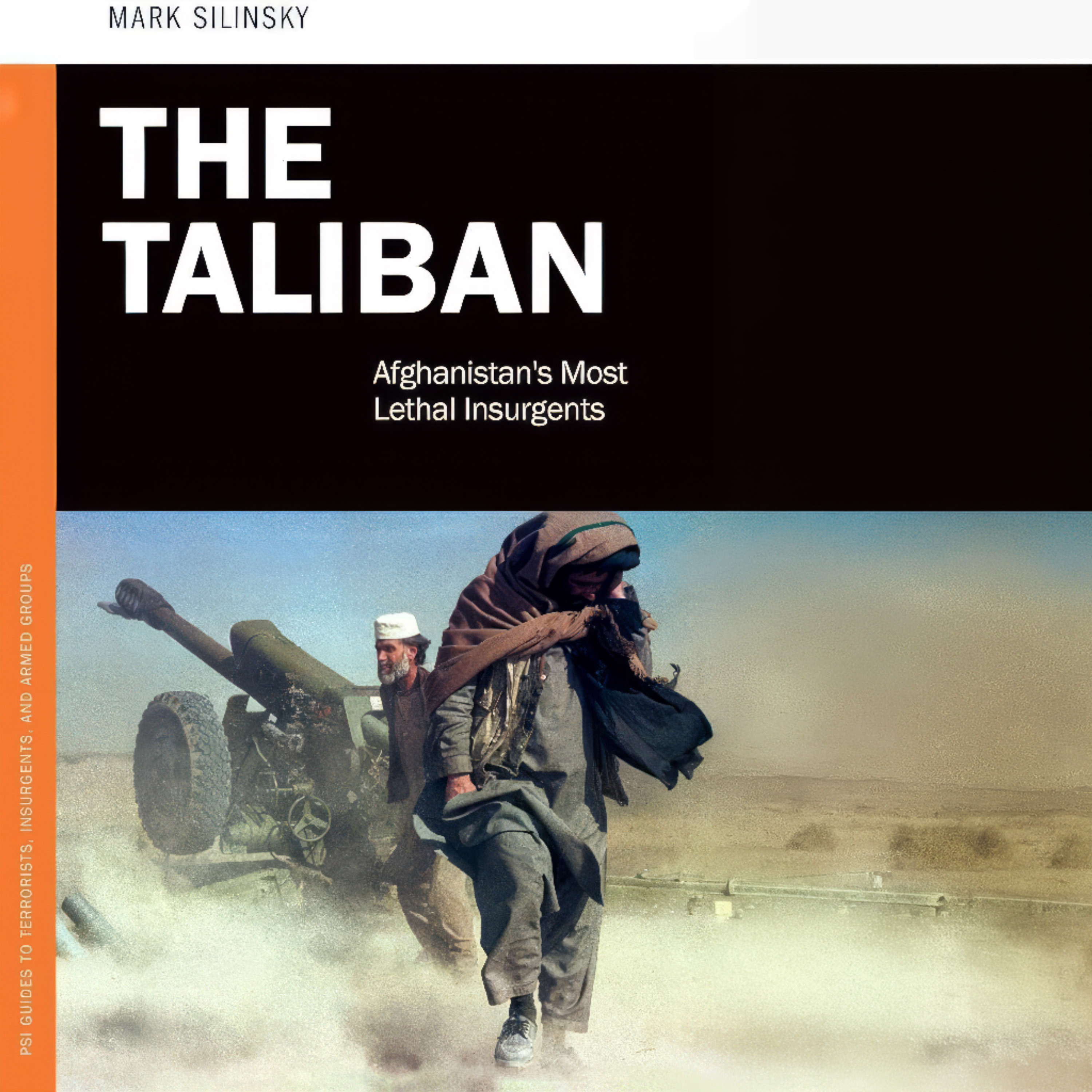
Hello and welcome to a reading from The Taliban – Afghanistan’s Most Lethal Insurgent Group, written by Mark Silinsky and published by Praeger, an imprint of Bloomsbury Publishing in New York, New York. This reading is brought to you by Kensington Security Consulting, where we bring education to national security.
There are many attacks that are difficult to thwart. For example, in Herat Province in April 2007, Taliban fighters dressed in fake ANP police uniforms set up an illegal checkpoint and tried to ambush a combined ANA and Coalition patrol as they approached. Afghan and Coalition forces seized over 100 fake uniforms and recovered more than a dozen false ID documents in a single raid. The Taliban might have acted alone or received the uniforms and IDs from inside sources. Another example of a carefully planned, multi-tactic attack was against the Defense Ministry in Kabul in 2011. The attacker had a special pass allowing him entry. Once inside, a man in an army uniform jumped from a car and stormed the main office building, shooting and killing two soldiers before he was shot. This attack involved pre-operation surveillance, understanding the security system and staff schedule, predicting when a high-ranking official would be present, obtaining the necessary passes, possibly securing inside agents, and training at least two operatives for what was almost certainly a suicide mission.
The Taliban may have had insiders involved. The police are heavily targeted by infiltrators. Since 2006, infiltration efforts have steadily increased. By 2010, concerns arose about a potential plot to assassinate British Prime Minister David Cameron during his visit. Since then, infiltration techniques have become more advanced and widespread. One of the most notorious infiltration operations was the assassination of President Karzai’s brother in July 2011. A trusted bodyguard, a longtime family friend, shot him after asking to speak privately with Karzai. The Taliban claimed responsibility, and it’s likely they had a hand in the operation, which was almost certainly a suicide attack. The bodyguard was quickly killed and did not reveal his motives. Successful Taliban infiltration has also enabled large-scale, theatrical escapes.
Similar to the famous World War II “Great Escape,” in June 2008, 480 inmates escaped from Kandahar prison by tunneling for over five months, constructing a 1,050-foot tunnel to the main prison, bypassing checkpoints, watchtowers, and razor-wire-topped barriers. In August 2011, the U.S. announced it would keep control of Afghanistan’s high-profile prison indefinitely, citing concerns about the rule of law.
Profile 19: Three Bullets and One Leg - The Life and Death of the Taliban’s “al-Zarqawi” – Mullah Dadullah Akhund Born in Kandahar Province, Daduallah Akhund, known as Mullah Dadullah, was educated in a madrassa in Balochistan. He fought against the Soviets and lost a leg to a landmine. Despite this, he continued fighting the Soviets, the Northern Alliance, the Karzai government, and Coalition forces. Using contacts with Pakistani leaders, he helped the Taliban protect supply convoys from Turkmenistan to Pakistan traveling through Herat. He made his mark. He fought the Northern Alliance in the late 1990s and helped capture Mazar-e Sharif. He was captured by Adul Rashid Dostum’s forces but escaped despite his missing leg. He became a hero among his tribesmen. Most accounts say Dadullah had many lives on his hands. He was closely linked to atrocities against the Hazarra. After 2001, he became a leading field commander for Mullah Omar but was disliked by his associates because of kidnappings, beheadings, his ego, and unpredictable violent fits. In his final years, he earned the nickname the “al Zarqawi” of Afghanistan because of his bloodthirsty zeal for beheading hostages. He’s also credited with creating the “kamikaze tactic” discussed earlier. Feared by enemies and peers alike, he produced ghastly propaganda films. One showed him and others slitting six men’s throats, accused of spying for the Americans. Dadullah was most active in FATA, where he helped build the Taliban to about 20,000 fighters, with help from Pakistani agencies. In 2005, a Pakistani court sentenced him to life for trying to kill a politician, but he still moved freely in Quetta. When he was killed in May 2007 at age 39, his body—with one leg and three bullet wounds—was shown to journalists to prove he was truly dead and hadn’t once again dodged Coalition forces. Once a prolific killer, he had been on the coalition’s most-wanted list for years, and eventually, he was taken off. Now, lying motionless on a stainless-steel table, Dadullah was truly dead, having stopped his violent ways.no more.