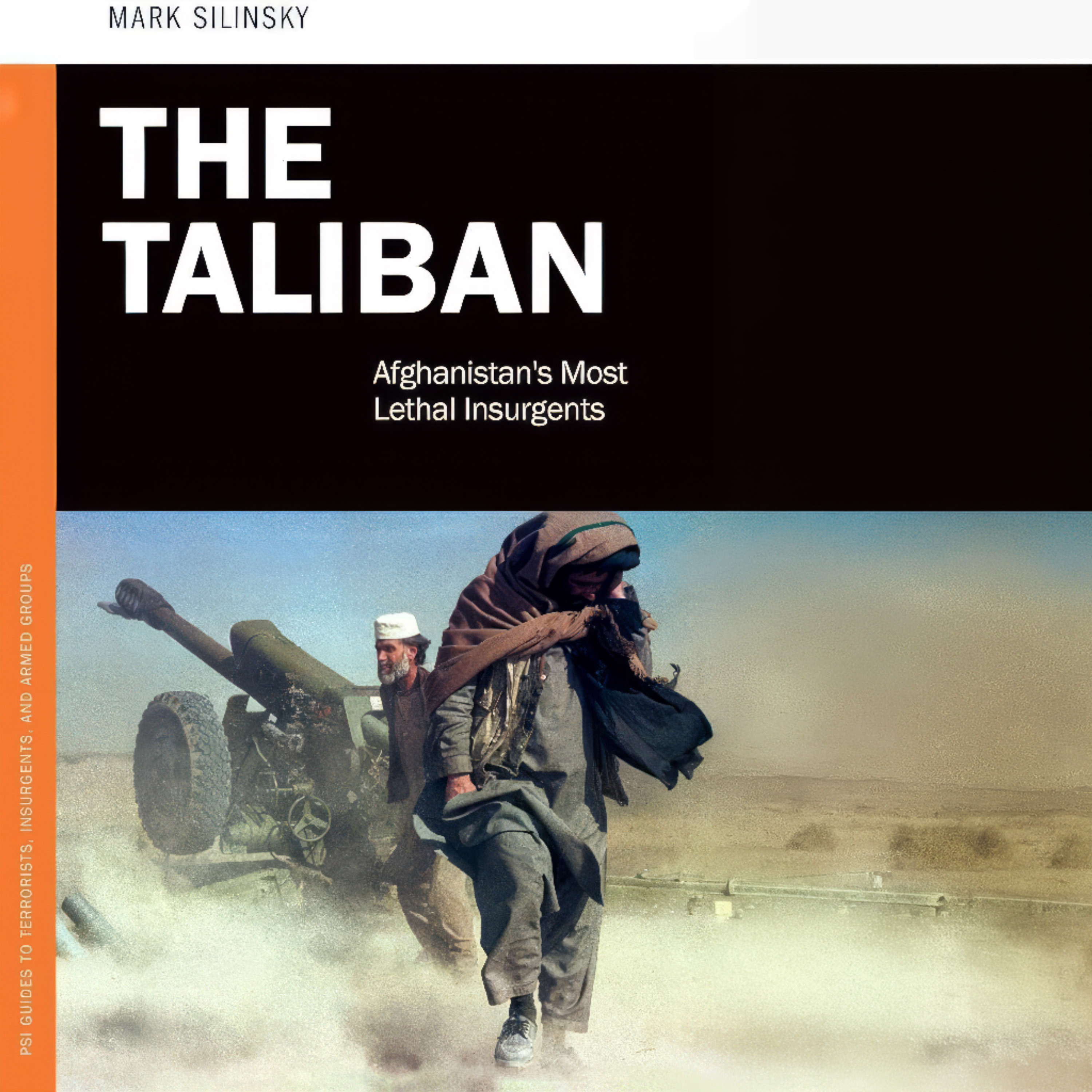
Hello and welcome to a reading from The Taliban – Afghanistan’s Most Lethal Insurgent Group, written by Mark Silinsky and published by Praeger, an imprint of Bloomsbury Publishing in New York, New York. This reading is brought to you by Kensington Security Consulting, where we bring education to national security.
Sanctions and Hostilities
Imposing sanctions on the Taliban was an intermediate response between rhetoric and war. International organizations and individual states applied financial and military sanctions of Afghanistan. Many governments restricted travel by Taliban officials and downgraded their diplomatic missions abroad.
Either through miscalculation or with the unexplained intention of being provocative, the Taliban unchained bin Laden, allowing him to be interviewed by Western journalists. Once again, he claimed the right to use large-scale weapons against Western targets. After he did so in September 2001, he became the most-wanted man in the world by American authorities.
American leaders demanded his extradition, but the Taliban balked, offering rococo explanations of Islamic mandates and Afghan customs. Gratuitously, the Taliban’s foreign minister boasted that the Taliban would never deport bin Laden. “We will not hand him to an infidel nation.” True to their word, the Taliban never did yield him, continuing to cavil and balk. But US authorities were determined to kill or capture him.
President Bush and Secretary Donald Rumsfeld swore to destroy the Taliban unless they surrendered bin Laden immediately. In stormy discussions, US Ambassador Wendy Chamberlin bluntly expressed to Pakistani President Musharraf “that the September 11 attacks had ended the debate about the Taliban, who were now considered an enemy of the US.” Secretary of State Colin Powell cautioned the Taliban end their torpor and “think properly.” Pakistan was cooperating with the United States, and the Central Asian states were offering Washington staging grounds. The Iranians were quiet on the issue. Only Iraq “didn’t find what happened to us a tragedy.” President Bush offered to spare the Taliban from war if they extradited bin Laden. They declined, scuppering the talks.
Chapter Summary
The Taliban took advantage of a late 20th century power vacuum in Afghanistan to expand their areas of influence quickly. The Taliban have four, basic, defining characteristics. They are Salafists, which refers to their illiberal view of Islam; they are Pashtuns, which refers to their ethnicity and social code; they are isolated, which helps to explain their philosophy, ethnic supremacy, and xenophobia; and totalitarian, they intend to monitor all aspects of human behavior.
Taliban’s domestic policies from 1996-2001 would likely be replicated should Omar seize power again. The rule of the Taliban threw the Afghanistan into a miasma of mullah-imposed viciousness. The few economic and social gains of the 1970s, which were sincerely pursued by a relatively progressive head of state, were eliminated. The status of women declined; there was economic entropy; the civil service was stripped of all elements of professionalism; fewer Afghans could move or communicate; standards in education and health plummeted. Much of life was dreary, and Afghans were dispirited. Nonetheless, most of the country was secure, and the mass killings ended with the cessation of the civil war.
The attacks of September 2001 galvanized America, but the Taliban continued to be nonchalant under American threats. An obliging host, Mullah Omar refused to surrender Osama bin Laden. In consequence, President Bush prepared America for war.
Thank you for listening to this reading from “The Taliban – Afghanistan’s Most Lethal Insurgent Group.” If you enjoyed it, please consider subscribing and liking it. Nothing in this book reflects the official position of any person or agency of the United States government. On behalf of Kensington Security Consulting, thank you for listening.