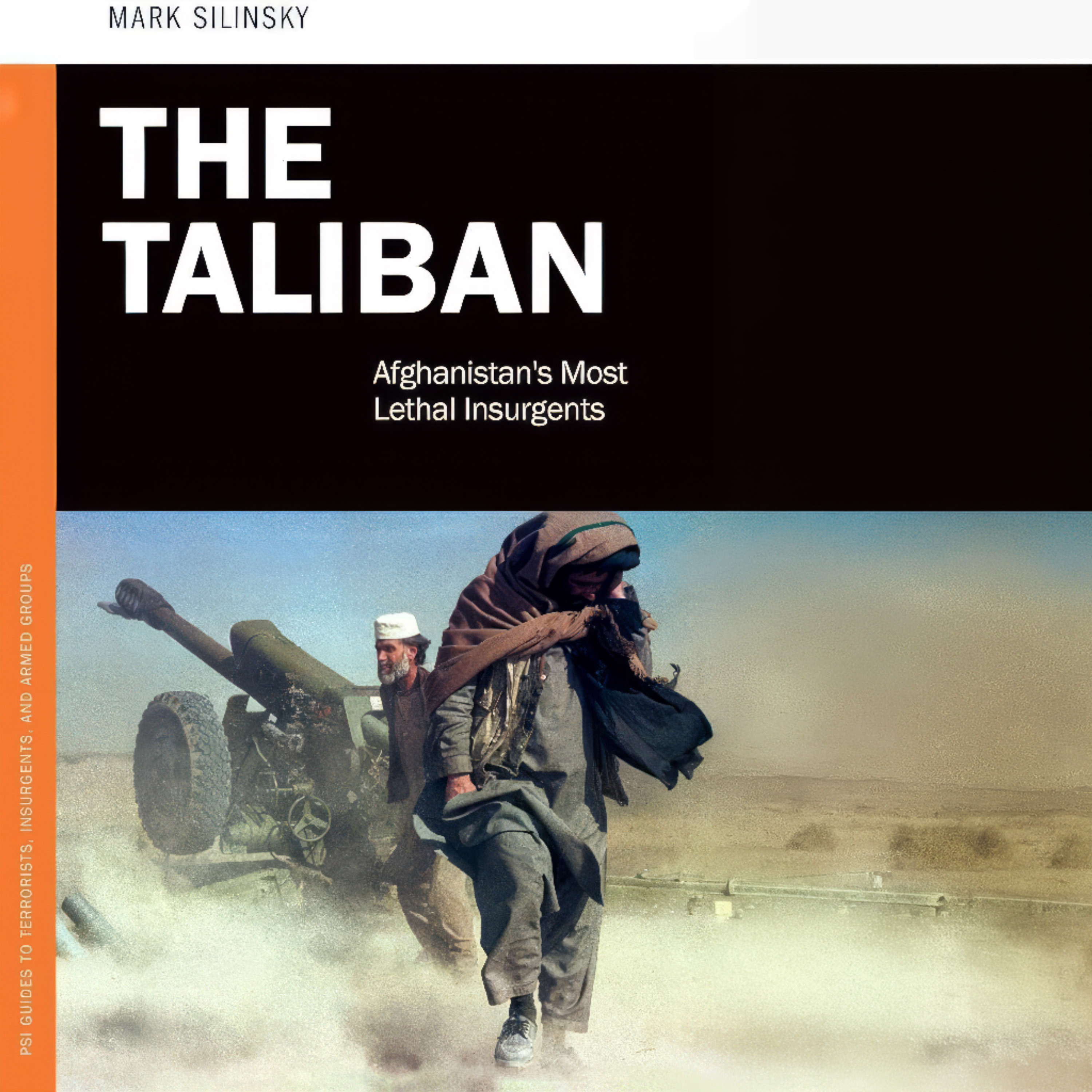
Hello and welcome to a reading from The Taliban – Afghanistan’s Most Lethal Insurgent Group, written by Mark Silinsky and published by Praeger, an imprint of Bloomsbury Publishing in New York, New York. This reading is brought to you by Kensington Security Consulting, where we bring education to national security.
Chapter Three: The Taliban in Power
Jihad in the path of Allah is greater than any individual or organization.” Ayman al-Zawahiri
Chapter Two traced the Taliban’s ascent to power. It examined the ideological bond between a preening bin Laden and a reclusive Mullah Omar, as well as the general template for insurgencies. It offered a three-stage model for insurgencies and analyzed the Taliban’s rise to power within that framework. Chapter Three will discuss the Taliban’s agenda and policies during their rule from 1996 to 2001.
The Taliban Builds its Base
During its rise to power, the Taliban relied on boys and young men to fill its periodically depleted ranks. Recruits were largely drawn from slums near refugee camps in Afghanistan and adjacent areas in Pakistan. They were often chronically unemployed, with low levels of education and limited skills. Many were drifters or dead-enders, or were very young, alone, and searching for parental figures. Some were religious zealots seeking a community. Religious schools in Afghanistan and Pakistan continued to serve as sources from which the Taliban’s leadership drew foot soldiers.
The Taliban is determined to erase any hint of humanity from their boys. Boys and young men were indoctrinated and hardened to ensure they would kill their enemies without mercy or hesitation. A brutal example was captured on video, showing a pre-adolescent boy slit the throat of a blindfolded man. The victim was accused of being an American spy. As the child hoisted the severed head in the air, he cried, “God is great!" Boys who resisted this hardening were whipped or sometimes killed. Those suspected of disloyalty were hanged with dollar bills shoved in their mouths. This indoctrination continued during the Taliban’s exile. The Taliban tapped into the boys’ innate aggression and unrelieved sexual frustration. Celestial harems of nubile virgins, or houris, await Muslim men who fall in battle for Islam.
Beyond their malice, the Taliban were totalitarian. Bin Laden and the Arabs, along with other international fighters, fused the Islamism of Qutb and Azzam with the Deobandi philosophy of Afghan elites. All human activity was to be channeled toward replicating the time of their Prophet. In this spirit, music, dancing, kite flying, and chess were banned. Soccer matches were permitted, but spectators could only legally cheer "Allahu Akbar” to rally their teams. The games themselves had sadistic elements reminiscent of Caligula’s Rome, as those convicted of crimes were publicly whipped, clubbed, and killed. Limbs were amputated while Taliban leaders exhorted the audience to shout approval. The cruelty was vast, frequent, cavalier, and often morbid. As a result, morale plummeted among the educated and relatively secular, and those who could flee often did so.
Taliban agents monitored how people behaved and thought; how they raised their children; how they spoke to their spouses; how they engaged in civil society; and how they practiced religion. Fear was pervasive. There was a shared communal responsibility to expose those who did not conform to political and economic orthodoxy and to eliminate any contagion of deviationism. Villagers would notify the secret police of neighbors’ transgressions. Often, the accused would be hauled to prison.
Life was difficult for Muslims in Afghanistan and even more so for the relatively few non-Muslims. The Taliban demanded that non-Muslims subordinate themselves to Muslims. Life was particularly onerous for Hindus, who, during the Taliban’s tenure, were required to carry badges identifying themselves as non-Muslims.
Back to the Prophet
Mullah Omar’s spokesman explained, "We want to recreate the time of the Prophet." It would have been more accurate to say that the Taliban intended to regress to an era in Arabia that they imagined. The life and customs of Mohammad’s world have long been obscured by hagiography, legend, and literary embellishments. There are no extant, accurate accounts of the life of Mohammed. But the Taliban believe that living in the world of the first-generation Muslims requires purging elements of modern society that are contrary to the Koran.
The worldview of the Taliban was also shaped by the interplay of isolation and poverty. The Taliban were cloistered from modernity and wanted to keep Afghanistan safe from globalization. To further tighten this insulation, Mullah Omar tried to ban the Internet, a task made easier by the country’s primitive communication systems. What few international organizations remained in Afghanistan were heavily monitored, censored, and muzzled.
In July 1998, the Taliban gave Afghan families 15 days to rid themselves of television sets, videocassette recorders, and satellite dishes. For many Afghans, the decision was irrelevant because there was no television available. Many villages also had no access to electricity. The electrical grids in much of the country had long ceased to function. Afghans didn’t need electricity to sing folk songs. But the Taliban banned them too. Unless the songs promoted Islam, they were not to be sung. An enforced silence would give more Muslims more time to pray.
Thank you for listening to this reading from “The Taliban – Afghanistan’s Most Lethal Insurgent Group.” If you enjoyed it, please consider subscribing and liking it. Nothing in this book reflects the official position of any person or agency of the United States government. On behalf of Kensington Security Consulting, thank you for listening.