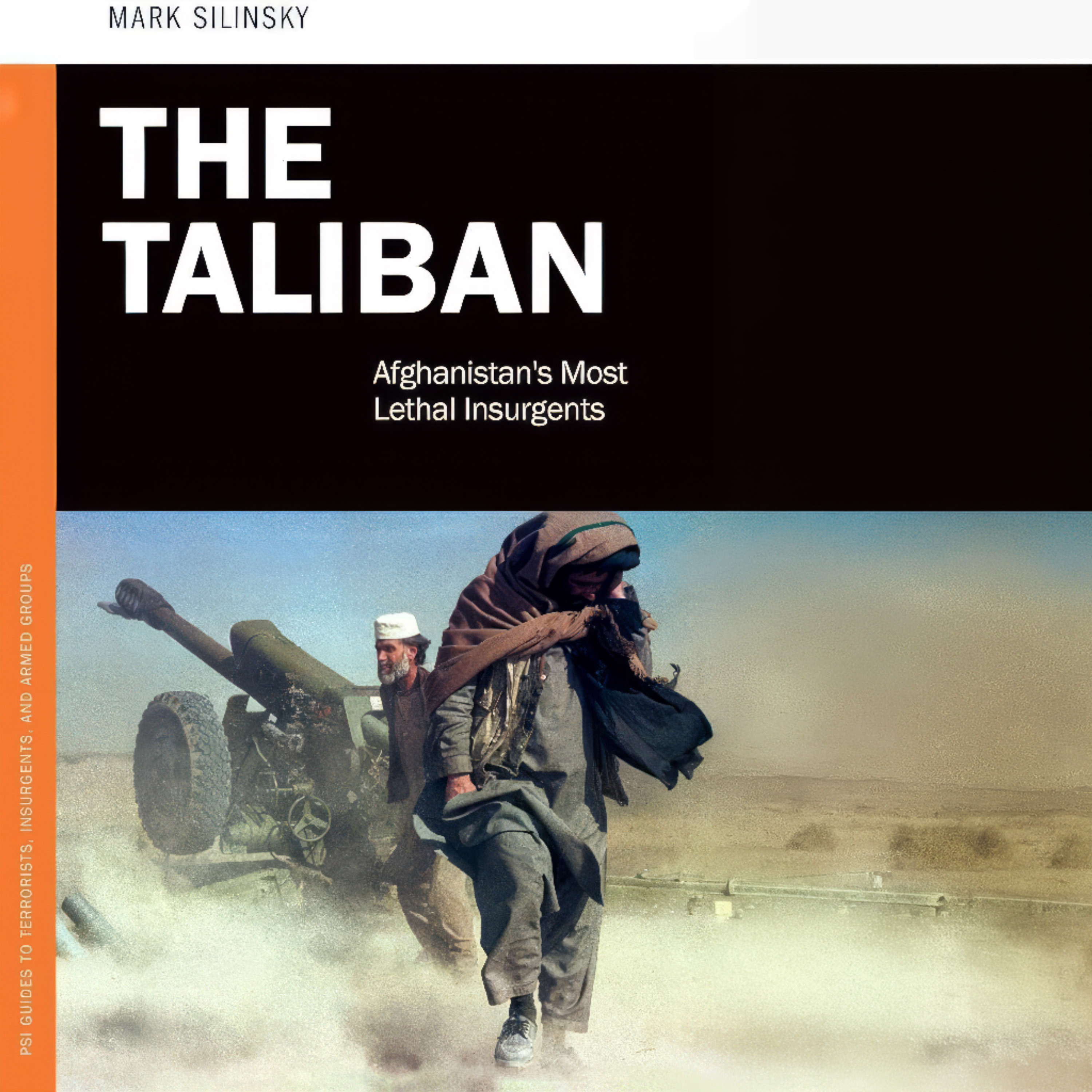
Hello and welcome to a reading from The Taliban – Afghanistan’s Most Lethal Insurgent Group, written by Mark Silinsky and published by Praeger, an imprint of Bloomsbury Publishing in New York, New York. This reading is brought to you by Kensington Security Consulting, where we bring education to national security.
If there is any human development sector in which the Taliban’s tenure was not an unmitigated catastrophe, it is the security sector. The Taliban’s victory ended the civil war in 1996. In this sense, they increased security in Afghanistan. The mass, unregulated killings were stopped. But this came at a cost of fear-induced social paralysis. The Taliban offered only the eerie and sullen calm of effective autocracy.
Despite the misery and forced conformity, the Taliban made the streets safer. Ironically, in the early days of their rule, the Taliban promised stability, reform, and economic recovery. In wildly optimistic accounts of the Taliban’s early days in Kandahar, the Taliban’s bellwether, some Western journalists described the Taliban as moderate reformers. This seems shocking in retrospect, but the Taliban restored a sense of order. Fun was outlawed in Afghanistan, yet crime was low.
The Taliban’s rule of law was marked by a wide range of draconian measures that permeated all aspects of daily life. They criminalized any activity that led men to neglect religious study. The legal system segregated women, banning them from schools and most workplaces and effectively imprisoning them at home. Taliban authorities targeted men suspected of trimming their beards, and men who had difficulty growing the required 4 inches of facial hair sometimes wore false beards to avoid harassment. Those accused or convicted of crimes were at the mercy of Islamic courts. Amnesty International reported that 1,000 people were arrested within a month of the takeover, and that many disappeared.
Particularly notorious were the legally sanctioned and internationally broadcast public revenge killings and amputations. As in Saudi Arabia, Afghan Sharia courts administered Koran-mandated single and double amputations, often in public. At the Kabul Sports Stadium, sedated criminals, usually punished for stealing small amounts, had their right hands amputated by Taliban physicians before the main attraction, the shooting of more serious offenders. Women were often whipped vigorously before the crowd. One woman was flogged 100 times for being with a man to whom she was not related. Women in the stadium wept as she was lashed. After the killing and torture, a soccer game, often modified with Islamic rules, would be played. As one Afghan said in 1998, “In America, you have television and movies- the cinema. Here, we can only have this.”
Profile 4: Zarmina’s Hammer
“Zarmina should never have been killed. She had a hard life. She was not educated. She wasn’t aware of Islamic law. All she knew was that her husband beat her.” Rana Sayeed, an Afghan policewoman and detective
Some pictures of Afghan women have become iconic: the 1984 National Geographic photo of Gula, the ragged girl with haunting green eyes; Time’s cover photo of Bibi Aisha, whose husband slashed her face and cut off her nose; and the killing of Zarmina, the woman without a face.
Unlike Gula and Bibi Aisha, Zarmina’s face was obscured from the world by her burqa, which she wore to her death. Accused of killing her husband, the mother of seven children was transported in the back of a Toyota pickup, dragged to Kabul’s Olympic Stadium, forced to kneel between the goal posts of the soccer field, and shot in the head by a Taliban member.
Raised in northern Kabul and described as pretty and feisty, Zarmina was wed at 16 to Khwazak, a Pashtun policeman and part-time proprietor of a small general store. Khwazak’s personality began to sour as the Taliban solidified power. “He had been a mild man, but slowly he became a monster.” Some neighbors speculated that the trauma of the killings, rapes, and bombings warped his mind and turned him into a brute. Others saw his descent into cruelty as consistent with his solidarity with the Taliban.
Khwazak regularly beat Zarmina and their children. He became a policeman for the Taliban and harassed and tormented girls and women. His moods were unpredictable, and neither Zarmina nor her children could anticipate what would send him into a ruthless rage. Zarmina decided to kill Khwazak. She may have drugged him by lacing his food with opiates, then clubbed him with a 10-lb mason’s hammer. It may have been an elder daughter who delivered the lethal blow and then staged a scene of a burglary that turned violent.
The Taliban police were suspicious immediately, and Zarmina and her two youngest children were imprisoned for 3 years. Zarmina confessed to the murder, claiming she acted alone. She was kept alive in prison by the compassion of fellow inmates, who gave her bits of food and a blanket. Zarmina’s elder children were placed in the custody of her Taliban brother-in-law, who told Zarmina, 2 months before she was executed, that he had sold her two elder daughters into prostitution. According to an investigator, the brother-in-law told Zarmina the price he received for each of her daughters. It is not unusual to sell unwanted girls and women. Prices typically range from $530.00 to $3,200 for more nubile and attractive models.
On November 15, 1999, the Taliban told Zarmina that she would be killed in 2 days. The Toyota, in which Zarmina was captive, circled the soccer field twice, which was caught on video and posted on YouTube. She was forced to kneel between goal posts, and Zarmina prepared herself. But men and women in the stadium began to jump, and shout, and begged the Taliban to show Zarmina mercy. “Let her live,” many cried. This startled but did not deter the Taliban. Bracing herself, Zarmina raised both arms and pleaded for somebody to hold them, to help her steady herself. The Taliban then shot her in the head.
Her body lay unclaimed for weeks because no one wanted it. Her mother avowed, “She brought shame. She deserved what she got. She is not even a memory to me.” She is buried in an unmarked pauper’s grave, and several of her children were living as beggars in 2002. The whereabouts of her other children are unknown. A policewoman who investigated Zarmina’s death in 2002 sighed, "At last Zarmina's story can be told. It is the story of one woman. But it is also the story of Afghan women under the Taliban…brutes who turned our country into a zoo and our women into dogs.”
Thank you for listening to this reading from “The Taliban – Afghanistan’s Most Lethal Insurgent Group.” If you enjoyed it, please consider subscribing and liking it. Nothing in this book reflects the official position of any person or agency of the United States government. On behalf of Kensington Security Consulting, thank you for listening.