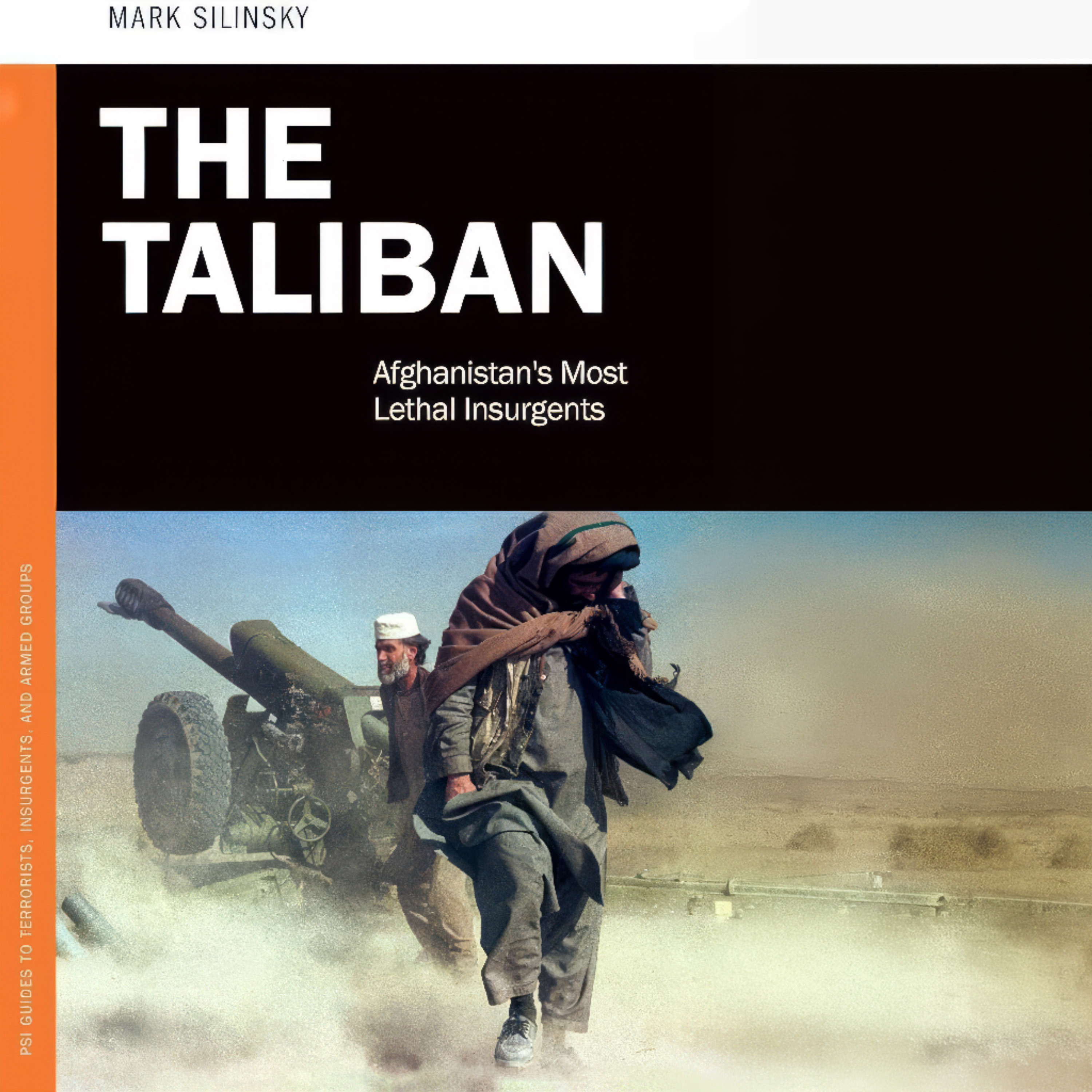
Hello and welcome to a reading from The Taliban – Afghanistan’s Most Lethal Insurgent Group, written by Mark Silinsky and published by Praeger, an imprint of Bloomsbury Publishing in New York, New York. This reading is brought to you by Kensington Security Consulting, where we bring education to national security.
A New Dark Age -Life under the Taliban
The Economy Declines
The Taliban’s conquest of Kabul ushered in a new, if reactionary, era in Afghanistan. By almost all measures of living standards, the quality of life for Afghans, already poor, deteriorated. It is unlikely that any influential Taliban leader had a sophisticated understanding of contemporary market-based economic theories. Several modern Islamic countries, particularly Malaysia and Turkey, have enjoyed sustained economic development in recent years without significant petroleum exports. Yet the Afghan economy withered because the Taliban did not promote sustained economic growth. They subordinated economic growth to cloying religiosity across all of Afghanistan.
By any credible economic standard, Afghanistan was a failed state. Failed states have several defining characteristics, including the inability to control the state’s physical territory; to provide basic social services, such as electricity, potable water, emergency services, and police services; to collect adequate tax revenue or combat corruption; to sustain adequate levels of economic growth, employment, and job creation; to mitigate the effects of social and sexual discrimination and group-based inequality; and to prevent the erosion of the environment. Afghanistan, during the Taliban’s rule, failed on all counts.
In 1998 and 1999, agricultural production increased; livestock herds rose sharply, taking advantage of unused grazing lands; and horticulture improved with the expansion of orchards and vineyards. But this economic uptick was misleading. The recovery was concentrated in areas of the country conquered relatively early by the Taliban. Economic growth occurred because the peace prompted Afghans to invest. When investment stopped, the economy began to crater.
The Taliban impoverished more than the lives of their Afghan citizens from 1996-2001. The effects of their botched programs seeped into the larger South and Central Asian neighborhood. The consequences of the failed Afghan state's political, economic, and social instability had spillover effects on neighboring countries. Among those effects were vast problems with refugees, public health, and sanitation.
In governance, the Taliban preferred a small government to an expansive administration. This neglect of large-scale infrastructure development soon degraded the quality of public services. Deterioration in basic social services – public administration, health, communications, and education – took root and was exacerbated by the Taliban's inchoate policies, which largely excluded women from work and girls from employment and education. The already shambolic Afghan civil service largely collapsed under Taliban rule. While a primary goal of most civil services is to provide essential services, the Taliban’s priority was to prevent moral corruption. Religious police sometimes beat those who did not conform to the Taliban’s norms. This led to a hemorrhage of educated talent from many public bureaucracies.
Communications and education that did not promote the expansion of Islam were neglected or prohibited. In a country with very limited print, radio, and electronic communications, it became very difficult for men and women to communicate at all, except within the immediate family. Women could not leave the home without a male guardian. The Taliban heavily regulated content on the radio and television. The only European pop singer regularly broadcast was the Greek-Anglo crooner-turned-Salafist Yusuf Islam, better known as Cat Stevens. Other Western pop and movie stars were declared menacing to Afghan values. The movie Titanic and its song were banned, as was the then-fashionable Leonardo DiCaprio floppy haircut, which was declared foppish and sacrilegious. By January 2001, the Taliban imprisoned 22 barbers for offering this hairstyle, citing the puzzling reasoning that the long bangs impede the ability to bow and pray.
The country’s health care, already poor, began to decay. As in all other sectors of human development, girls and women suffered disproportionately under the Taliban’s restraints. The Taliban drastically limited access to medical services. The State Department's 1998 Human Rights Report described “the Taliban's devastating disregard for the physical and psychological health of women and girls.” Women and girls who were starving were not allowed to beg. The deprivations of girls and women were publicized in the United States by celebrities. First Lady Hilary Clinton publicly protested.
The melancholy and despondency endured by Afghans during the Taliban era were revealed in a 2002 study by the US Centers for Disease Control and Prevention. It found, unsurprisingly, that approximately 70% of Afghans showed signs of clinical depression and anxiety. Rates were even higher among women and the disabled. After the Taliban were ejected, the collective mental health of the Afghan people, particularly women, improved, though unevenly and not everywhere.
As with the Afghan people, the economy of Afghanistan was brought to its knees by the Taliban’s farrago of religious edicts. Despite opportunities for foreign investment in the post-civil war peace, few investors, domestic or foreign, were eager to risk capital that could be easily expropriated at the whim of a mullah. Commercial transactions that did not conform to the Taliban’s standards of virtue could be nullified by civil servants on the basis that they promoted vice and evil. International lending agencies were kept at bay, as were many non-governmental organizations.
Thank you for listening to this reading from “The Taliban – Afghanistan’s Most Lethal Insurgent Group.” If you enjoyed it, please consider subscribing and liking it. Nothing in this book reflects the official position of any person or agency of the United States government. On behalf of Kensington Security Consulting, thank you for listening.