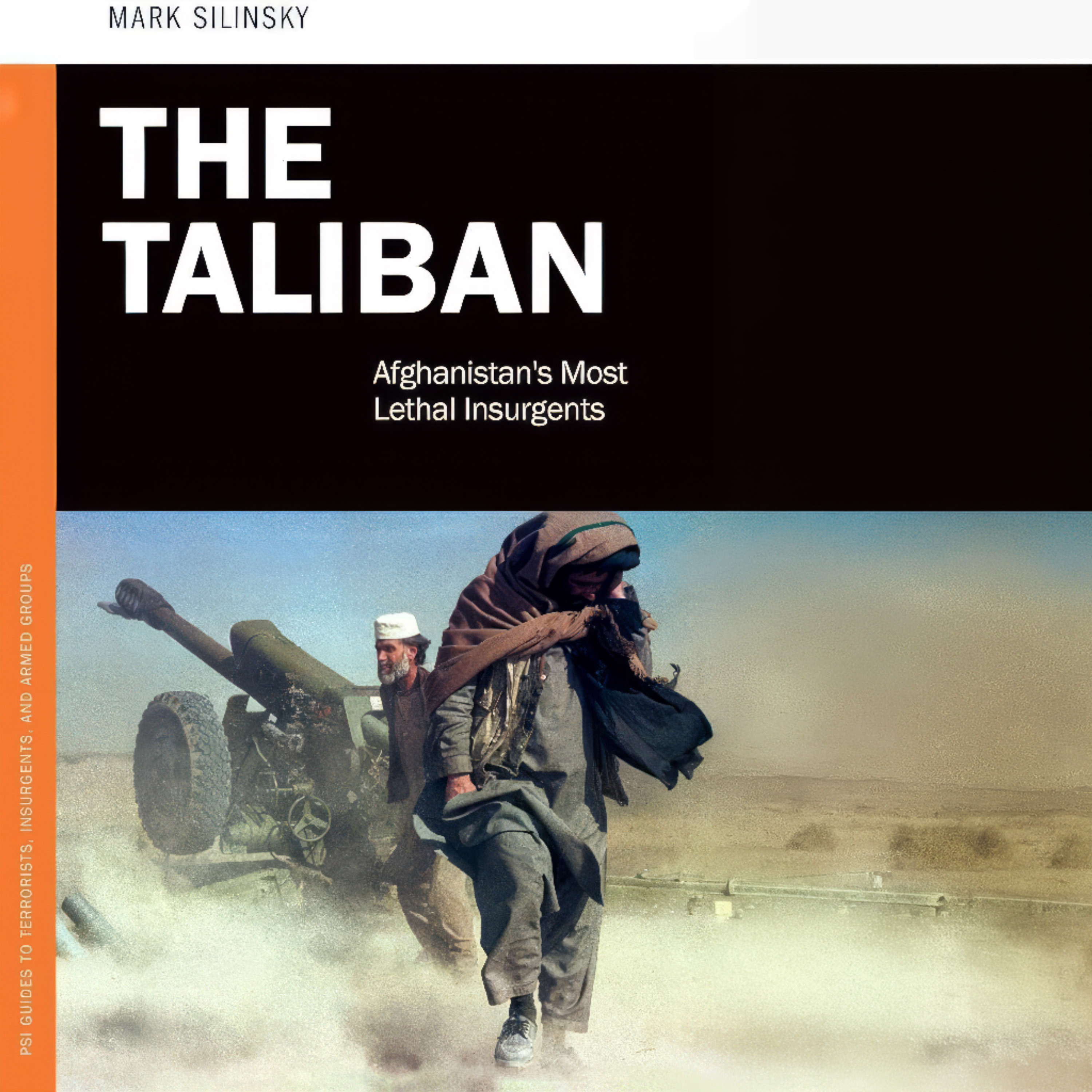
Hello and welcome to a reading from The Taliban – Afghanistan’s Most Lethal Insurgent Group, written by Mark Silinsky and published by Praeger, an imprint of Bloomsbury Publishing in New York, New York. This reading is brought to you by Kensington Security Consulting, where we bring education to national security.
The Taliban and the General Template of Insurgency
Omar would lead his insurgency to victory. He would face many of the same strategic challenges, leading the insurgency in exile after 2001. An insurgency is a type of small war that varies in intensity, duration, and levels of success and failure. Insurgencies seek to undermine a government’s legitimacy and impose their political agenda on the country. There are many definitions of insurgency, but most good ones include at least four elements:
A US Army analysis of 20th-century insurgencies identified prerequisites for success. First, the population needed to be vulnerable to either the insurgents' coercion or their soft power. If the insurgents effectively intimidated villages, as the Viet Cong did in Vietnam, the villagers' will could be worn down. Sometimes, insurgents could successfully tap into common dissatisfaction with the government and widespread resentment of living conditions. In Afghanistan, there was certainly a vulnerable population segment. Because Afghanistan was only nominally a unitary state in the early 1990s, the Taliban could bully many villagers, and they did so. But they also controlled criminal syndicates and brigands.
Second, competent insurgent leadership was needed, and Omar was certainly capable. A third prerequisite was a lack of government control over substantial portions of the country. The greater the government's control, the lower the chance of insurgent triumph. Afghanistan was largely in disarray in the early 1990s. From 1992-1996, the frailties of the Rabanni government were exploited by the Taliban’s propaganda element.
The Taliban and the General Template of Insurgency
The insurgency followed a well-established historical pattern. Insurgencies evolve from a small nucleus into a recognized and persistent threat to the government. Most insurgencies, including the current one in Afghanistan, follow a general chronological template. Mao, long considered the most successful practitioner of modern insurgency, developed his three-phase model in the 1930s. US intelligence produced a template very similar to Mao’s that integrates elements of guerrilla and conventional warfare. There are three phases:
In the first phase, leadership emerges. Secret cells are created, supplies are gathered, and propaganda is produced, but direct conflict is generally avoided. This is a building phase that often focuses on developing, not destroying, infrastructure. Mao also articulated a set of principles to avoid alienating potential comrades. Violence is generally shunned, and killings are highly selective and rare. Insurgents speak in a vocabulary and cadence that win the confidence of villagers.
In their first surge to power in the mid-1990s, the Taliban won the confidence of local Afghans. They came to attention when they intervened to protect a young woman who had been sexually assaulted. They built legitimacy among clerics, who in turn legitimized the Taliban. Clerics praised the Taliban in their sermons. Clerical support is essential to justify violence.
In this first phase of the Afghan insurgency, as in the second, Arabs came en masse to swell the Taliban’s ranks. By the time the Taliban consolidated power, Arab Jihadis were noticeable in key cities. Arabs, particularly those affiliated with al Qaeda, brought enthusiasm, financing, and technical expertise. But there is no evidence that any major Taliban victory was determined exclusively by Arab fighters. The Taliban demonstrated military acumen and uncanny intelligence capabilities that persist to this day. They cultivated a vast network of informants and sympathizers and bought off enemies with money supplied by foreign powers. They also learned from mistakes and innovated.
The Taliban, perhaps as well as any Afghan political cohort, understood the significance of the mullah in South Asian culture. Becoming a mullah offers Afghan social mobility; the individual is no longer constrained to his father's occupation. Mullahs can travel freely across Afghanistan and are treated respectfully and hospitably by village commoners and grandees. They can also establish their own madrassas. In Afghan culture, only a mullah can declare jihad with any credibility.
Omar understood that building ties with mullahs would enable the Taliban to enter the second phase of their insurgency. In this phase, insurgents take military action to dislodge the government. This can include attacks, assassinations, sabotage, or subversive activities. This is the “organizational phase,” in which the group builds its infrastructure, recruits and trains cadre, and acquires supplies. The Taliban pursued this from 1994-1996, fighting rival groups of different ethnicities, sometimes in pitched battle. They also settled scores with rival ethnicities and clans.
The third and final phase of insurgent warfare is conventional warfare. In the final phase of the war in Vietnam, armor, artillery, and massive infantry power conquered Saigon. If the transition is properly timed, the government has been sufficiently weakened to succumb to an onslaught of insurgent forces. Many insurgencies never reach this stage. The Taliban reached this point during their final drive to Kabul in 1996.
Many killings across all three evolutionary stages were driven by military necessity. Some of the Taliban’s brutality, however, stemmed from revenge or gratuitous sadism. For example, in 1998 in Mazar-I-Sharif, after wreaking bloody vengeance on civilians, the Taliban rounded up 11 Iranian diplomats and shot them dead. In Mazar, the Taliban’s mass suffocations, executions, and torture stunned UN observers, who estimated that 4,000 to 5,000 people were slaughtered.
The Taliban continued to harass men and displace women and children after 1996. As late as 1999, the Taliban swept across the Shomali Plains north of Kabul, arresting, killing, and driving women and children onto buses bound for remote destinations. There, they would suffer, and some would die from privation. The United Nations estimated that up to 20,000 women and children were evicted from their homes and forcibly relocated.
Killing was common, and many Afghans did not see the Taliban as liberators. After the Taliban concluded the third phase of the insurgency, they blocked aid to starving villagers caught in a war they could not escape, hoping only to survive. One example occurred in Hazarajat, in the mountainous regions of central Afghanistan, in 1998, when 1.5 million began to starve after the Taliban blocked supply routes. Afghans died of starvation, measles, and other diseases brought on by weakened immune systems. Blockades are common in war, but this one was directed at the Hazaras, whom the Taliban loathes for religious and racial reasons.
The Taliban’s ascent to power followed a standard insurgency pattern. The first phase is building and organizing. The second phase begins with violent attacks; the third is one of maneuver and pitched battle. Mullah Omar and Osama bin Laden shared a Salafist view of Islam and held contempt for the West. The prickly Omar revealed a soft-spoken charisma, while bin Laden exhibited more sizzle and braggadocio. The Taliban took power through a standard three-stage insurgency. They promised to create a self-contained Islamic state. They certainly tried to do just that under a suffocating theocracy, which is the subject of the third chapter.
Thank you for listening to this reading from “The Taliban – Afghanistan’s Most Lethal Insurgent Group.” If you enjoyed it, please consider subscribing and liking it. Nothing in this book reflects the official position of any person or agency of the United States government. On behalf of Kensington Security Consulting, thank you for listening.