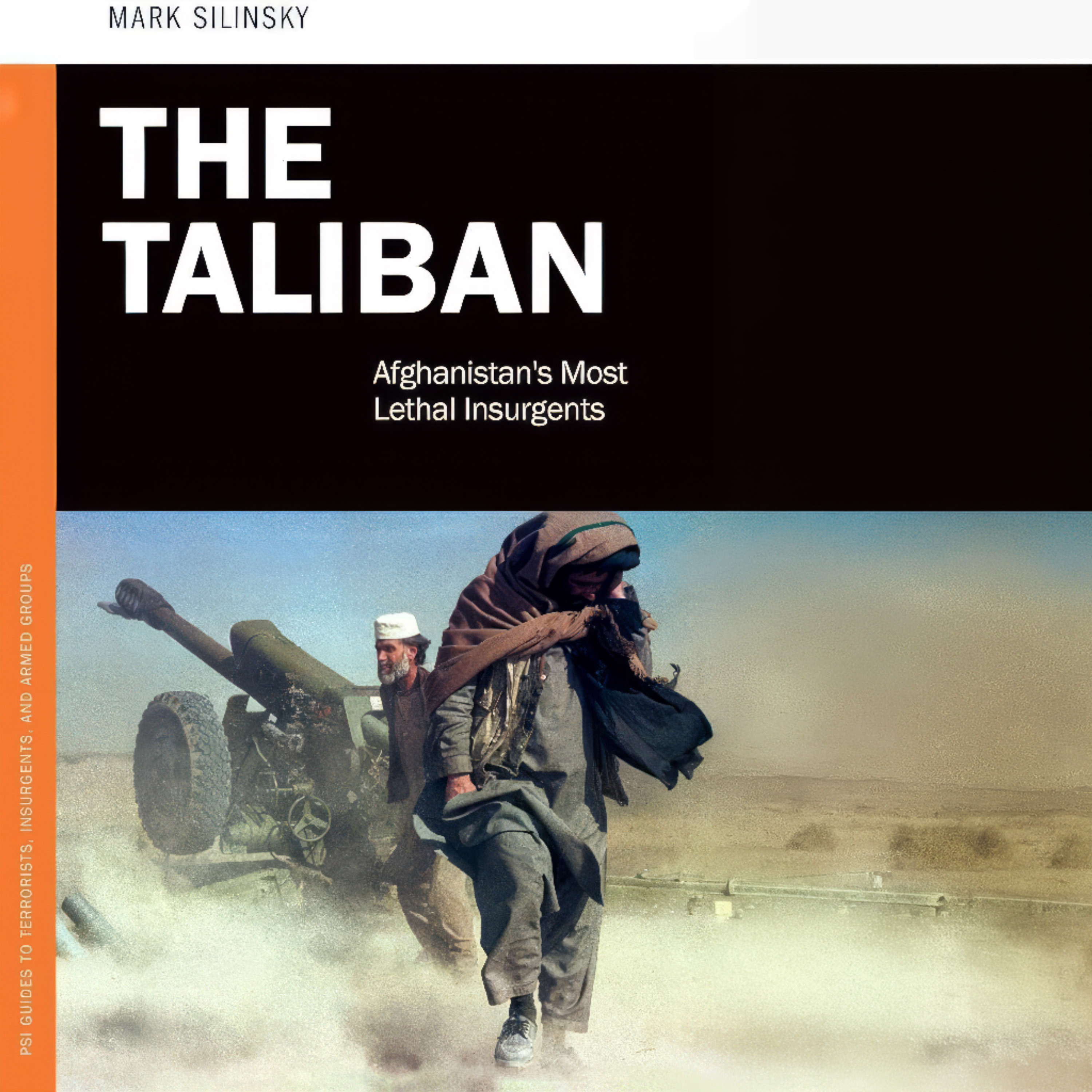
Hello and welcome to a reading from The Taliban – Afghanistan’s Most Lethal Insurgent Group, written by Mark Silinsky and published by Praeger, an imprint of Bloomsbury Publishing in New York, New York. This reading is brought to you by Kensington Security Consulting, where we bring education to national security.
Chapter Two: Enter the Taliban
Chapter One explored the geographic, cultural, religious, and ideological underpinnings of the Taliban. Chapter Two focuses on the Taliban’s origins, victory, tenure, temporary destruction, and rejuvenation.
The Setting
The Taliban’s ascent to power follows an ancient Afghan tradition of clan-tangled struggles for supremacy. In this perennial drama, ethnic and political factions vie to seize control of Kabul and eliminate rivals.
The Taliban trace their origins to the mujahedeen of the Afghan-Soviet war. In the 1980s, Afghanistan was inhospitable to ruling communist leaders and their sympathizers. Some Afghans supported the Communist Party, which promised to modernize and, to some extent, communize the country. The Soviets found partners among Kabul’s small, well-educated elites, who saw themselves as stakeholders in Afghanistan’s development.
But Marxism-Leninism never resonated with Afghans. Soviet atheism and communist contempt for religion, no matter how well disguised for an Afghan audience, became tropes of the anti-Soviet insurgency. Socialist, state-oriented planning panicked many Afghans, who saw the Soviet-led agenda as an attack on Islam. As a result, civil war erupted, the Soviets intervened, and the United States began supplying the mujahedeen. The Saudis, too, provided aid to the mujahedeen.
Pakistani leaders played a strong role in training, equipping, provisioning, guiding, and leading mujahedeen. The relationships forged during this period would be rekindled. A leading and flashy figure is the former Pakistani intelligence chief Hamid Gul (see profile 24), who worked closely with several major mujahedeen fighters who today are battling U.S. troops and trying to topple the Afghan government. Some of Gul’s former cohorts are insurgent leaders today. They include Gulbuddin Hekmatyar, who is not an associate of the Taliban, and Jalaluddin Haqqani, who is connected to the Taliban.
The war against the Soviets was over, but there was no peace. In the 1990s, Afghanistan remained a magnet for jihadists and zealots worldwide. It attracted Islamist ideologues, romantics, adventurers, and those trying to escape the routine and despair in the Middle East’s failed states. Religious zealots who wanted to uproot corruption, secularism, and cronyism in the Middle East could not do so in the Middle Eastern states in which they lived. In many of the region’s authoritarian states, such as Saudi Arabia and Egypt, the domestic intelligence and security services were very strong.
Islamic states, particularly Arab countries, began to take the threat posed by the Brotherhood seriously in the 1990s. In Arab countries, security and intelligence personnel purged the civil service, the military, and, to the extent possible, seminaries of Islamists. There was an unwritten understanding that Islamism would be tolerated as long as it did not target existing local governments, such as the Saudi monarchy. For this reason, in the second half of the 1990s, many malcontents and Islamic dogmatists, often opulently funded by wealthy Arabs, moved to Afghanistan and Western states. Liberal constitutions in Europe protected many doctrinaire Muslim preachers, and Afghanistan was a wide-open country.
Foreign fighters in Afghanistan came from many countries, including Chechnya, China, Indonesia, Pakistan, the Philippines, and Uzbekistan, as well as the Arab Middle East. Some stayed in Afghanistan, took local wives, built families, and became known as “Arab Afghans.” By 2001, over 2,000 Arab combatants, many of whom were apparently affiliated with and financed by bin Laden, were actively supporting the Taliban. Pakistanis living near the Afghan border had strong sympathies for the Taliban.
From the Taliban’s earliest days, neighboring Pakistan played a major role in Taliban affairs. The Jama`a Islami party of Pakistan provided material and logistical support to the Taliban in the early 1990s. Wealthy Saudis financed a vast network of madrassas, or religious schools, largely in Pakistan. These madrassas indoctrinated young people with a martial spirit. With Saudi largess, the number of madrassas grew from 245 in 1947 to 6,741 in 2007.
The Taliban were developed, to some extent nurtured, by the Pakistani Inter-Services Intelligence Directorate (ISI), sometimes referred to as ISID. Afghanistan and Pakistan share a long border, and Pakistan views Afghanistan’s security concerns as its own. Between 1997 and 1998, Pakistan provided the Taliban with an estimated $30 million. Bonds between Pakistani officials and the Taliban grew very strong. Some observers of the Pakistani scene said that ISI officers had become "more Taliban than the Taliban." The ISI introduced Osama Bin Laden to the Taliban.
Thank you for listening to this reading from “The Taliban – Afghanistan’s Most Lethal Insurgent Group.” If you enjoyed it, please consider subscribing and liking it. Nothing in this book reflects the official position of any person or agency of the United States government. On behalf of Kensington Security Consulting, thank you for listening.