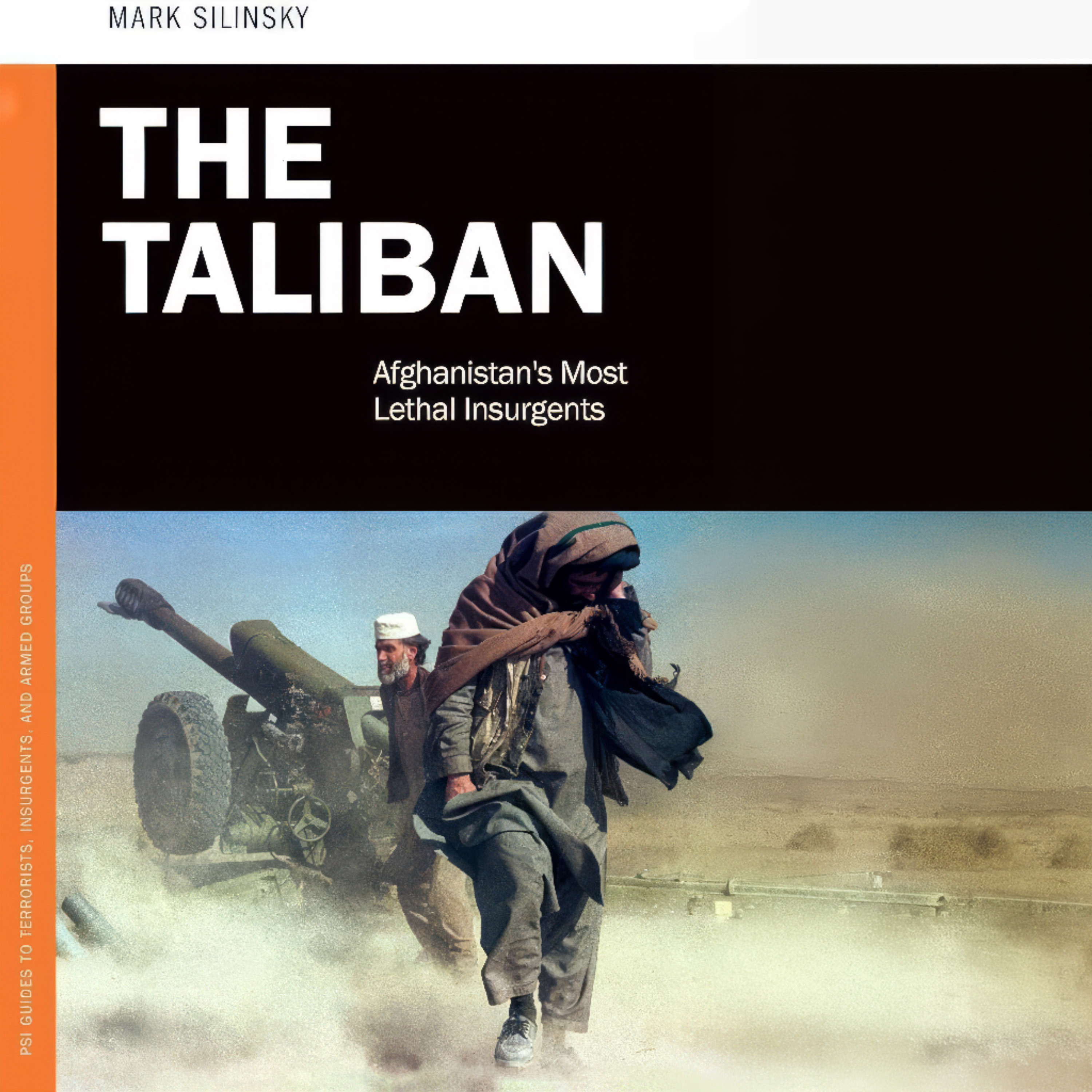
Hello and Welcome to a reading from The Taliban – Afghanistan’s Most Lethal Insurgent Group, written by Mark Silinsky and published by Praeger, an imprint of Bloomsbury Publishing in New York, New York. This reading is brought to you by Kensington Security Consulting, where we bring education to national security.
By September 2000, the Taliban controlled 95% of the country and were fighting mainly against the Tajik Ahmed Shah Massoud, Prime Minister Rabbani's former defense minister, who defended parts of the north. This was the remaining part of the country not controlled by the Taliban.
Profile Omar 3 "Commander of the Faithful” Consolidates his Power
From the beginning, Mullah Omar demonstrated political acumen and military savvy. His political charisma resonated with his Pashtun constituency, and he drew and held people even in the most difficult times. Omar developed a powerful hold on his followers, and his magnetism served as glue when the Taliban’s fortunes were dire. He gave Kandahar’s poor a sense of value and belonging in a great Muslim family. Initially, Omar lived frugally in a mud-brick home. One journalist described him as a “simple man unaccustomed to the perks of power." When the Taliban captured Kabul in September 1996, Omar remained in his Kandahar cocoon, along with a small coterie of Taliban leaders. He established a skeletal bureaucracy in Kabul.
Born in the mid-to-late 1950s, Omar endured an impoverished childhood and learned early on self-reliance and leadership. As a young man, he showed an aptitude for religious study. After studying in a madrassa in Pakistan, he opened his own religious school and then fought in the anti-Soviet Jihad from 1989 to 1992. On the battlefield and in the mosques, he delivered dulcet sermons that resonated with the more pious. In the anti-Soviet fight, he lost an eye but gained tactical military skills and religious standing, which he would exploit several years later.
Omar made little attempt to converse with non-believers in almost any circumstances. Even among his closest congregants and political operatives, Omar was a recluse. He held extended conversations with no more than a handful of Westerners. His taciturn behavior is still seen as humble by many Afghans, which boosts his image. His knowledge of the Koran, much of which was self-taught, fighting skills, soft-spoken self-confidence, and aptitude for bringing peace and rule of law cemented his power. This autodidact became legendary when, in 1996, he donned a cloak reputed to have belonged to Mohammed and pronounced himself "commander of the faithful." His followers in the audience began to swoon, weep, and faint.
Most men who could have deserted Omar during the Taliban’s nadir in 2002 did not, despite grueling living conditions. Nor were there any known, well-coordinated conspiracies to unseat Omar. Under Omar’s leadership, the Taliban recruited, rebuilt, and quickly re-engaged Coalition Forces in battle. His charisma also had a mesmerizing, twisted quality. Omar persuaded many Taliban to commit vicious crimes, including mass murder, throwing acid in girls’ faces, summary executions, and amputations for trivial offenses. Afghans are seen as tough people, but they do not have a reputation for being sadistic. The Taliban committed unbounded cruelty far beyond Afghan tradition. Nothing like that had happened in the memory of modern Afghanistan.
Nonetheless, Mullah Omar attracted both Afghans and non-Afghans. It was not by coincidence that bin Laden was given refuge in the Taliban’s Afghanistan. Saudi Arabia expelled bin Laden in 1991 and revoked his citizenship in 1994. He declared war on the West in 1998. In Afghanistan, bin Laden, who was wanted by U.S. authorities, continued his screeds against Americans, and Mullah Omar continued to offer him refuge.
The Afghanistan of the Taliban was a natural refuge for bin Laden. Bin Laden and Mullah Omar shared charismatic traits that resonated with segments of the Islamic world. Both leaders presented their messages and agendas as authentically Muslim, though from different Sunni legal schools. Both were ascetic and contemptuous of modern comforts. Bin Laden left the wealth and fortune to which he was heir to toil among the Afghan poor. This cultivated an image of a stoic Muslim hero committed to austere self-discipline, which garnered international prestige. Mullah Omar espoused a more local, Pashtun-focused vision of Islam.
Today, years after Omar was pushed into exile, he holds the enduring loyalty of his still-smitten constituents. The devotion continues despite his absence. Few Taliban have seen him since he scurried on the back of a motorcycle from Kandahar in late 2001. Even when he was in power, he rarely made public appearances and ventured to Kabul only once from his home in Kandahar.
There were two primary differences that distinguished Omar’s and bin Laden’s style of charisma. First, there was bin Laden’s fillip. Bin Laden, despite his protestations to the contrary, reveled in celebrity status until the last few years of his life. He held court in his tent encampments, where he self-reverentially lectured Arab and some Western journalists about the impending wrath of his sword. Bin Laden was very comfortable in front of a camera. During the anti-Soviet Jihad, he commissioned a 50-minute video displaying him in manly pursuits, such as bareback riding on horses and firing weapons. Omar remains shy and retiring, preferring to be closeted with his staff.
Finally, their charisma appealed to distinctly different audiences. Bin Laden’s audience was global, as were his ambitions, while Mullah Omar’s remains markedly provincial and Afghan. Their leadership styles were dissimilar, but they shared a common goal of global Islamic supremacy. They were also united in their hatred of the United States.
Thank you for listening to this reading from “The Taliban – Afghanistan’s Most Lethal Insurgent Group.” If you enjoyed it, please consider subscribing and liking it. Nothing in this book reflects the official position of any person or agency of the United States government. On behalf of Kensington Security Consulting, thank you for listening. listening.