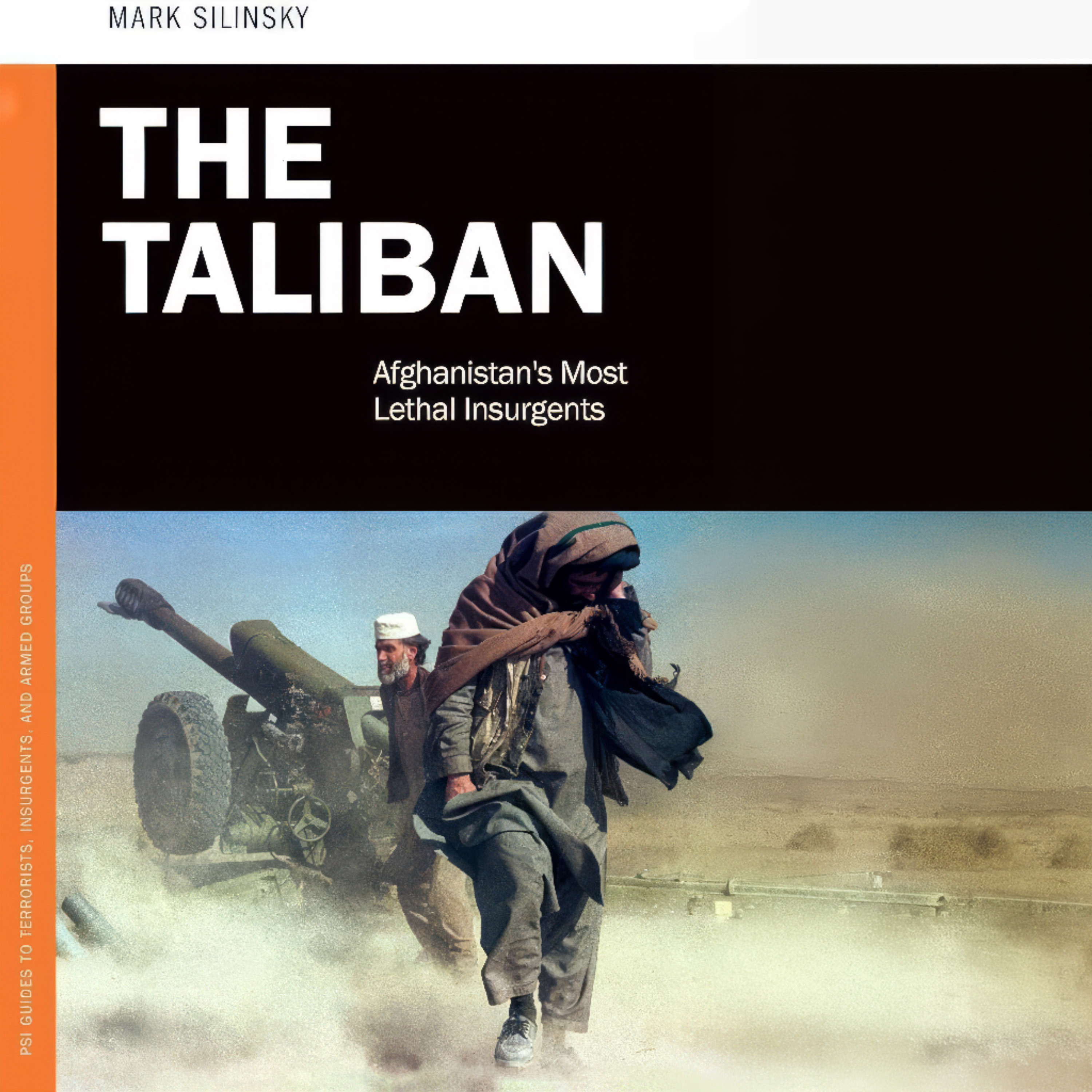
Hello and welcome to a reading from The Taliban – Afghanistan’s Most Lethal Insurgent Group, written by Mark Silinsky and published by Praeger, an imprint of Bloomsbury Publishing in New York, New York. This reading is brought to you by Kensington Security Consulting, where we bring education to national security.
The Taliban Builds Roots
Afghanistan’s government was never strong and was usually tenuous during the reign of President Burhanuddin Rabbani, who held office from June 1992 until 1996. He never had a durable base, lacked charisma, was not a Pashtun, and proved incapable of uniting Afghanistan. Another civil war was underway, and 1 year later the forces of Mullah Omar entered the fighting.
The reclusive leader of the Taliban, Mullah Mohammad Omar, led the Taliban to gain control of one-third of the country within 2 years, two-thirds within 3 years, and nine-tenths within 5 years. In the summer of 1994, Omar pushed his small band of seminary students into the general Afghan fracas. He killed local warlords in Afghanistan’s south who were connected to the rape of a girl. During the next several years, he expanded his power base to control 90% of the country.
The Taliban’s leader was young by the standards of a society that venerated age, associating it with wisdom, political acumen, and survival skills. Unlike some of his rivals with university training, the canny Mullah Omar was largely self-educated. He rarely traveled outside Kandahar. In keeping with Islamic tradition, he took several wives, some accounts say three, and fathered 13 children. He joined the jihad against the Soviet invasion of 1979 and lost one eye in an artillery battle.
The fall of the Afghan capital, Kabul, to the Taliban militia in September 1996 marked a distinct break from the politics of the preceding decades. Both the communist regime and the Soviet-aligned government tried to modernize the country within the confines of Afghan culture and the country’s resources. But the Taliban had no such ambition. Instead, Taliban leaders were content to have their countrymen subsist on the margins of absolute poverty. While the Taliban’s victory ended a protracted civil war, it did not halt all the violence. The Taliban began to mete out their cruelty immediately after they took control in September 1996. They proclaimed Afghanistan to be the Islamic Emirate of Afghanistan and the law of the land to be Sharia. A first target of the Taliban was former communist President Najibullah, whom the Taliban murdered and whose corpse, along with that of his brother, was horrifically displayed as a war trophy (see profile five).
In keeping with revenge, or badal, the Taliban settled tribal scores when they seized power. For example, in the spring of 1997, the northern city of Mazar-e-Sharif was contested between the Taliban and non-Pashtun, Uzbek and Hazara civilians. When the Taliban controlled the city, they killed many Uzbeks and Hazaras. Later, when the Taliban lost control of the city, the ethnic groups they had persecuted took revenge on the now-weakened Taliban. This reversal of fortune continued as towns and villages changed hands, and former victims became victimizers.
On their way to Kabul, the Taliban butchered Hazaras in well-planned, ruthless attacks. In 1998, Human Rights Watch’s Asia division wrote, “We are talking about the systematic execution of perhaps 2,000 civilians.” Hazaras are often identifiable by a distinct Mongoloid appearance and live in concentrated areas. According to verified reports, the Taliban would go house to house, dragging out men, women, and children, and shooting them in killing pits or along the roads. Survivors reported, “The Taliban shot at anything that moved.”
Thank you for listening to this reading from “The Taliban – Afghanistan’s Most Lethal Insurgent Group.” If you enjoyed it, please consider subscribing and liking it. Nothing in this book reflects the official position of any person or agency of the United States government. On behalf of Kensington Security Consulting, thank you for listening.