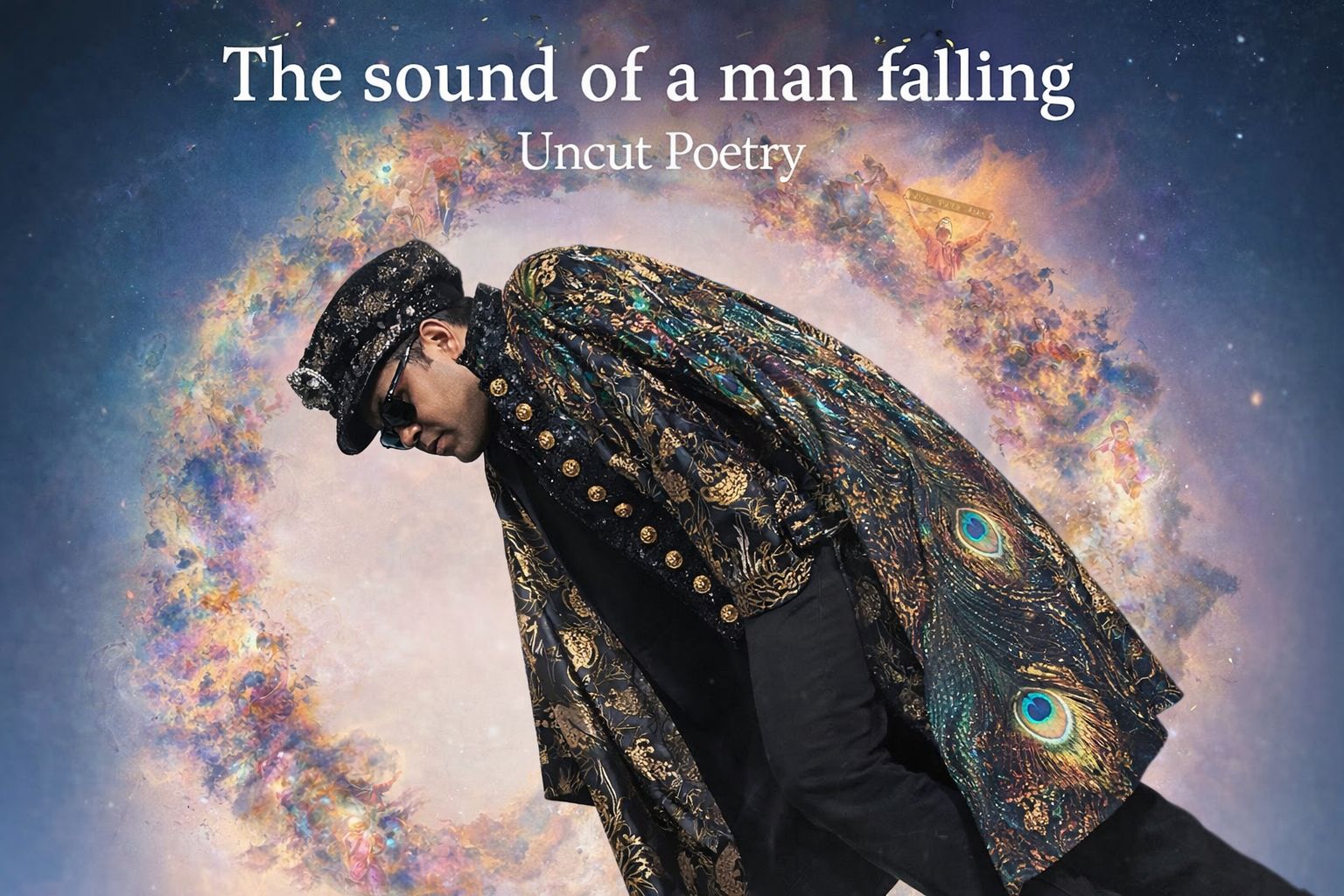
I reach the summit.
Not inch by inch—no, I arrive in a flood. Talent spills out of me. Love follows, tidal and unquestioning. Directors orbit me like obedient moons; they cannot imagine a world without my sound. I do not merely compose music—I alter its grammar. I am told I am a miracle. I begin to agree.
This is where it breaks.
Because admiration, once mistaken for destiny, hardens into entitlement. I begin to believe the applause is owed, not earned. That the place I clawed my way to is permanent, immune to time, taste, or doubt. I convince myself I can offer anything—anything at all—and the world must bow and call it genius. If it doesn’t, the fault lies with the world. They don’t understand music. They don’t understand me.
Power arrives quietly. I let it.
I summon directors and leave them waiting in the dark, hours stretching thin, just to feel my own gravity. I choose sacred backdrops for first meetings, mistaking symbolism for sanctity. I give indifferent music to a good film and dismiss its failure as “divisive,” because nothing I touch is allowed to be mediocre—only misunderstood.
Lines I never meant to draw begin to appear everywhere.
Faith, identity, difference—these become instruments too, played without care. When someone enters my home carrying another god, another grammar of devotion, the air tightens. Symbols are stripped, not violently, but casually. As if it is obvious, as if it is necessary. As if genius grants permission.
My arrogance is no longer an accident. It is deliberate. Curated. Non-negotiable.
I do not spare those who built me. The directors who trusted me when I was still a question mark. The collaborators who believed music was a conversation, not a sermon. One by one, they drift away—not in protest, but in fatigue. Projects thin out. Invitations dry up.
And the music—ah, the music.
It stumbles. It repeats itself. It loses hunger. But how would I know? I am sealed inside a fog of my own praise, a mausoleum of old triumphs. Self-awareness was buried years ago, quietly, without ceremony.
So when the world starts turning elsewhere—towards younger, leaner, less reverential talent—I am stunned. Betrayed. How dare they move on from me?
Then comes the mirror I choose because it flatters my wounds.
The foreign interviewer. The sympathetic gaze. The easy narrative. I explain my fading relevance with a single, convenient sentence: it isn’t decline, it’s persecution. Not exhaustion, but exclusion. The industry, I say, is communal. I am being punished for who I am.
I believe this because it costs me nothing. It asks nothing of my craft, my humility, my failures.
And even when someone who has known me—who has admired me—looks at me and says, almost gently, almost in disbelief, “My god, I never even realised you were Muslim,” the truth still does not land. Because by then I am too deep inside my grievance to hear anything else.
I mistake isolation for martyrdom.
I retreat into the smallest room imaginable: the ghetto of my own frustration. Religion, the last refuge of the unimaginative and the cornered, becomes my alibi.
What I do not see—what I may never see—is the scale of the loss.
The hearts that once beat in time with my music and now feel nothing. The silence in concert halls where tickets were bought with devotion and abandoned with disappointment. The audience that did not turn hostile—they simply stopped coming.
That is the true heartbreak.
Not that I fell. But that I never understood why.
If you liked this poem, consider listening to these other poems on failures & hypocrisies of people -
Subscribe to my newsletter 'The Uncuts'
Follow me on Instagram at @sunilgivesup.
Get in touch with me on uncutpoetrynow@gmail.com
The details of the music used in this episode are as follows -
Relaxing Piano Improvisation by Alexander Nakarada
Link: https://filmmusic.io/en/song/relaxing-piano-improvisation