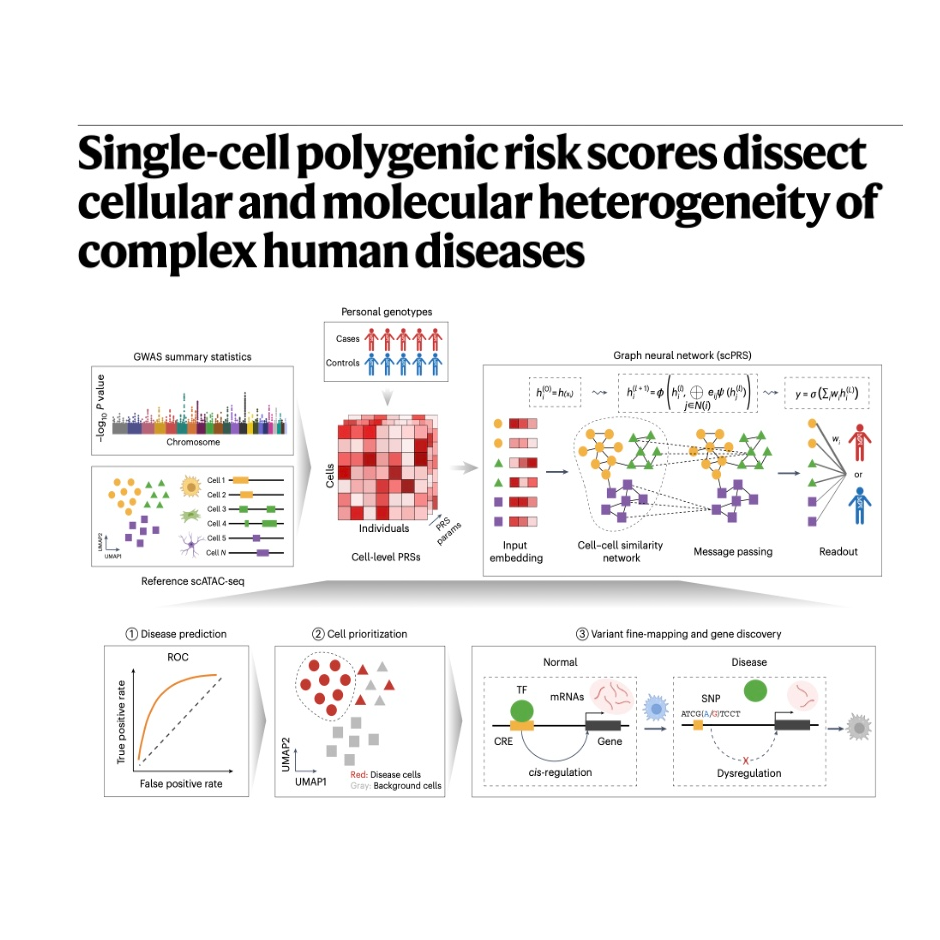
The paper introduces a novel computational approach called the single-cell Polygenic Risk Score (scPRS), which is designed to overcome the limitations of conventional risk prediction by accounting for cellular and molecular heterogeneity in complex human diseases. This methodology integrates single-cell epigenome profiling, specifically scATAC-seq data, with a Graph Neural Network (GNN) to calculate genetic risk scores at the individual cell level. Researchers applied scPRS to four major conditions, including Type 2 Diabetes, Alzheimer Disease, and Hypertrophic Cardiomyopathy, consistently demonstrating superior predictive performance compared to established polygenic score methods. Critically, scPRS is capable of prioritizing and identifying disease-relevant cell types, such as specific pancreatic cells in T2D or microglia in AD. Furthermore, the model uncovers cell-type-specific genetic regulatory programs, allowing for the fine-mapping of causal risk variants and genes associated with disease pathogenesis. Experimental validation confirmed that genetic variations pinpointed by scPRS impact essential cellular functions, supporting the model's high resolution and biological interpretability.
References:
- Zhang S, Shu H, Zhou J, et al. Single-cell polygenic risk scores dissect cellular and molecular heterogeneity of complex human diseases[J]. Nature Biotechnology, 2025: 1-17.