Listen

Description

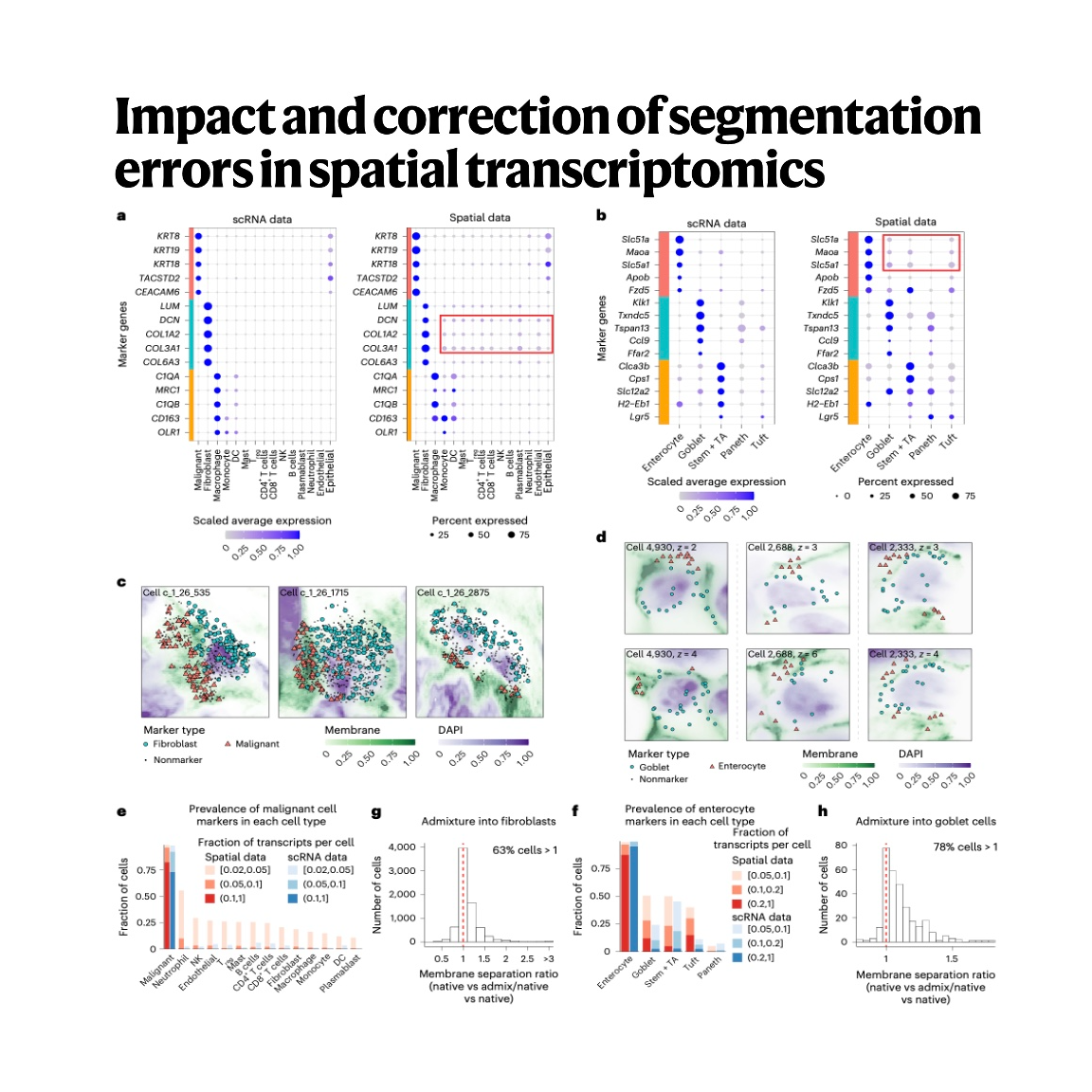
Spatial transcriptomics relies on sequencing and imaging to map cellular activities, but both methods face significant technical hurdles in accurately assigning RNA molecules to individual cells. The provided text highlights how cell segmentation errors and the limitations of two-dimensional mapping lead to "admixture," where transcripts from neighboring cells are incorrectly attributed to a specific profile. These errors create artifactual signals that can distort biological results, such as differential expression and ligand-receptor analyses. To address this, the researchers developed cellAdmix, a tool that utilizes computational models like non-negative matrix factorization and conditional random fields to identify and remove foreign transcripts. By filtering out these contaminating molecules, the method improves the clarity of gene set enrichment and more accurately reflects true biological roles, such as those of cancer-associated fibroblasts. The study demonstrates that such corrections are essential across various tissue types and technologies to ensure the integrity of spatial genomic

References: