Listen

Description

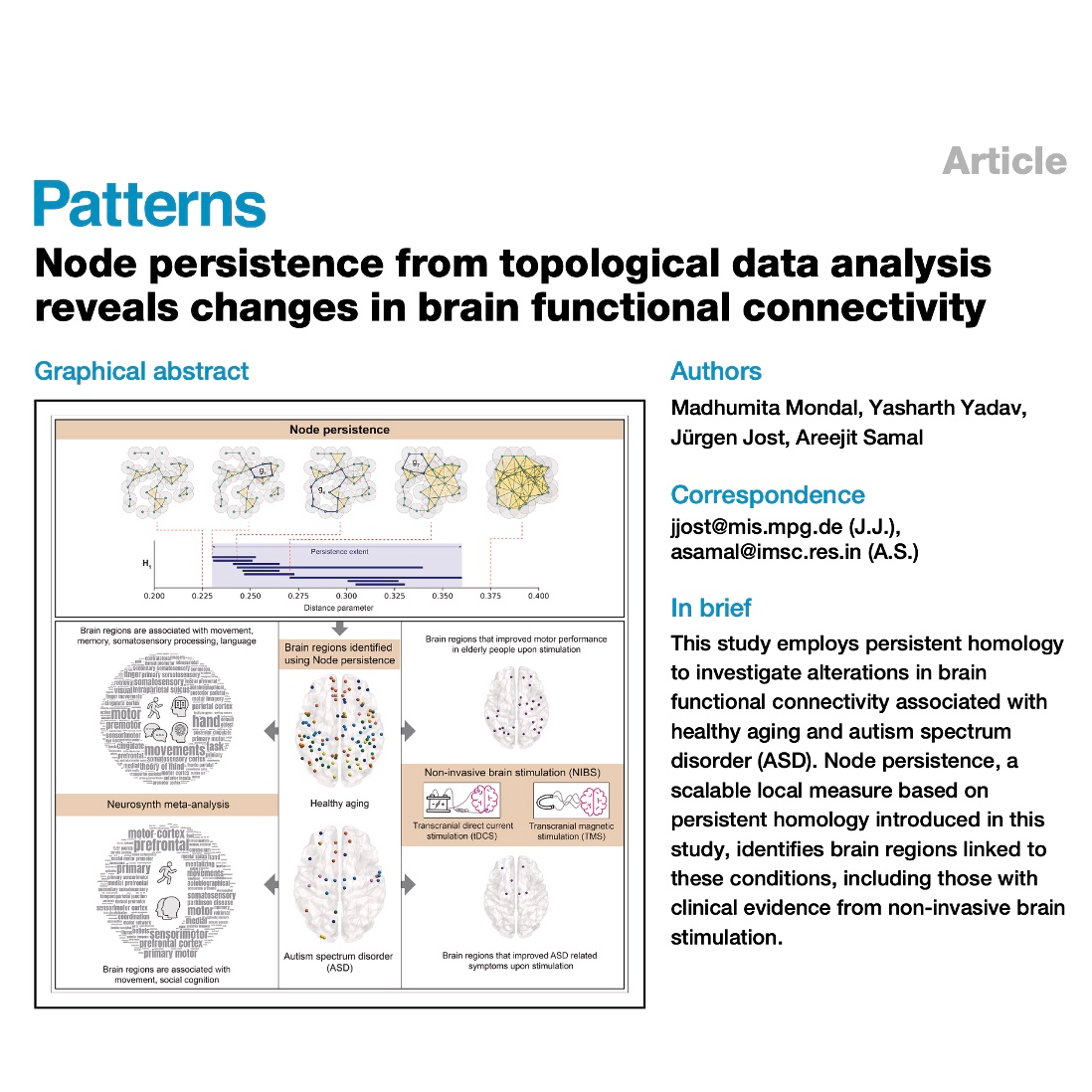
This research study utilizes topological data analysis (TDA) to examine how brain functional connectivity changes during healthy aging and in individuals with autism spectrum disorder (ASD). By applying a method called persistent homology, researchers developed a new metric known as node persistence to identify specific brain regions linked to these conditions at global and local scales. The findings reveal that age-related and ASD-related changes are concentrated in networks responsible for movement, social cognition, and memory. Significantly, many of the regions pinpointed by this mathematical tool overlap with areas targeted in non-invasive brain stimulation therapies to improve cognitive or motor functions. This approach provides a scalable and efficient way to map the brain's complex architecture, potentially guiding more effective clinical interventions. In summary, the study bridges advanced geometry and neuroscience to better understand the topological signatures of neurodevelopmental and age-related shifts.

References: