Listen

Description

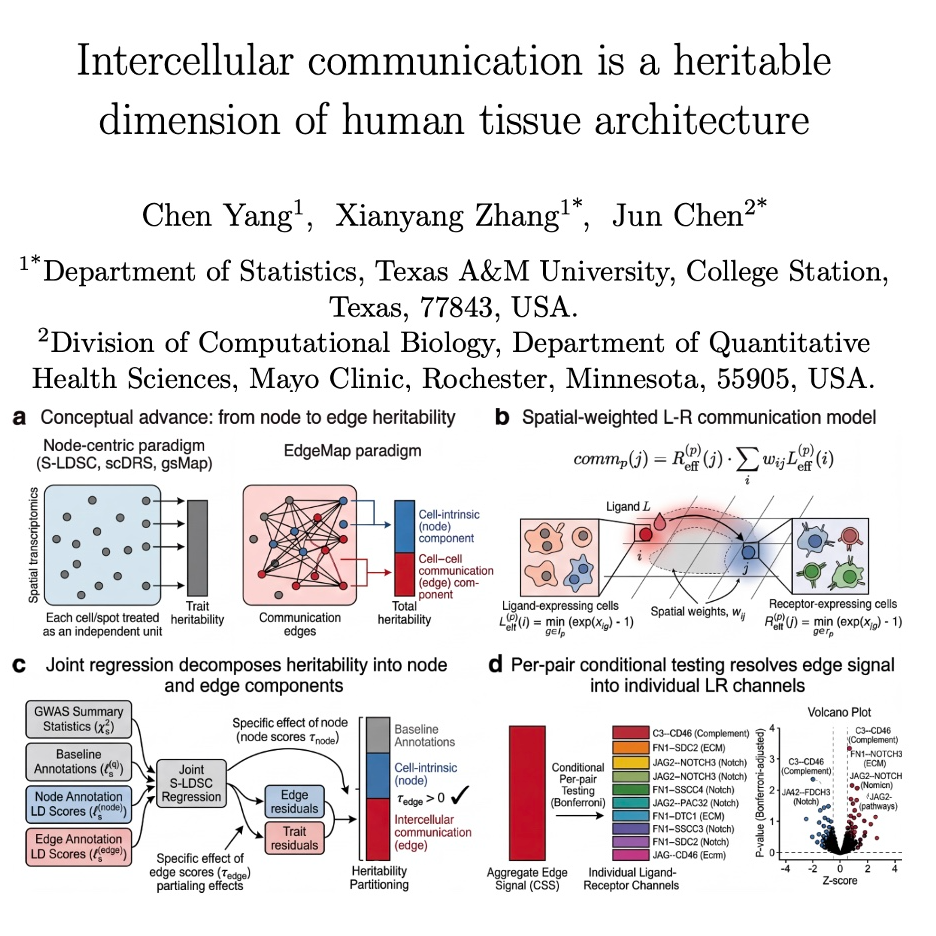
This paper introduces EdgeMap, a new computational framework designed to show how intercellular communication contributes to the heritability of complex human diseases. While traditional genetic methods focus on how individual cells function in isolation, this research demonstrates that genetic risk is often concentrated at the signaling interfaces—or "edges"—where neighboring cells interact via ligand-receptor pairs. By integrating spatial transcriptomics with data from genome-wide association studies (GWAS), the authors successfully partitioned trait heritability into cell-intrinsic and communication-based components across five human tissues and 17 different traits.

The study reveals that specific communication channels are linked to distinct conditions, such as synaptic signaling in bipolar disorder and lipoprotein clearance in liver-related metabolic traits. Notably, many of the genes identified through this intercellular lens are missed by standard analysis, suggesting they represent a hidden dimension of human genetic architecture. These findings offer a more sophisticated map of how tissues are organized and provide a new set of genetically supported targets for drug development. Ultimately, the sources argue that understanding how cells talk to one another is essential for uncovering the biological mechanisms behind complex diseases.

References: