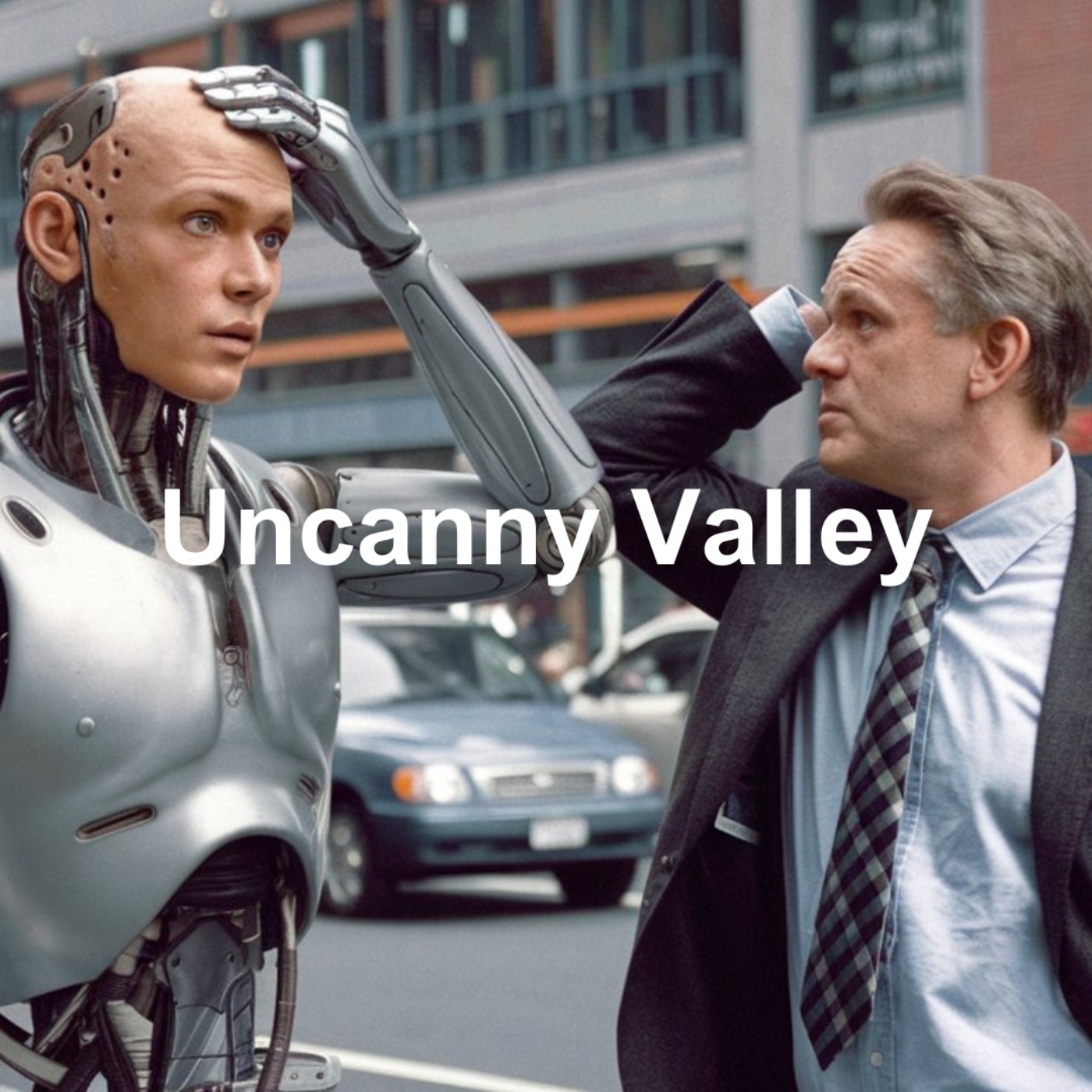
Today we're talking about the "uncanny valley" effect, a hypothesized psychological phenomenon where human replicas that are nearly, but not perfectly, lifelike elicit feelings of revulsion or eeriness. We'll cover the etymology of the term, tracing it back to robotics professor Masahiro Mori's 1970 concept, and various theoretical bases attempting to explain the phenomenon, such as mate selection, mortality salience, and pathogen avoidance. We will also detail research findings, design principles for avoiding the uncanny valley, criticisms of the hypothesis, and numerous examples of its appearance in visual media, particularly in computer-generated imagery for films and virtual actors.
_____
Swetlana AI on other platforms:
Hosted on Acast. See acast.com/privacy for more information.