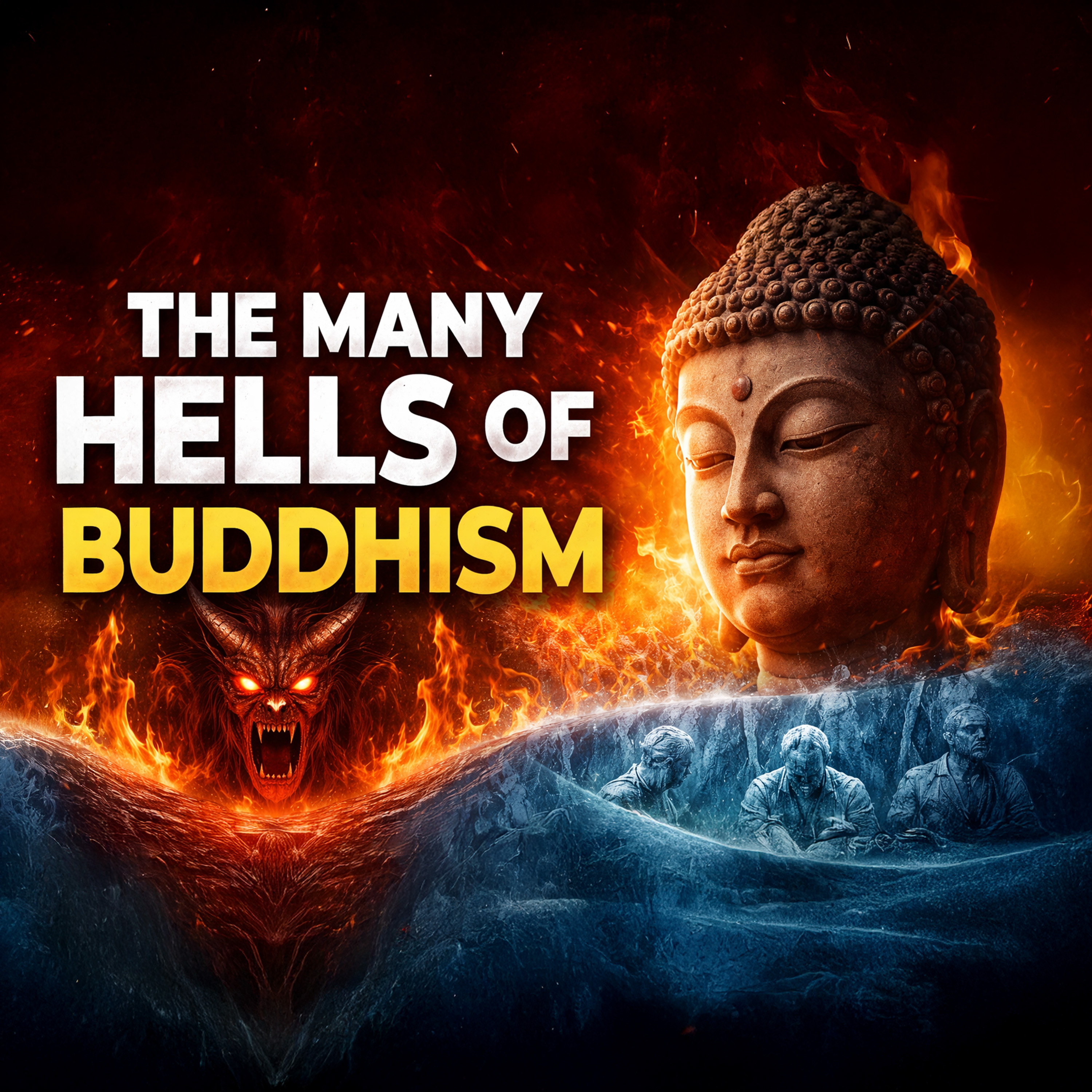
When most people hear the word hell, they imagine one place, one judgment, and one eternal punishment.
Buddhism tells a very different story. In this episode of Gnome Talk, we explore the many hells of Buddhism, not as threats or divine punishments, but as states of suffering shaped by cause and effect.
In Buddhist thought, hells are not eternal, not ruled by a god, and not places you are sentenced to forever. They are conditions that arise when certain patterns of anger, obsession, cruelty, despair, or confusion take hold.
This is not a dark episode for shock value. It’s a compassionate one. We look at how Buddhist hells function as maps of suffering, created long before modern psychology existed, to help people understand why pain repeats and how it can eventually loosen its grip.
We explore hot and cold hells, not as literal geography, but as symbolic and experiential descriptions of inner states many of us recognize immediately. In this episode, we talk about: What “hell” actually means in Buddhism
Why Buddhist hells are not eternal or judgment-based
How karma functions as momentum rather than punishment
Hells as inner psychological and emotional states
Why impermanence is central to compassion and change
How awareness interrupts suffering before it deepens
Why humans across cultures keep creating hell cosmologies
This conversation is reflective, grounded, and intentionally non-dogmatic. You don’t need to believe in Buddhist cosmology to recognize what these teachings are pointing toward. They speak to experiences many of us have already lived through, moments when suffering felt endless, and moments when awareness created a way out.
Maybe hell isn’t something to fear. Maybe it’s something to understand.
🎧 Whether you approach this topic spiritually, symbolically, philosophically, or with healthy skepticism, you’re welcome here.