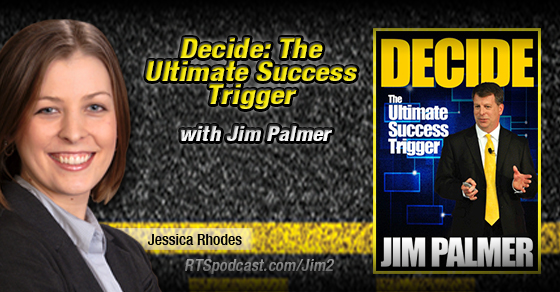
This is a special episode of Rhodes to Success as I interview Jim Palmer on his podcast Stick Like Glue Radio about the launch of his new book, DECIDE- The Ultimate Success Trigger. We cover many of the mindset challenges and hurdles that entrepreneurs face and how to overcome them.
Jim Palmer is a marketing and business-building expert, host of Newsletter Guru TV and is the founder and CEO of multiple six-figure businesses including the Dream Business Academy. Jim is known internationally as the Newsletter Guru and Dream Business Coach.
Main Questions Asked
- Why did you decide to write this book?
- Talk about the experiences you went through early on and the lessons learned.
- What are people going to learn in this book that they can apply to their journey now?
- Talk about ‘head trash,’ what it is, and how it holds entrepreneurs back.
- When and why should we raise our prices?
- Talk about delegating or staying small.
- Expand on the lesson ‘good is good enough.’
- Why do you need to be immune to criticism?
- How does wealth reward risk and speed?
Key Lessons Learned
- Inspiration is as important as information and education.
- It’s not just about knowing how to do something but also what the person went through to get where they are.
- Growth happens when you take action and do things outside your comfort zone.
- Don’t do what the pros do now. Do what they did when they were where you are now.
What Is Covered in ‘DECIDE – The Ultimate Success Trigger’?
- Head trash.
- Deciding to survive.
- How to be authentic.
- How to invest in yourself.
- The difference between an entrepreneur and a small business owner.
- Imposter syndrome.
- Unwillingness to delegate and get help.
- The need to be perfect.
Head Trash
- Everybody has head trash. This is all the thoughts, feelings, and how you think. This is often made up of self-limiting beliefs.
- Head trash affects how people make decisions to invest, go forward and start a business.
- When we have a fear issue, we tend to make up excuses.
- At some point you have to stop being an impediment to your own growth and take care of business and do things that successful people do.
What Successful People Do
- Become a speaker, author, create videos, work with a coach, join a mastermind, and do your own live events.
- Instead of growing your business 1:1 becoming a speaker gives you a chance to grow your business 1:many.
Raising Prices
- This is featured in the ‘Decide To Be Profitable’ chapter.
- A lot of people struggle with charging fees that they are actually worth.
- You must be appropriately rewarded for the value that you are deliver to customers and clients.
- Fees should be based on the value you are delivering rather than on an hourly rate.
- It’s also not the immediate hourly value but rather the years of learning, training, and experience leading up to that point that you are charging for.
Outsourcing
- There is a point in every business where you start gaining momentum and doing more of what your core services are. At that point it should translate into your high revenue generating activities.
- Most entrepreneurs think they can do it cheaper, faster, and better than anybody.
Good is Good Enough
- Perfection is the enemy of progress.
- If you strive to get everything done to perfection then nothing will get done.
- Good is good enough doesn’t mean you put out crappy work. It just means you push the ‘go’ button sooner and ‘get it done.’
- Wealth rewards risk and speed. You just have to start and get better as you go.
Criticism
- Criticism can also be a business crippler as everyone has an opinion and people aren’t shy about sharing theirs (especially on social media.)
- The only people who aren’t criticized are people who aren’t doing anything.
- The filter Jim uses is by asking himself, “Do I know this person, trust them and do I value their opinion?” as well as “Is this someone who has earned the right to share this opinion?”
- There will always be people who don’t resonate with who you are and what you offer. You are not meant to do business with everyone.
Wealth Rewards Risk and Speed