Thanks to our Partner, Pico Technology
Watch Full Video Episode
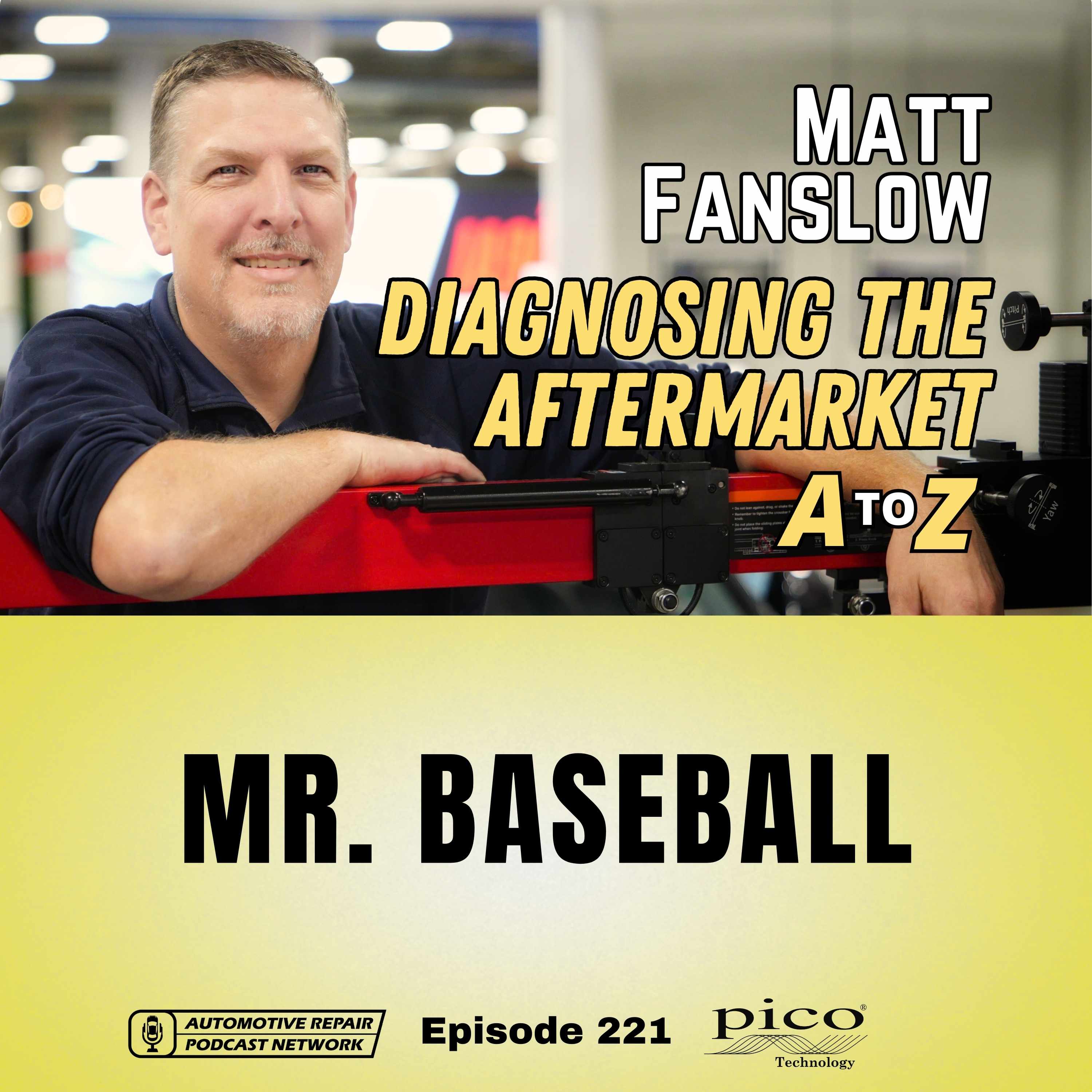
Matt uses the movie Mr. Baseball (Tom Selleck as Jack, an aging Yankees player traded to Japan) as an analogy for life in the automotive repair world—especially for veteran mechanical/technical specialists whose bodies start breaking down and whose production (and pay) can drop as a result. The core theme: your role can evolve from “hour-cranker” to leader/mentor, but that requires radical honesty, ego-checking, and intentional changes—from physical maintenance to skill expansion to management systems that properly reward wisdom.
Key points & takeaways
The “Mr. Baseball” analogy
- Jack believes he’ll dominate, but reality shows a hole in his swing and a body that’s not keeping up.
- His old talent used to hide the problem—until it doesn’t.
- The turnaround begins when he accepts reality, retrains, and recommits.
Auto repair parallel: age vs. mileage
- It’s not always “age”—it’s the mileage, injuries, wear, and accumulated strain.
- As bodies degrade (knees, backs, shoulders, hips, neck), production drops, and pay plans tied heavily to output can punish experience.
Ego check: redefining value
- When you can’t “crank hours” like you used to, value doesn’t disappear—it changes.
- Veterans often become natural leaders even if they don’t recognize or accept it.
- Leadership, mentoring, and stabilizing the team have real economic value—if the organization is willing to see it.
Management responsibility
- Shops can’t afford to “cast blind eyes” to what veterans contribute beyond billed hours.
- The goal is optimizing the whole organization (the unit), not just individual output.
- If compensation and structure ignore mentoring/leadership value, the industry risks driving out the people who make everyone else better.
Action steps for the veteran specialist
- Take care of the body: whatever works—massage, chiro, yoga, tai chi, mobility work, sleep/mattress upgrades, recovery habits.
- Expand skill sets into areas that are less physically taxing but high value (systems, diagnostics, workflow support, training others).
- Be honest and matter-of-fact about your limitations and your value—ask for role adjustments when needed.
Culture shift
- Checking egos at the door isn’t weakness—it’s how you stay in the game longer.
- The best teams rally when leaders own their shortcomings and recommit—same in the shop.
Memorable lines / quotables
- “It isn’t the age… it’s the mileage.”
- “You’ve been getting away with it because talent covered it—until it didn’t.”
- “Awareness sucks… but it’s the job.”
- “The unit matters—the entire organization being productive, valuable, and profitable.”
Listener challenges
- Identify your “hole in the swing”: what used to be easy that you’re now compensating for?
- Write down 3 ways you add value that aren’t billed hours (mentoring, process improvement, comebacks prevented, training).
- Pick one body-maintenance habit you’ll commit to for 30 days.
Resources mentioned
- Movie: Mr. Baseball (Tom Selleck)
Audience
- Veteran mechanical specialists and technical specialists
- Shop owners/managers designing pay plans and roles
- Younger specialists who want to understand the long game
Thanks to our Partner, Pico Technology
Are you chasing elusive automotive problems? Pico Technology empowers you to see what's really happening. Their PicoScope oscilloscopes transform your diagnostic capabilities. Pinpoint faults in sensors, wiring, and components with unmatched accuracy. Visit PicoAuto.com and revolutionize your diagnostics today!
Contact Information
- Email Matt: mattfanslowpodcast@gmail.com
- Diagnosing the Aftermarket A - Z YouTube Channel
- Subscribe & Review: Loved this episode? Leave a 5-star review on Apple Podcasts and Spotify
The Automotive Repair Podcast Network: https://automotiverepairpodcastnetwork.com/
Remarkable Results Radio Podcast with Carm Capriotto: Advancing the Aftermarket by Facilitating Wisdom Through Story Telling and Open Discussion. https://remarkableresults.biz/
Diagnosing the Aftermarket A to Z with Matt Fanslow: From Diagnostics to Metallica and Mental Health, Matt Fanslow is Lifting the Hood on Life. https://mattfanslow.captivate.fm/
Business by the Numbers with Hunt Demarest: Understand the Numbers of Your Business with CPA Hunt Demarest. https://huntdemarest.captivate.fm/
The Auto Repair Marketing Podcast with Kim and Brian Walker: Marketing Experts Brian & Kim Walker Work with Shop Owners to Take it to the Next Level. https://autorepairmarketing.captivate.fm/
The Weekly Blitz with Chris Cotton: Weekly Inspiration with Business Coach Chris Cotton from AutoFix - Auto Shop Coaching. https://chriscotton.captivate.fm/
Speak Up! Effective Communication with Craig O'Neill: Develop Interpersonal and Professional Communication Skills when Speaking to Audiences of Any Size. https://craigoneill.captivate.fm/