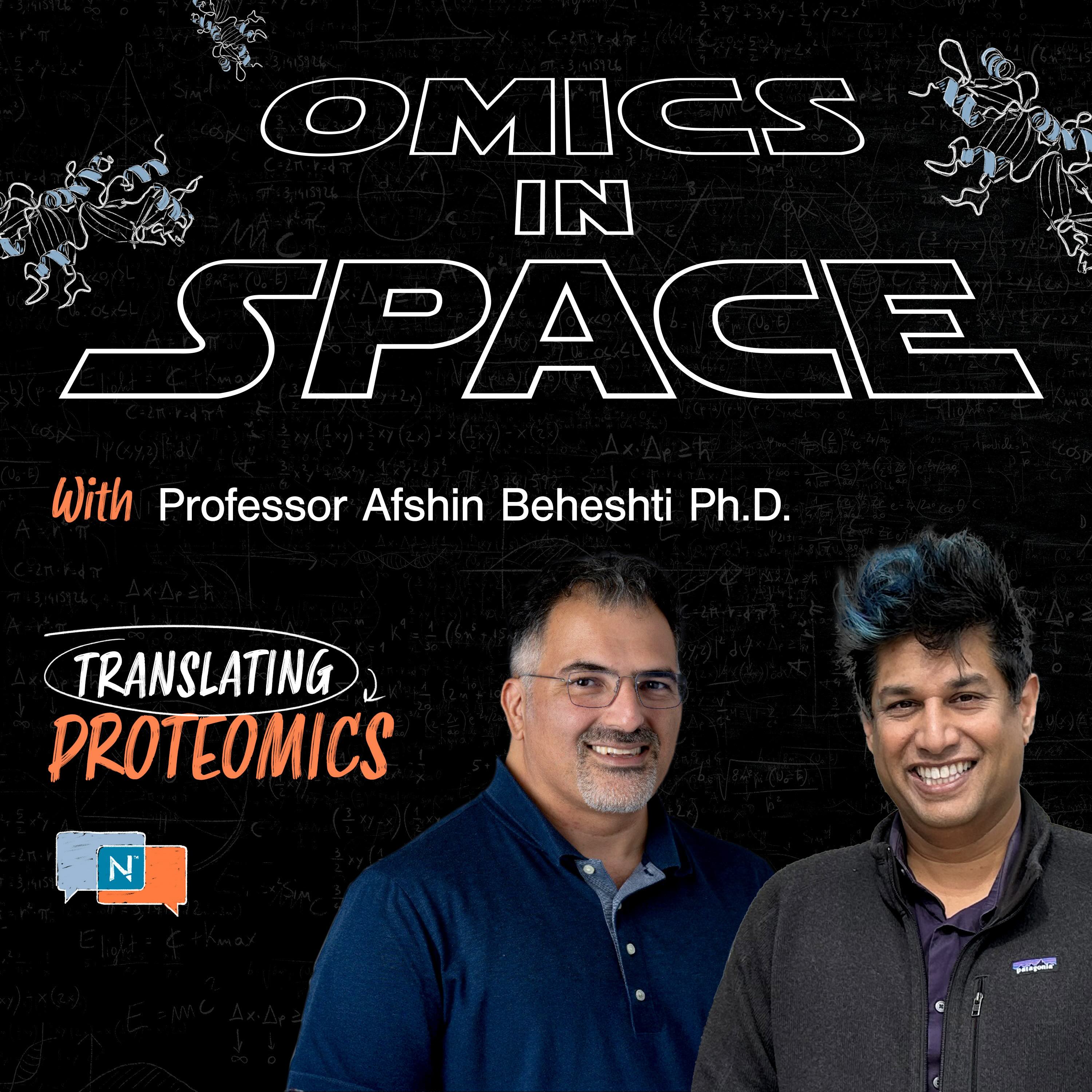
Host Parag Mallick chats with Professor Afshin Beheshti who is a Professor of Surgery, Director of the Center for Space Biomedicine, and Associate Director of the McGowan Institute for Regenerative Medicine at the University of Pittsburgh. In addition, Professor Beheshti has a visiting researcher appointment at the Broad Institute of MIT and Harvard and is president of two non-profits – the COVID-19 International Research Team and Kwaai. The latter aims to democratize access to artificial intelligence through the design, construction, and maintenance of a free personal AI called Kwaai.
Professor Beheshti’s research covers a range of topics focused on how circulating mirco RNAs and mitochondria impact health, but this conversation focuses primarily on Professor Beheshti’s work advancing our understanding of how spaceflight impacts biology. We cover:
Trivedi Institute for Space and Global Biomedicine
NASA Open Science Data Repository
Camera et al., 2024. Agining and putative frailty biomarkers are altered by spaceflight
Overbey et al., 2024. The Space Omics and Medical Atlas (SOMA) and international astronaut biobank
Corti et al., 2024. To boldly go where no microRNAs have gone before: spaceflight impact on risk for small-for-gestational-age infants
Beheshti et al., 2013. Age and space irradiation modulate tumor progression: implications for carcinogenesis risk