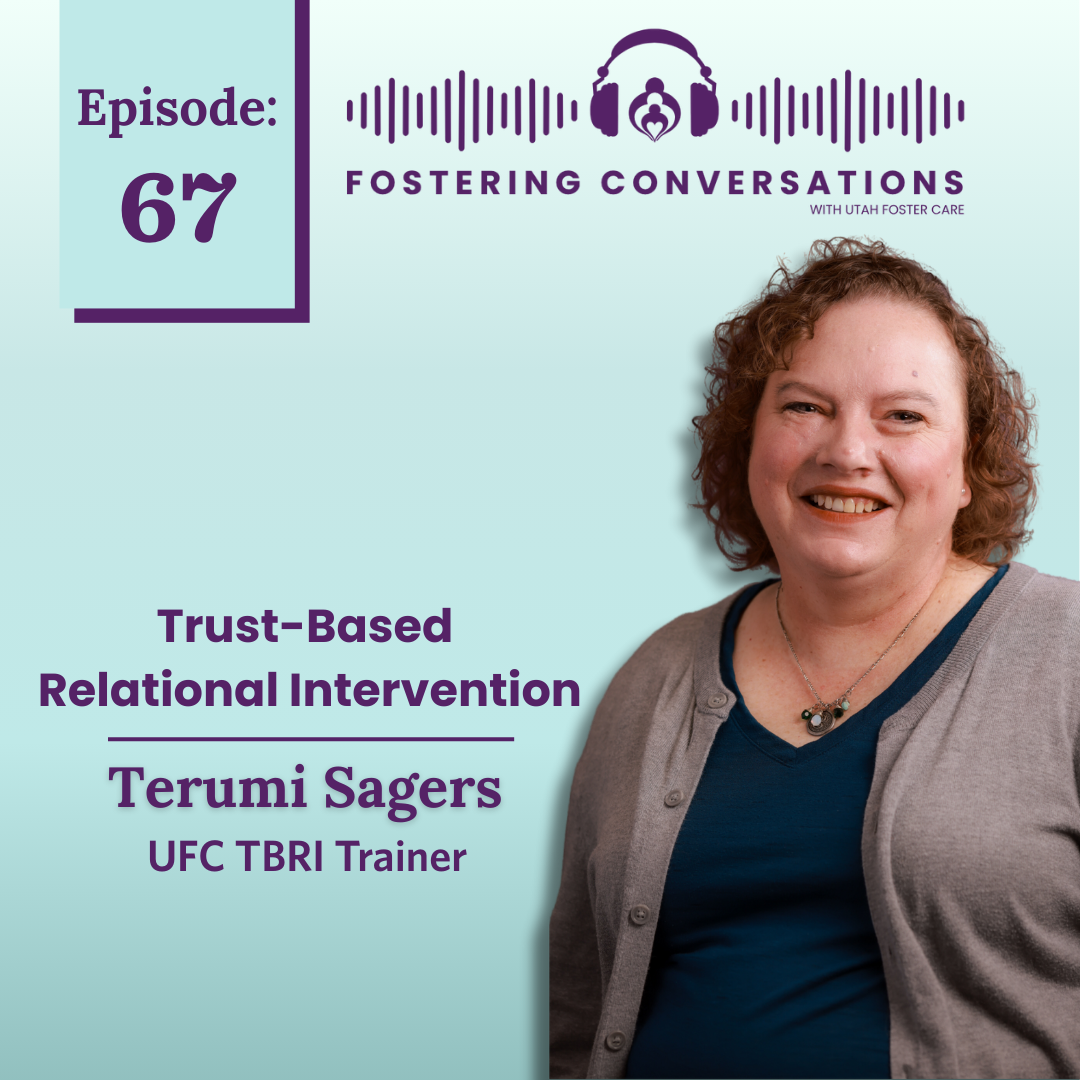
In this episode of Fostering Conversations, host Amy Smith sits down with Terumi Sagers, TBRI Specialist for Utah Foster Care, longtime foster parent, and adoptive parent. Together, they unpack the foundations of Trust‑Based Relational Intervention (TBRI)—a relationship‑centered, trauma‑informed caregiving approach developed by Dr. Karen Purvis and Dr. David Cross.
This conversation is filled with real‑life examples, practical tools, and compassionate insights for foster parents, kinship caregivers, educators, and anyone raising children—because, as Terumi explains, TBRI works for all humans, not just those with trauma backgrounds.
Episode Summary
Terumi shares her extensive experience fostering, adopting, and training caregivers for over 15 years. She explains the three core TBRI principles—Connecting, Empowering, and Correcting—and why trust must be rebuilt from a “negative starting point” for many children who enter care.
You’ll hear:
- How simple, consistent connection builds safety
- Why correcting behavior isn’t effective until trust is established
- How sensory needs, movement, nutrition, and hydration affect behavior
- Practical examples caregivers can implement today
- Clear guidance on where families (foster or not) can access TBRI training
This episode is a comforting mix of vulnerability, practical strategy, and hope for caregivers navigating the complexities of trauma‑impacted parenting.
Guest
Terumi Sagers
TBRI Specialist, Utah Foster Care
20 years as a foster parent • Adoptive parent • Trainer and practitioner
Key Topics Covered
1. What Is TBRI?
- A trauma‑informed parenting philosophy centered on trust‑building and relational connection.
- Originally developed for children with trauma histories, but now shown to benefit all children and even adult relationships.
2. Why Trust Starts Below Zero
- Children in care often enter new homes with trauma, loss, and disrupted attachment.
- Caregivers must focus on connection to help kids reach “zero” before growth can begin.
3. The Three TBRI Principles
- Connecting: Relationship‑building through presence, attunement, and positive interactions.
- Empowering: Meeting physical and sensory needs (movement, hydration, blood sugar, calm environments).
- Correcting: Teaching life skills and addressing behavior after safety and connection are in place.
4. Real‑World Examples
- A withdrawn teen reconnecting through daily small affirmations.
- A family eliminating after‑school meltdowns simply by offering protein snacks and water right after pickup.
5. Training Opportunities
- Utah Foster Care’s 8‑class TBRI Caregiver Series (20 hours).
- Community resources including My Healing Home, Raise the Future, and online courses from TCU.
6. Becoming a TBRI Practitioner
- A rigorous process including 10 weeks of study, an intensive adult attachment interview, and a 5‑day immersive training.
Resources Mentioned
- Books: The Connected Child and The Connected Parent by Dr. Karen Purvis
- Training: UtahFosterCare.org → TBRI Caregiver Series
- Community Providers: My Healing Home • Raise the Future
- Online Learning: TCU’s TBRI 101 resources
...