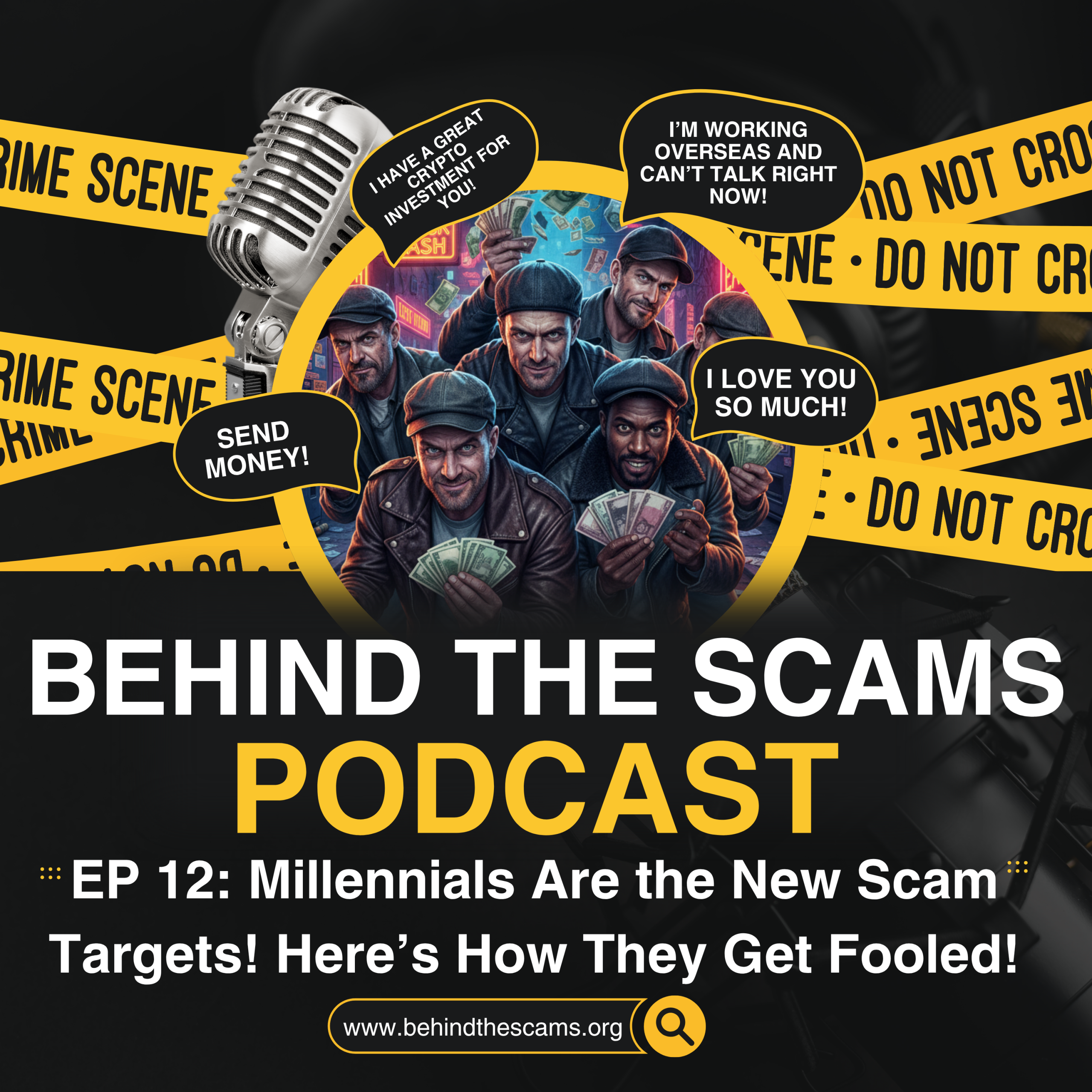
A Candid Mother-Daughter Conversation on Digital Fraud and Financial Traps
Younger Generations Are Now the Top Scam Targets
In this episode of Behind the Scams, host Susan and her daughter Sarah unpack a surprising truth: Millennials and Gen Z are now reporting more scam losses than any other age group. While older adults have long been seen as the most vulnerable, digital natives are being hit hard by online scams. From fake investment offers to Venmo payment fraud, today’s scams are faster, smarter, and specifically engineered for younger audiences.
Real Talk: Gen Z Faces Fraud on Every Platform
Sarah, a Gen Z volunteer with Stamp Out Scams, shares her personal story of nearly falling for a bank text scam. She explains how scammers mimic fraud alerts from legitimate institutions, pushing young people to act fast without verifying. These phishing scams, along with crypto fraud, fake jobs, and social media influencer cons, are flooding platforms like Instagram, TikTok, LinkedIn, and even dating apps—where trust is easily manipulated and money disappears instantly.
The Psychology Behind Why Gen Z and Millennials Get Scammed
Why are tech-savvy generations falling for digital scams? Sue and Sarah explore how constant screen time, social pressure, and mobile-first transactions make it easy to miss red flags. Millennials and Gen Z often face financial stress, making them more vulnerable to quick-cash schemes, fake remote jobs, and get-rich-quick crypto scams. Sarah explains that even friends who are “tech smart” get scammed because they assume they’d never fall for it.
A Fake Charity, a Parking Lot, and a Venmo Trap
Sarah also shares the story of her friend Jenna, who donated to a fake charity in a parking lot using Venmo. The scammer had a convincing sign with a QR code and a story designed to tug at the heart. This example shows how payment app scams and emotional manipulation are a powerful—and dangerous—combination, especially when targeting compassionate young adults.
Education, Communication, and Prevention are Key
Throughout the conversation, Sue and Sarah emphasize the importance of family communication, early education, and de-stigmatizing scam victimhood. They offer real scam prevention tips—like verifying before sending money, checking nonprofit legitimacy, and reporting fraud to the FTC. By having open, judgment-free discussions, families can help protect younger people from falling victim to online fraud, AI voice scams, fake employers, and other trending threats.
Scam Prevention Starts with Awaren...