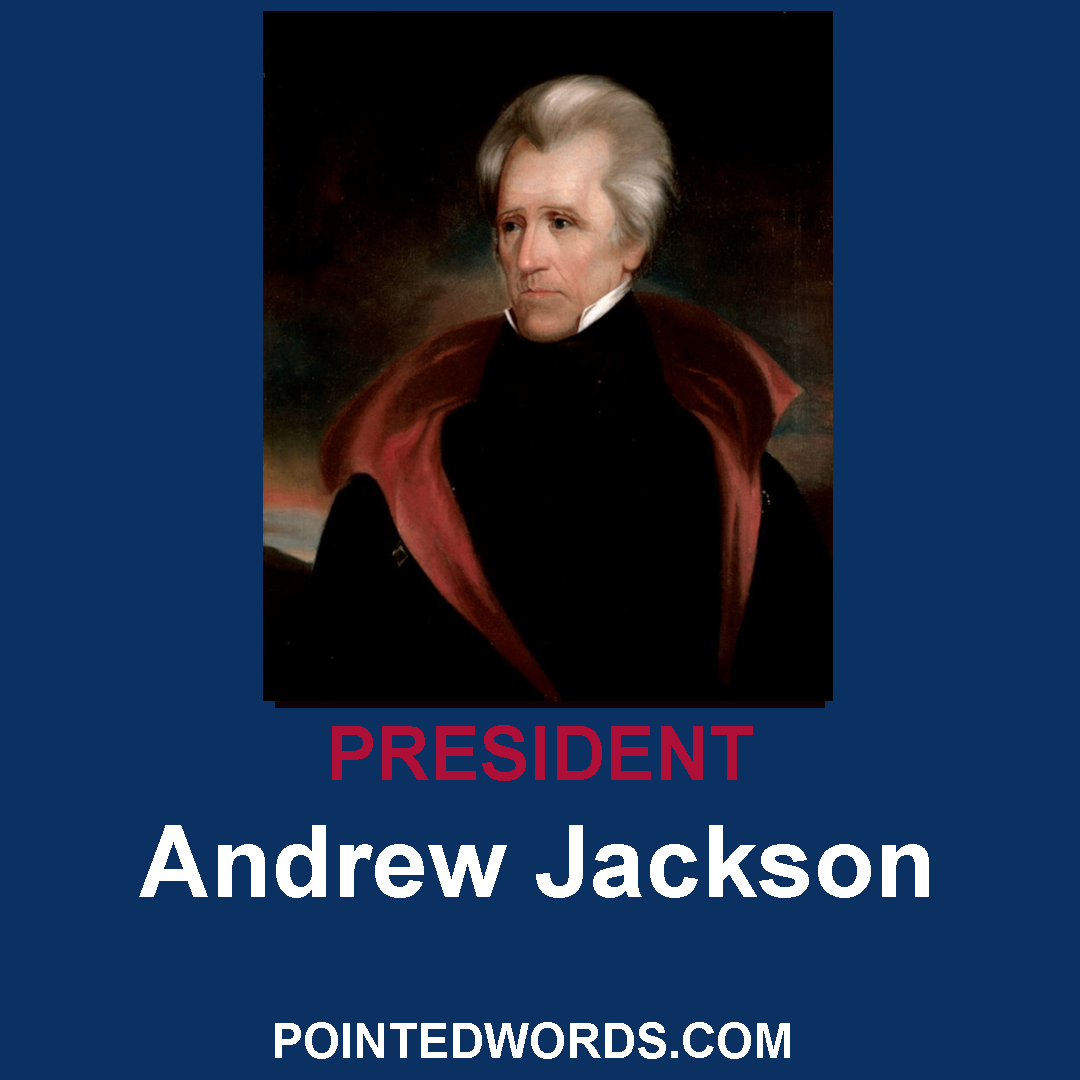
Andrew Jackson was the first "outsider" President. Unlike the first six presidents who were wealthy Virginia aristocrats or Massachusetts intellectuals, Jackson was a self-made man from the Tennessee frontier. Born into poverty and orphaned during the Revolutionary War, his election in 1828 marked the rise of the "Common Man" in American politics.
He is the father of the modern Democratic Party. His supporters organized the first national political conventions and grassroots campaigns, creating the machinery of modern partisan politics.
His presidency (1829–1837) fundamentally reshaped the executive branch. Jackson used the veto power more than all previous presidents combined, establishing the precedent that the President represents the people directly and is equal in power to Congress.
His legacy is forever stained by the Indian Removal Act of 1830, which he aggressively championed. This policy forced tens of thousands of Native Americans (including the Cherokee, Creek, and Choctaw) off their ancestral lands in the Southeast, leading to the Trail of Tears, where thousands died during the forced march to Oklahoma.
A fierce opponent of concentrated financial power, Jackson waged a personal "Bank War" against the Second Bank of the United States, eventually vetoing its recharter and withdrawing federal funds. While popular with his base, this move destabilized the economy and contributed to the Panic of 1837.
"He was a brawler, a general, and a populist who invited the public to trash the White House at his inauguration. Andrew Jackson didn't just govern the nation; he forced it into a new era."
Andrew Jackson: The People’s President (and the Establishment’s Nightmare)
Andrew Jackson was carrying bullets in his body before he ever entered the White House—literally. A veteran of the Revolutionary War (where he was slashed by a British officer for refusing to shine his boots) and a legendary duelist (who killed a man for insulting his wife), Jackson was "Old Hickory"—tough, unbending, and violent. He became a national hero after the Battle of New Orleans in 1815, where his ragtag army defeated the British Empire, restoring American pride.
When he won the Presidency in 1828, it was a revolution. The electorate had expanded as states dropped property requirements for voting, allowing working-class white men to vote in mass numbers for the first time. They chose Jackson. His inauguration was a chaotic scene where thousands of supporters stormed the White House to shake his hand, breaking china and standing on furniture until they were lured outside with tubs of punch.
As President, Jackson was relentless. When South Carolina threatened to "nullify" federal tariffs and secede, Jackson threatened to personally lead the army down there and hang the traitors (including his own former Vice President, John C. Calhoun). When the Supreme Court ruled that the Cherokee nation had a right to their land in Georgia, Jackson reportedly sneered, "John Marshall has made his decision; now let him enforce it," proceeding with the brutal forced removal that cleared the South for white settlement and cotton expansion.
He left office in 1837 more popular and more hated than when he arrived. He had paid off the national debt (the only time in history it has happened), killed the National Bank, and cemented the two-party system. He retired to The Hermitage in Nashville, still fighting his enemies in his letters until the day he died.
Constituency Context: The United States (1829–1837)
Population: ~13 Million.
The "Jacksonian Democracy": This era saw the shift from "republicanism" (where elites govern) to "democracy" (where the majority rules). It was defined by the Spoils System, where Jackson fired career bureaucrats and replaced them with loyal party supporters.
The Economy:
Cotton is King: The removal of tribes...