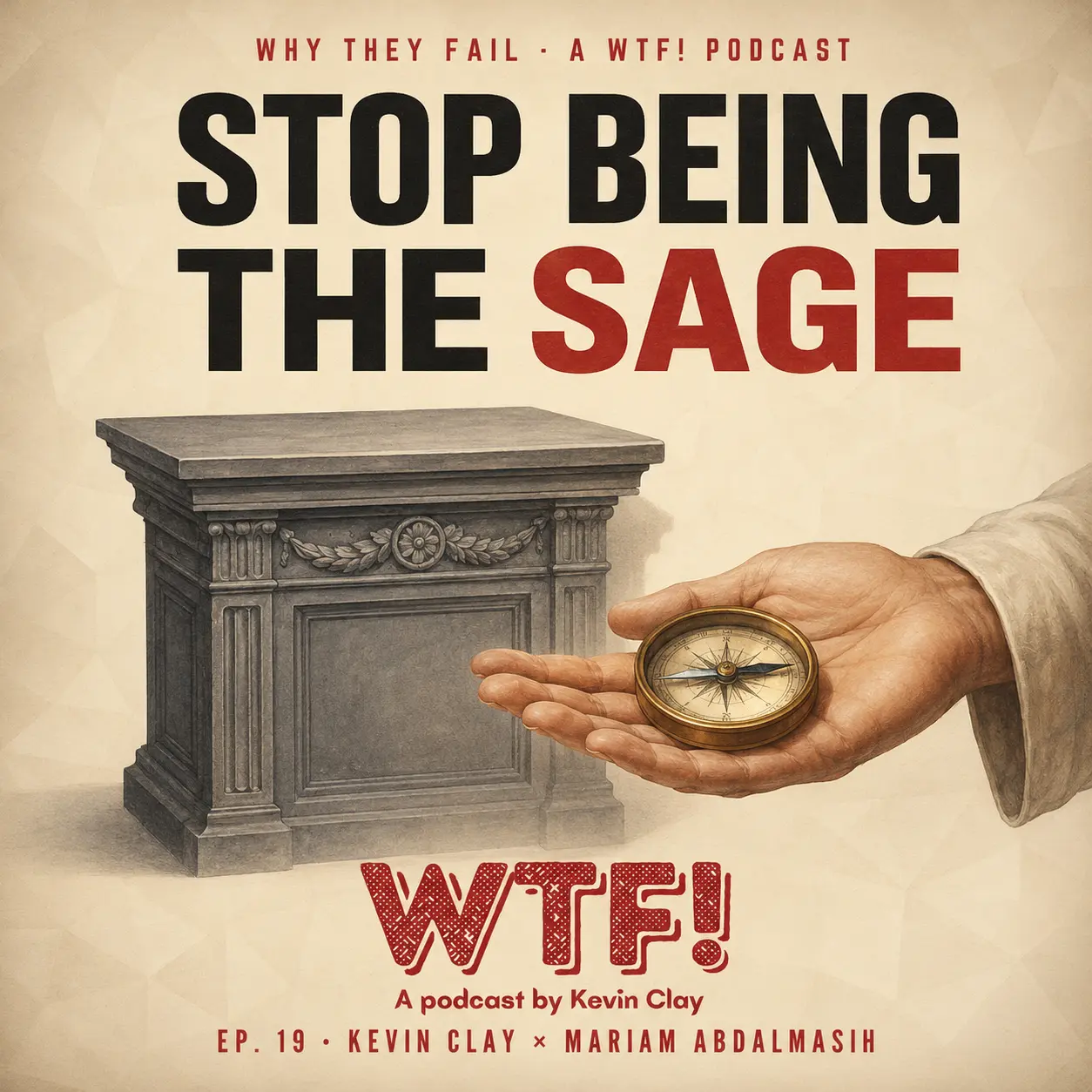
Most companies build their continuous improvement programs the wrong way. They train a single green belt or black belt and expect that one person to fix everything. However, studying Six Sigma principles in Amazon's operations reveals a completely different model. At Amazon, process engineers do not own the solutions. Instead, they build the capability for frontline teams to find the answers themselves.
In this episode of the Why They Fail Podcast, Kevin Clay sits down with Mariam Abdalmasih, Senior Process Improvement Engineer for London Fulfillment Operations at Amazon. Mariam brings nearly a decade of cross-functional experience across automotive, food manufacturing, and retail logistics. As a result, she offers a rare inside look at how a structured metric environment functions at genuinely massive scale.
Amazon treats process excellence as a foundational part of daily operations. It is not a standalone department. It is not a temporary initiative. Therefore, continuous improvement is built directly into the operational infrastructure from day one.
During the conversation, Mariam explains how corporate metrics cascade down to visual display screens on the fulfillment floor. Every individual operator can see exactly how their work connects to larger corporate performance indicators. Furthermore, Amazon relies on an independent system of Gemba walks to verify those numbers on the ground. This prevents data from being analyzed in silos. Instead, operations and process safety teams work together in real time to validate what the dashboards are actually showing.
A major theme of this episode is how Amazon develops its organizational culture around enabling rather than dictating. Mariam outlines how prioritizing leadership capability in hiring allows continuous improvement professionals to serve as true guides. Consequently, ownership of improvement stays exactly where it belongs: with the subject matter experts on the floor.
Additionally, the episode unpacks Amazon's "one-way door vs. two-way door" decision-making framework. This operational model actively encourages calculated risk-taking. It empowers frontline teams to make faster, independent improvements while keeping the customer experience completely protected.
Understanding Six Sigma principles in Amazon's operations means understanding that sustainability comes from infrastructure first, not individual practitioners.
Applying these principles is what separates a lasting continuous improvement culture from one that fades within 18 months.
First, process improvement practitioners must act as frontline enablers, guiding teams rather than dictating solutions. Second, metrics must cascade from corporate targets down to visual management systems on the floor so every operator understands their impact. Third, data trends and control chart signals must always be verified firsthand through structured Gemba walks. Fourth, evaluating actions as reversible two-way doors empowers teams to move fa...