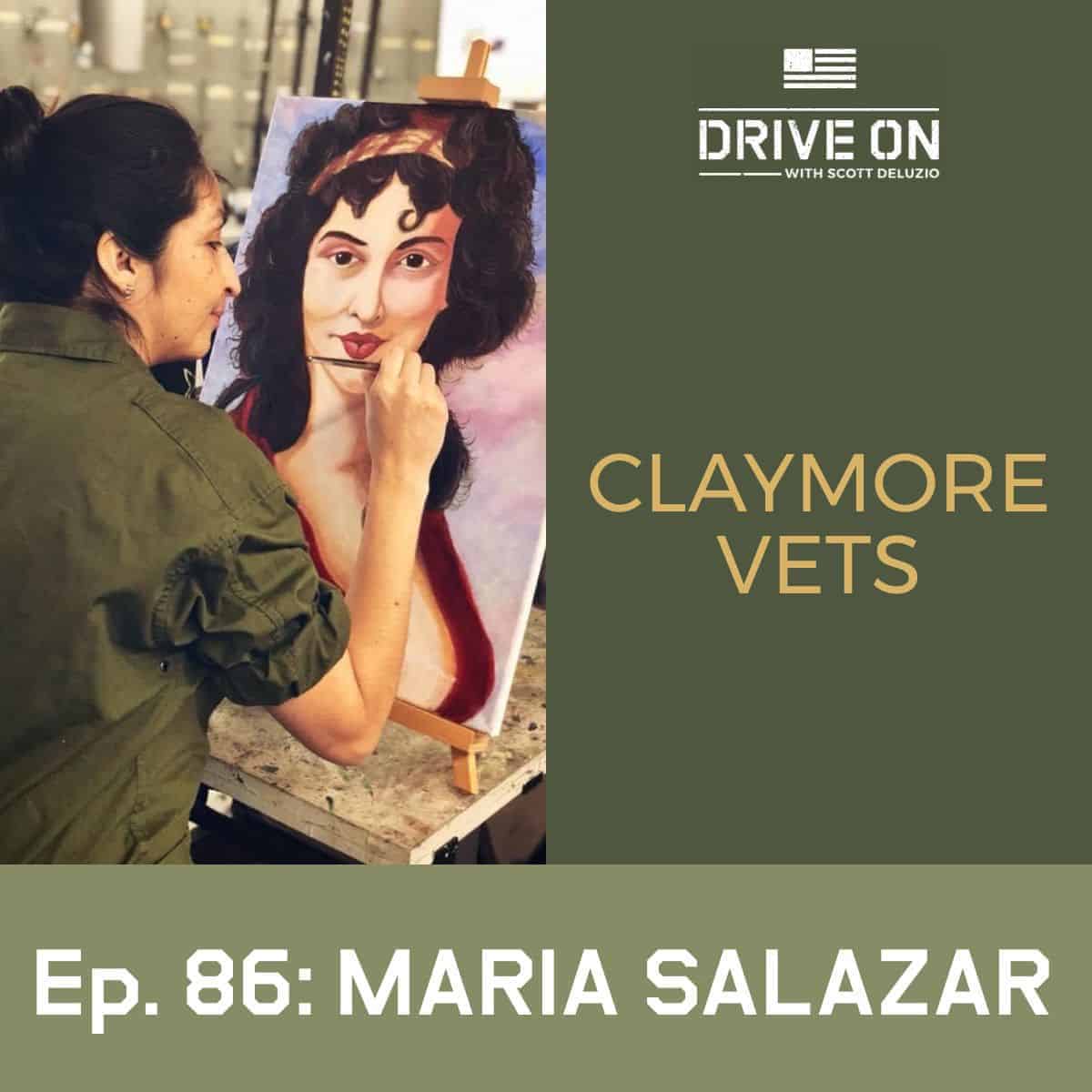
Scott DeLuzio: 00:00:03 Thanks for tuning in to the Drive On Podcast, where we talk about issues affecting Veterans after they get out of the military. Before we get started, I’d like to ask a favor if you haven’t done so already, please rate and review the show on Apple podcasts. If you’ve already done that, thank you. These ratings help the show get discovered so it can reach a wider audience. And while you’re there click the subscribe button so that you get notified of new episodes as soon as they come out. If you don’t use Apple podcasts, you can visit DriveOnPodcast.com/subscribe to find other ways of subscribing, including our email list. I’m your host, Scott DeLuzio. And now let’s get on with the show today. My guest is Maria Salazar. Maria is a nine-year Marine Corps Veteran who has found the benefits of art therapy and founded Claymore Vets, which is a nonprofit that provides Veterans with a way to explore their creative side. So, Maria, welcome to the show. Why don’t you give us a little bit of a background about yourself and tell us a little bit about your military service.
Maria Salazar: 00:01:08 Thanks so much for having me, Scott. I’m really excited to talk about this. I served in the Marine Corps for nine years. I deployed to Iraq in ’03 like I mentioned earlier, I’ve always found art as a mode of dealing with life. It was always my go-to and until I found Clay in 2016, it was one of my required courses for my art therapy degree and everything just clicked for me. The media changed the way I processed my own emotionality, and I see how it could be a medium for Veterans to work with because of the physicality, the demand is very sensory seeking. So yeah, that’s how Claymore Vets was born.
Scott DeLuzio: 00:02:01 I love the name by the way, incorporating the clay as the medium for the art and then the play on words with the Claymore and everything. That’s awesome. How did you discover that you had an artistic side? Before we started recording, I know you said that you’ve always been into art in one way or another. You were telling me that even when you were in Iraqi, you had carried a little sketchbook around with you and you would draw little things here and there. Where did that originally come about with you? Is that something that came about when you were a kid and your childhood or something like that, or how did that come about?
Maria Salazar: 00:02:40 It definitely started when I was in my childhood. When we grew up in Peru, I lived in the ‘90s where Peru was run with terrorist organizations. And my dad was the equivalent of the FBI here. And at that time, they would literally take out a hit list of people that they were wanting to take off from the government and stuff. And it was just really insane. So, my dad ended up coming here and seeking political asylum. So, when he left, immigration laws are so messed up, that it took us almost three and a half years for us to be able to come. So, my initial dive into art was trying to deal with that when my dad left. I think when he left, I was 10. Yeah, just about 10 years old. And so, I started drawing just because I couldn’t understand what was going on. I think early on I developed that as a coping mechanism for anything, for life, when I was really stressed or sad or anything, I would just dive into creating.
Scott DeLuzio: 00:04:09 And that’s interesting that at such a young age, you had the the ability to come up with that coping mechanism of drawing and you’re expressing yourself through the artistic side of you. That’s pretty interesting that you had that ability to do that at such a young age. What eventu...