Scott DeLuzio: [00:00:00] Thanks for tuning in to the Drive On Podcast where we are focused on giving hope and strength to the entire military community. Whether you’re a veteran, active duty, guard, reserve, or a family member, this podcast will share inspirational stories and resources that are useful to you. I’m your host, Scott DeLuzio, and now let’s get on with the show.
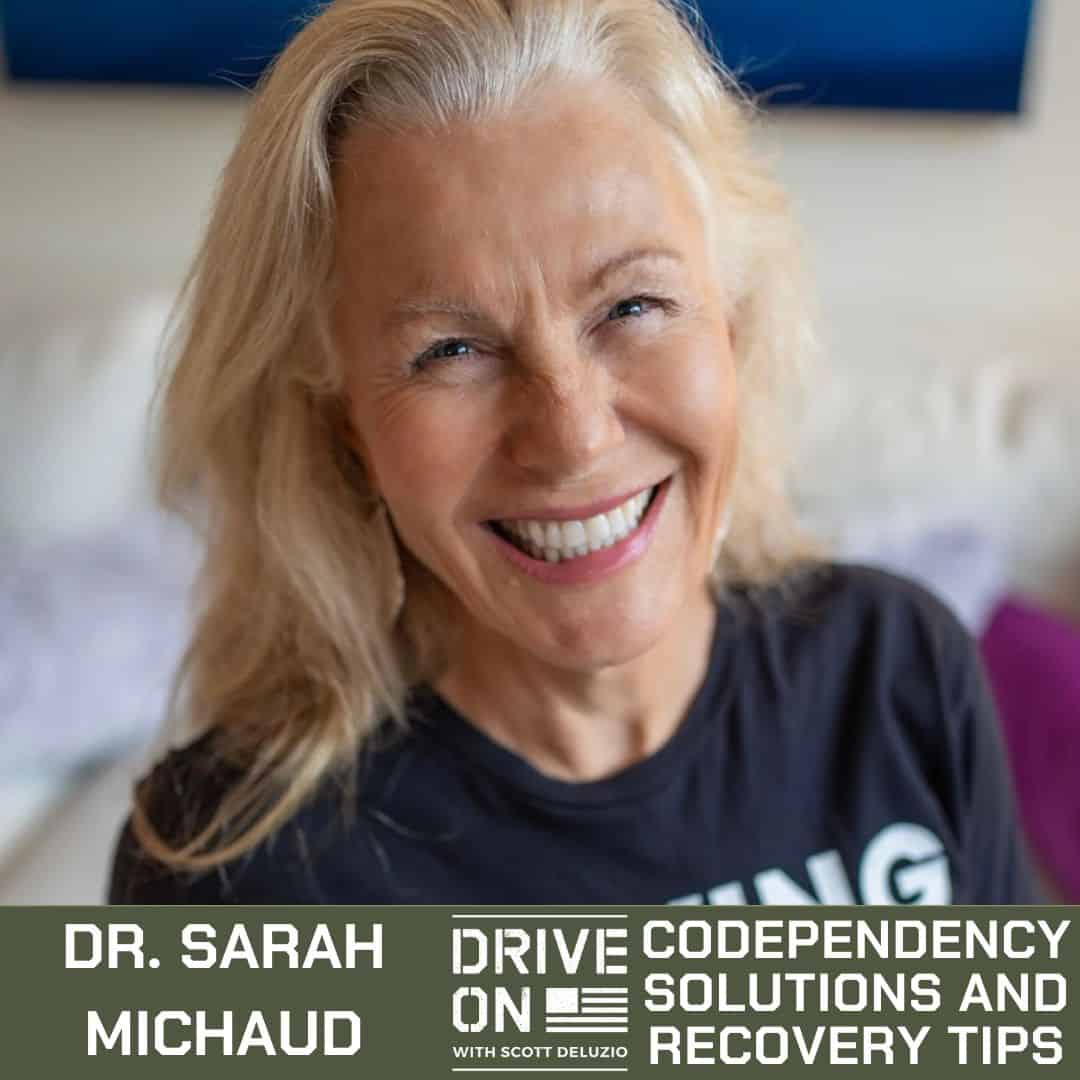
Hey, everyone. Welcome back to Drive On. I’m your host, Scott DeLuzio. And today, my guest is Dr. Sarah Michaud. Dr. Michaud is a seasoned psychologist with over 30 years of experience and a deep understanding of some of the issues that veterans face, such as addiction and codependency. And today we’ll discuss how those issues impact veterans and their families and what steps can be taken to develop healthier relationships and coping mechanisms with regards to these types of issues.
So before we do that, uh, Sarah, I’m [00:01:00] really glad to have you here. Uh, welcome to the show.
Dr. Sarah Michaud: Thanks so much. I’m really glad to be here, Scott. I thank you for inviting me. I have a special place in my heart for veterans. My dad was in World War II and I just, I don’t know, I just hope I can be helpful.
Scott DeLuzio: Well, I, I think so. You know, based on, uh, you know, some of the stuff I’ve, uh, you know, kind of looked up and, you know, kind of conversations that we’ve had, uh, kind of offline before we started recording here. Um, I, I think this is going to be a great conversation. I think it’s going to be especially helpful for those folks who might be struggling with addiction, codependency issues, that type of thing.
So, um, but I guess before we get into it, I think a lot of people are probably familiar with, uh, Addiction and like what that is. Like they kind of can conceptualize it. Codependency is, is one of those terms that I think maybe is, uh, maybe not as commonly used and, and as familiar to folks. Can you start with explaining what codependency is and how it manifests in folks?
Dr. Sarah Michaud: Absolutely. [00:02:00] I would be happy to. And the problem with codependency these days is it’s kind of become part of the lexicon. I mean, everybody’s throwing the term around. So, um, it’s kind of lost its meaning. I mean, it originally was developed really by Bill Wilson, who started Alcoholics Anonymous, his wife was kind of the first person who started talking about it.
Meaning, what is the personality of the traits of the person that’s the partner of someone with a substance abuse problem? That’s where it began. And then in the kind of 60s, 70s, and 80s, these books were written about codependency and it was initially A partner of a substance abuser. So basically the person was focused more on their partners, thoughts, feelings, and behaviors rather than their own.
And that caused a lot of problems, which we can discuss, because the problem with that paradigm is it doesn’t work. So these, you know, the classic kind [00:03:00] of housewife would spend all their time worrying and trying to fix their husband and get them sober. And meanwhile, the husband would just get resentful and the wife would go down the tube.
So it never really worked out. And then as the, as time has evolved, codependency has been more kind of brought into the general arena of relationships because. You know, people, first of all, it’s not only women, and secondly, it’s really where anyone can kind of focus way too much on someone else and trying to fix them or...