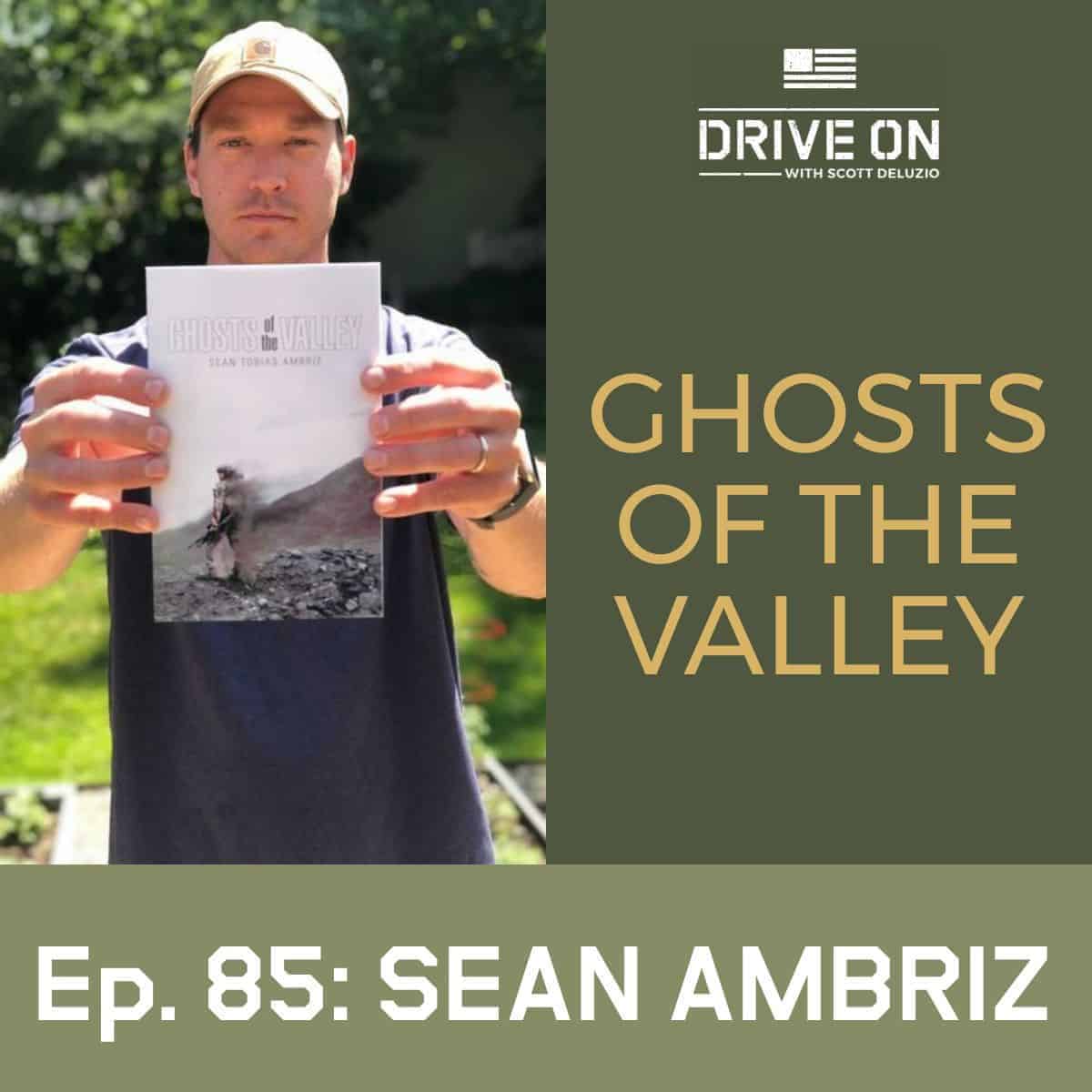
Scott DeLuzio: 00:00:03 Thanks for tuning in to the Drive On Podcast, where we talk about issues affecting Veterans after they get out of the military. Before we get started, I’d like to ask a favor if you haven’t done so already, please rate and review the show on Apple podcasts. If you’ve already done that, thank you. These ratings help the show get discovered so it can reach a wider audience. And while you’re there click the subscribe button so that you get notified of new episodes as soon as they come out; if you don’t use Apple podcasts, you can visit DriveOnPodcast.com/subscribe to find other ways of subscribing, including our email list. I’m your host, Scott DeLuzio. And now let’s get on with the show. Hi everybody, today my guest is Sean Ambriz. Sean is the author of the book, Ghost of the Valley in which he talks about his experiences during his time in Afghanistan. And one of the goals of the book is to help Veterans with PTSD who have experienced various traumas. And that’s pretty much the goal of this podcast too. So, I think Sean’s message and his book will be great for this audience. Sean, welcome to the show. Why don’t you tell us a little bit about yourself and your background?
Sean Ambriz: 00:01:13 Yeah, thank you. I’ve been in the military for 12 years now. I’m originally from Los Angeles, California. I’ve been stationed at Fort Carson, JBLM Hawaii, and now I’m currently serving at Fort Leonard wood where I teach MPE senior leaders’ course. I’ve been married to my wife, Amy for it’s about to be 10 years here soon. No kids, two dogs, live a pretty simple life, so nothing too crazy.
Scott DeLuzio: 00:01:42 Okay. Let’s jump right into your time in Afghanistan and what the book is about and what you’ve written about some of those experience.
Sean Ambriz: 00:01:56 Yeah. So, the book is essentially not a biography. It’s not supposed to be about me. It’s more of a memoir. It’s about certain events that happened in Afghanistan. And it’s essentially told from my eyes; the book is about leadership and mental resilience. It is very cutthroat raw of the combat scenarios in which we were in. Specifically evolves around two separate missions. So just to give you a layout, the book has 10 chapters, with pictures, it’s like 160 pages; it’s fairly short. It’s not like a leadership book. I’m not trying to teach you a new leadership philosophy you’ve never heard of before and reinvent the wheel. It’s literally just a story to bridge three different gaps, essentially.
Sean Ambriz: 00:02:56 I’ll talk about those in a second, but essentially it is nine readable chapters. The 10th chapter is resources for Veterans that provides phone numbers, websites, anything. So, if they pick up the book, they have those resources. Like I said, it surrounds itself around two major battles. The first big battle was Restrepo, have you heard of Restrepo at all, the documentaries? That’s all the area I was in. The movie, The Outpost that just came out recently on Netflix. So, that was the unit that I was in. And our battle was essentially a prelude less than 30 days to that battle just miles away. And essentially it was about a rescue mission that went South. Eight of us volunteered to go up to rescue a pin down to two squads that were pinned down by multiple snipers were cut off and surrounded, and then it was a successful rescue mission, but you know, Murphy’s Law kept it in play the whole night.
Sean Ambriz: 00:03:58 And that was when my Lieutenant Parton was killed in which the book is kind of dedicated to, because some of my personal proceeds...