Transcript
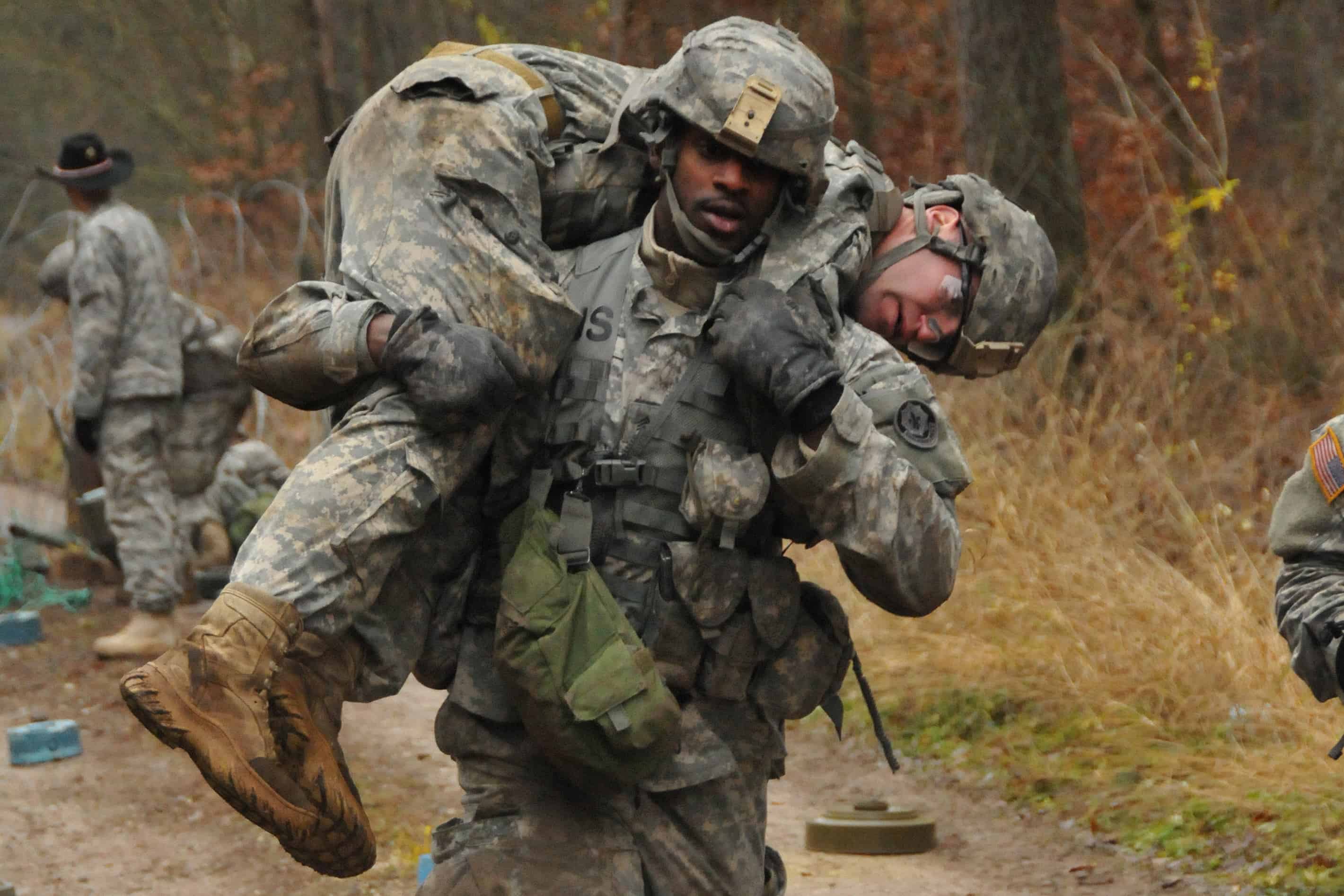
Think back to basic training when you learned combat lifesaving skills. Or maybe you learned this later on in your military career. I don’t know when everyone is first introduced to it, or even if all MOS’s are taught these skills. As an infantryman I know we had our first exposure to this medical training in basic training. We learned basic medical skills like how to use a tourniquet to stop bleeding, CPR, and other lifesaving skills that you might need on the battlefield.
When we deployed to Afghanistan each soldier was issued their own first aid kit with bandages, tourniquets, nasopharyngeal airway tubes, and other stuff like that. This essentially guaranteed that no soldier would have to wait for a medic to arrive in order for treatment to begin. Your buddy next to you could start treatment right away, because they had the same training you did.
We had the training and the equipment to treat some of the more common injuries a soldier would face on the battlefield. Anything from collapsed lungs, severed limbs, or severed arteries could be treated relatively quickly. I don’t have the statistics on this, but these basic medical steps I’m sure have saved numerous soldiers lives.
So we had the training and equipment to deal with these injuries. But from day 1 of this training, we are taught that security comes first. Think about it, if a soldier is shot out in the open, do you really want to run out and drag him back to safety? Well, of course you want to get your buddy out of harm’s way, but it’ll be a death sentence for you if you do without securing the area first.
You’re not going to be able to outrun the bullet that the sniper who just shot your buddy is going to be shooting in your direction.
So, security has to be a priority. Lay down some fire in the direction of the threat, call in air strikes, or if they’re close enough toss a grenade in their direction. Meanwhile, your friend is still laying there bleeding. It isn’t an easy thing to do. But you have to secure the area first. You have to do it quickly though, because your buddy doesn’t have all day to lay there with a gunshot wound, or whatever other injury they might have.
Gosh, this sounds cold doesn’t it? Just leave your buddy lying there while you worry about protecting yourself.
It’s not the only time we do things like this though.
Think about the last time you were on an airplane. Before takeoff, the flight attendant tells you that in the event of a drop in cabin pressure, oxygen masks will be deployed from the ceiling. They tell you to put your mask on first before helping others. Why?
When the cabin pressure drops suddenly, without a stable source of oxygen you’ll probably pass out pretty quickly. Let’s say you’re helping a child who is scared and starts to fight you putting on their mask. You struggle for a bit, and then boom, you pass out.
Now, not only don’t you have your oxygen mask on, the child doesn’t either. And forget about it if you’re traveling with more than one kid.
So they tell you to put your mask on first. That way you know you’re safe and can then help the child. Even if they do happen to pass out because their mask wasn’t put on quickly enough you’re still conscious enough to help them.
In other words, if you don’t help yourself first, you’ll become useless to the child.
In combat you’re not going to be much help to your injured buddy until all of the threats have been eliminated. So you help yourself first by eliminating that threat, but it also helps your buddy because you’re still around to help them once that threat is gone.
It doesn’t sound so cold anymore once you think about it this way.
We’re asked to help people all the time, aren’t we?
This is especially true around Christmas time – there are always people collecting money for one cause or another. The Salvation Army outside of grocery stores with their b...