Scott DeLuzio: [00:00:00] Thanks for tuning in to the Drive On Podcast, where we are focused on giving hope and strength to the entire military community. Whether you’re a veteran, active duty guard, reserve, or a family member, this podcast will share inspirational stories and resources that are useful to you. I’m your host, Scott DeLuzio, and now let’s get on with the show.
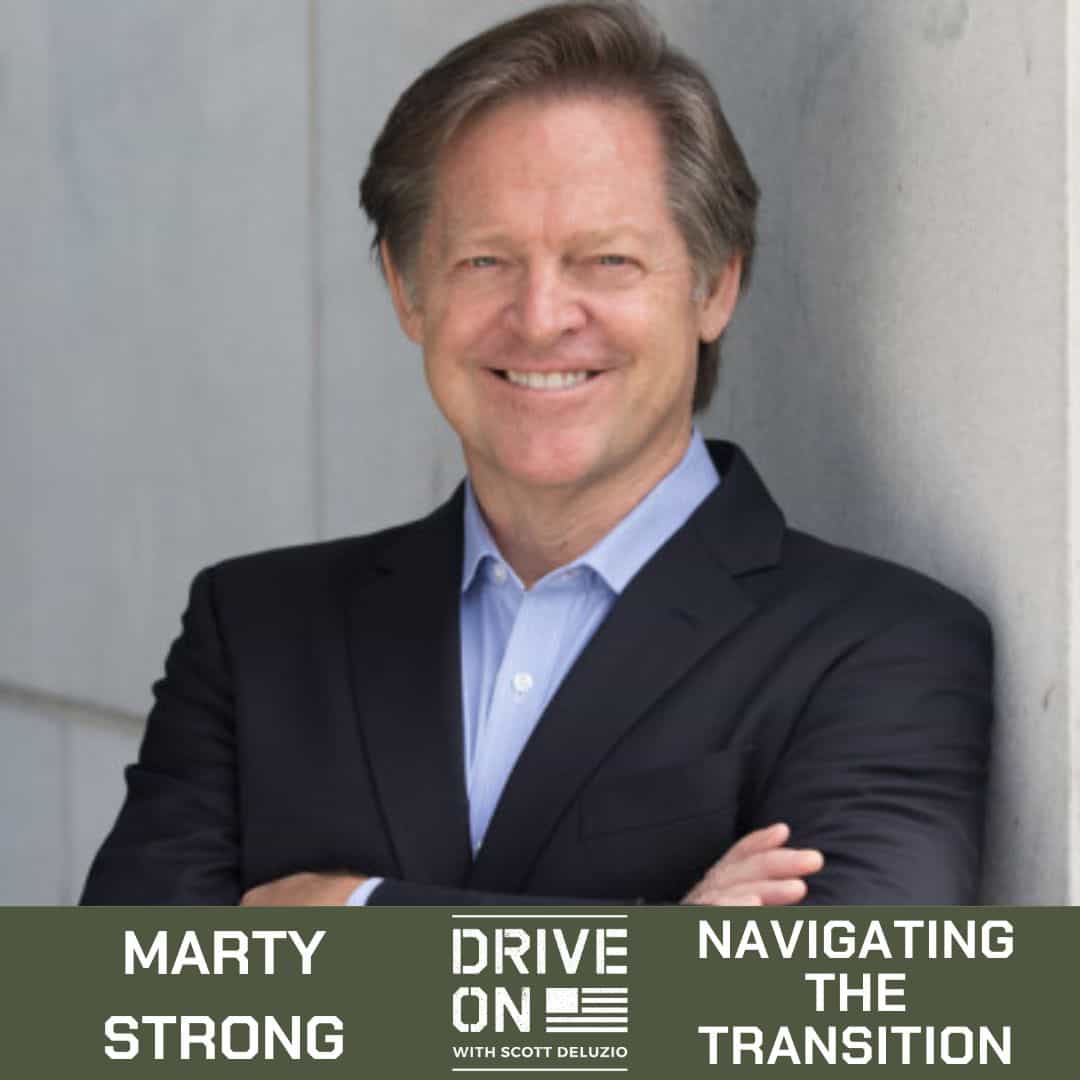
Hey everybody. Welcome back to Drive On. I’m your host Scott DeLuzio, and today my guest is Marty Strong. Marty is a retired Navy SEAL officer and combat veteran who successfully made the transi transition from military to civilian life. And he’s here today to talk about that trans transition and what it takes to succeed in life after the military.
So welcome to the show, Marty. I’m glad to have you here.
Marty Strong: Hi Scott. Thanks for having me. Hi.
Scott DeLuzio: Yeah, absolutely. Um, for the listeners who maybe aren’t familiar with you and your, your background, uh, could you tell us a little bit more about yourself?
Marty Strong: Sure. So I started in the, uh, [00:01:00] square states, um, specifically Nebraska.
And, uh, escape velocity for me was to join the Navy at the age of 17 to, uh, go out and see the world as they say, and. So at 17 I joined the Navy, became a, um, radar and air traffic controller by education. Went through a 17 week course. At the end of that, instead of getting orders to a ship, which I was expecting, I got orders to underwater demolition SEAL training in California.
So once I got there, they talked me into, uh, volunteering and uh, I ended up doing 20 years in the SEAL teams. After that, I managed money for United Bank of Switzerland and then got into, um, Government contracting is in a, is a business development executive. I’m an author and some other things. So that, that’s kind of it in a nutshell.
Scott DeLuzio: So it kinda interesting, and I, I wasn’t in the Navy, so I don’t know exactly how, how that works as far as getting into the, the SEAL teams. I know obviously you go through the, you know, buds and [00:02:00] you go through that type of training. Um, but, uh, from what I understand, and, and obviously based on what you’re saying, this, my understanding is not a hundred percent correct here, but, um, my understanding it’s, it’s, um, you know, Rather, um, you know, intensive process even just to get to Bud s But you’re saying that they kind of just sent you off to that, that training and you kind of fell into that, it seems like almost right?
Yeah,
Marty Strong: so it was a while ago and, and back in those days it wasn’t sophisticated. There were, when I showed up at SEAL Team too, there was 350 seals total, and that was about 3,500. Uh, we didn’t have any admin support people, so, and the Navy, you know, wasn’t concerned about the SEAL community. So it’s very easy, I think, in, uh, in hindsight to see that they could have made a mistake.
I took a test in bootcamp that I thought was a swim and kind of PT test, but I thought it was for a sports event. We were doing that that weekend and uh, they got my name and social security number and that I figured that out years later when I went [00:03:00] back as an instructor. And found my records. I kind of patched it all together, but yeah.
Um, it was a mistake.
Scott DeLuzio: It’s, it’s so interesting how all that, that wor...