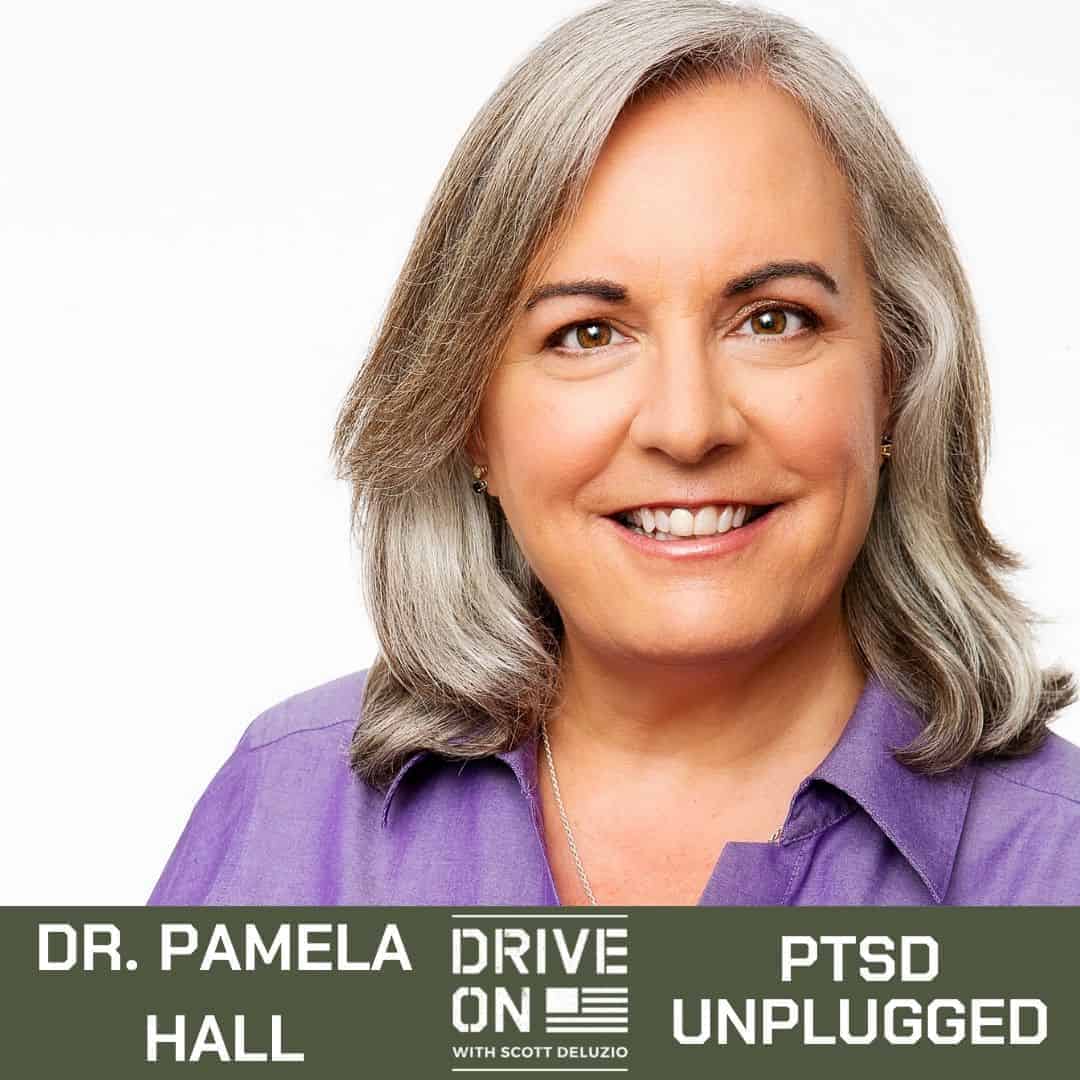
Scott DeLuzio 00:00:00 Thanks for tuning in to the Drive On Podcast, where we’re focused on giving hope and strength to the entire military community. Whether you’re a veteran, active duty, guard, reserve, or family member, this podcast will share inspirational stories and resources that are useful to you. I’m your host, Scott DeLuzio. Now let’s get on with the show. Hey everybody. Welcome back to the Drive On Podcast. Today my guest is Dr. Pamela Hall. Dr. Hall is a forensic and clinical psychologist and a subject matter expert in post-traumatic stress disorder. She’s on a mission to get the facts about PTSD into the hands of veterans and their families. And Dr. Hall has written a book, PTSD unplugged how to leave the war behind us, which is a guidebook for combat survivors and their loved ones. Welcome to the show Dr. Hall. Why don’t you tell us a little bit more about yourself and your background?
Pamela Hall 00:00:54 Well, thanks Scott for inviting me onto your program. Really appreciate it because that is the mission is to really get the real facts about PTSD into people’s hands. My background is that I have a couple of years on me and when I first got into my graduate training, it happened to be the year after this diagnosis made it into the diagnostic manual. Prior to that, I had watched my older cousins return from Vietnam in the seventies. I saw the struggle that our families had with how to be helpful and how to embrace their homecoming amidst the political turmoil, which always kind of comes along with war. When I saw this diagnosis describing that fall of my career at my graduate degree, I thought, well, that’s what we were looking at.
Pamela Hall 00:01:59 That’s what we were seeing. Fast forward 40 years and, PTSD has come in and out of my work for the first 20 years quite regularly until I worked at the VA for a doctoral internship in the mid-nineties. That was the first time I really dug in and started hearing from people about their Vietnam experience in particular. It just struck me how vivid the memories of war were, despite that we were already 20 plus years since they had been deployed. I knew nothing about words like deployment or anything like that. At that point in time, I knew about beer and alcohol, but I didn’t know that there was so much about the military experience and the veteran experience that I had yet to learn. That was a pivotal year for me to recognize the long-term effects of PTSD, at least the long-term effects without any effective treatment.
Pamela Hall 00:03:26 From there, I went into private practice and, like they say, the long story short is that I worked with people one at a time, trying to be helpful. It’s talking about how they were managing symptoms. Yet still seeing that this memory of trauma would come into the room. Once the memory of what had occurred was in the room, there was nothing else that we could talk about except for what happened. This was before or while I guess research was being conducted about how to be helpful with those things. It was really my clients who taught me what was helpful. By and large, what was helpful was a smart piecing of a discussion of what happened, pacing, meaning he can’t bite the whole, he can’t chew the whole thing at one time, you have to take bites and work through each bite of what happens or what comes up in memory.
Pamela Hall 00:04:37 From there another 15, 20 years went by, I was happy to see that what I was learning from my clients was what was coming up in research. I kept working in this a...