Scott DeLuzio: [00:00:00] Thanks for tuning in to the Drive On Podcast where we are focused on giving hope and strength to the entire military community. Whether you’re a veteran, active duty, guard, reserve, or a family member, this podcast will share inspirational stories and resources that are useful to you. I’m your host, Scott DeLuzio, and now let’s get on with the show.
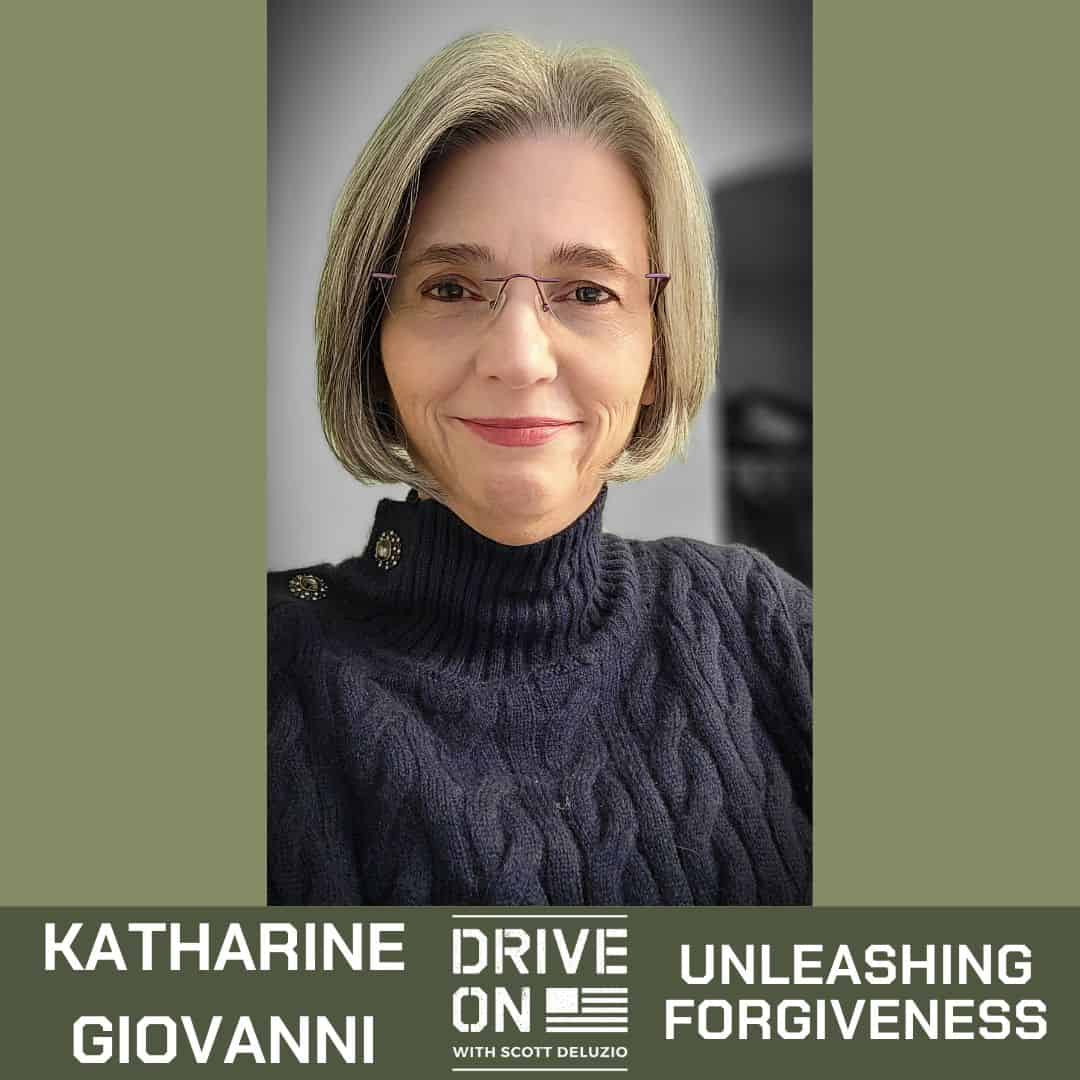
Hey, everybody. Welcome back to Drive On. I’m your host, Scott DeLuzio. And today my guest is Katharine Giovanni. Katharine has not only overcome significant challenges in her life, but has also dedicated herself to helping others unlock the transformative power of forgiveness. Her journey has been marked by adversity, including her own battle with breast cancer and a tumultuous childhood, as well as her husband’s status as a disabled veteran.
Uh, despite these obstacles, uh, Katharine has discovered the impact of forgiveness on her mental and physical wellbeing, [00:01:00] and she’s passionate about sharing her insights with others through her latest book, The Ultimate Path to Forgiveness, Unlocking Your Power. Uh, so in our conversation today, she’s going to enlighten us on the important importance of forgiveness, how to navigate the journey of forgiveness and why it’s essential for living a fulfilling life.
But before we get into that, I want to welcome you to the show. Uh, Katharine, I’m really glad to have you here.
Katharine Giovanni: Thank you so much for having me. I appreciate it.
Scott DeLuzio: Yeah, you bet. Um, well, let’s, let’s jump right into it. Um, talk, tell us a little bit about your personal journey, uh, and how forgiveness played a role in your life, uh, particularly in overcoming some of the challenges that you faced, uh, you know, in your younger years.
Katharine Giovanni: My forgiveness journey probably started in the 8th grade. Um, it was 1974 and I was in the 8th grade. My parents were getting an [00:02:00] ugly divorce. They were both raging alcoholics. And I was getting really bullied in school. And I tried to commit suicide. So, I spent my teenage years and early 20s as your typical angry teenager, draped in black, mad at the world, one friend, you know, it was, it was that kind of a gig.
We, we all know kids like that. Yeah, that was me. And I kind of blazed my way into my 20s and My mother got sober three years before she died. Because even my mother couldn’t get a gin and tonic in a hospital because she broke her hip. Although she tried, but she couldn’t. And we shipped her to rehab and she got sober for the first time in her life.
And we connected, we spent three really good years together. We were as close as sisters, and then she died. But I did have the three years. And when she died, I thought, I can’t continue like [00:03:00] this. I have maybe one or two friends. I’m in a job that I don’t like. I don’t like myself. I mean, I just, I couldn’t, I had to do something.
So I, I kind of thought maybe I’ll forgive, start forgiving people because I, I kind of read an article. We didn’t have computers back then. It was actually an article in a newspaper. That’s how old I am. And I started to forgive people and everybody tells you, you have to forgive. Nobody teaches you how. So what do I do?
I said, I forgive you. And I kind of started me on the path. It wasn’t until about, sadly, about 15, 20 years later that I actually started to really connect the dots. And I, I got tired, I got sick and...