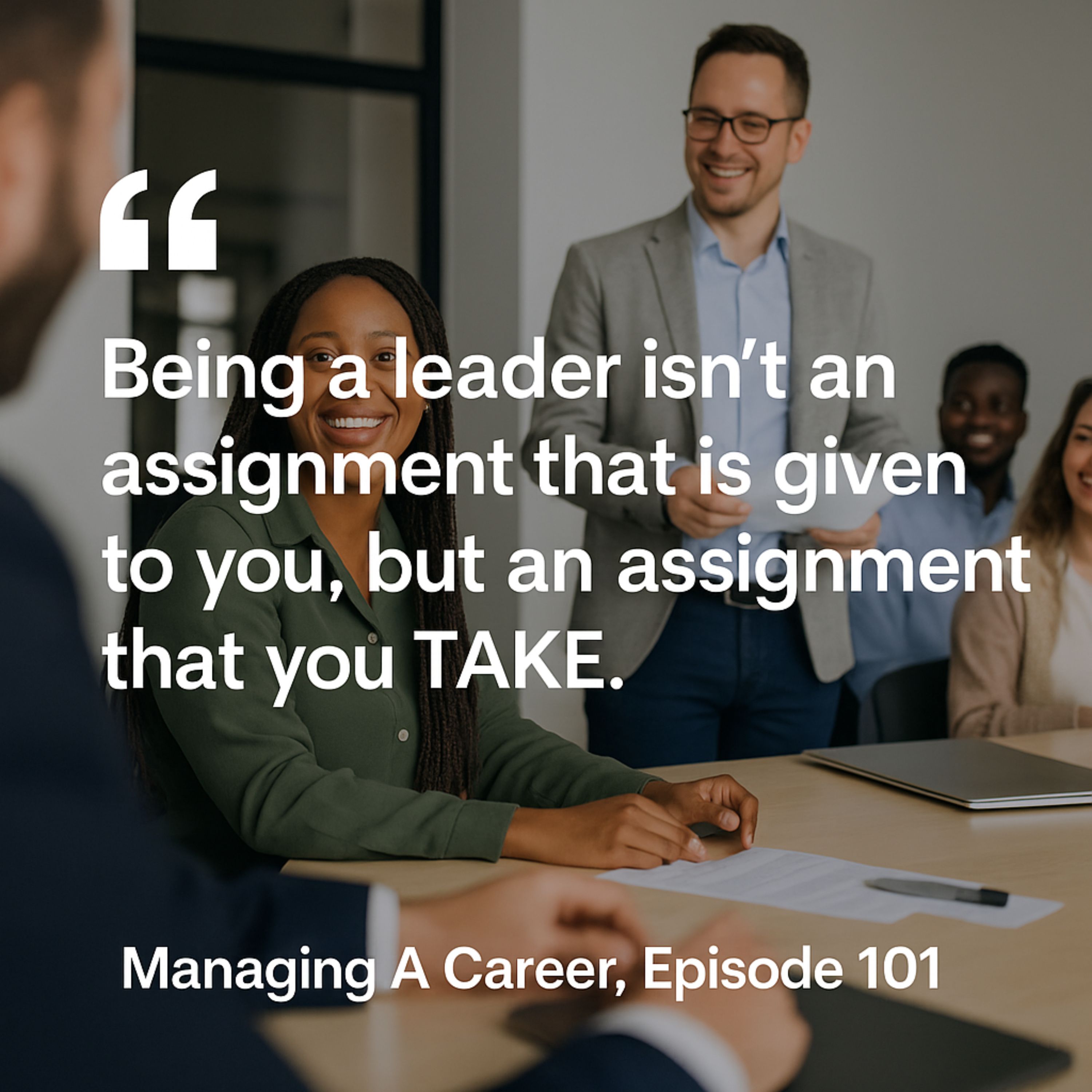
"Being a leader isn't an assignment that is given to you, but an assignment that you TAKE." Let that sink in. Leadership isn't about waiting for permission. It's about stepping up when others step back. In today's episode of the Managing A Career podcast, we're diving deep into what it really means to TAKE leadership.
Anyone can be a leader—because leadership is a quality you demonstrate, not a job title you hold. Sure, some roles come with authority baked in, but real leaders don't wait for the title. They lead because they choose to. If you have ambitions to advance in your career, this is the mindset that separates you from the crowd: you look for moments to lead, even when it's not "your job." You don't ask, "Whose responsibility is this?"—you ask, "How can I help move this forward?"
Whether your job description includes the role of "leader" or not, leadership is about finding the gaps—and filling them. True leaders don't wait to be assigned. They see what's missing, what's stalled, or what needs momentum, and they move it forward. Even when the work isn't flashy, fun, or high-profile, they still show up. Sometimes, that means buckling down and doing the work yourself. Other times, it means stepping up to rally the right people around the task.
Let's say your team's project needs approval from another department, but no one's reached out. A leader takes the initiative to start that conversation. Or maybe a recurring process is causing frustration across teams—someone who leads might pull together a quick working session to fix it. Even noticing that a new team member is struggling to get up to speed, and offering to show them the ropes, is leadership in action. It's not about glory—it's about ownership.
But what if you already have authority based on your position? In those cases, leadership isn't about taking control—it's about knowing when to step back and let your team take the lead. It's about creating the space for others to stretch, experiment, and grow—while being ready to step in and coach when they need support. This kind of quiet leadership builds trust, resilience, and long-term capability within your team.
Maybe one of your team members is presenting to senior leadership for the first time. A great leader doesn't take over—they prepare them, give them the floor, and offer backup only if it's needed. Or consider a scenario where a project is headed off-course. Instead of immediately jumping in to "fix it," a strong leader might guide their team through a post-mortem, letting them identify where things went wrong and how they'd course-correct next time. Even giving your high-performers the freedom to lead cross-functional initiatives without micromanagement sends a clear signal: I believe in you—and I'm here if you need me.
So, regardless of where you are in your career—what's stopping you from being a leader? Are you waiting for permission? Leaders don't wait. They lead because the work demands it. They step up, own the outcome, and do what it takes to drive it forward. Still hesitating? Ask yourself: what are you...