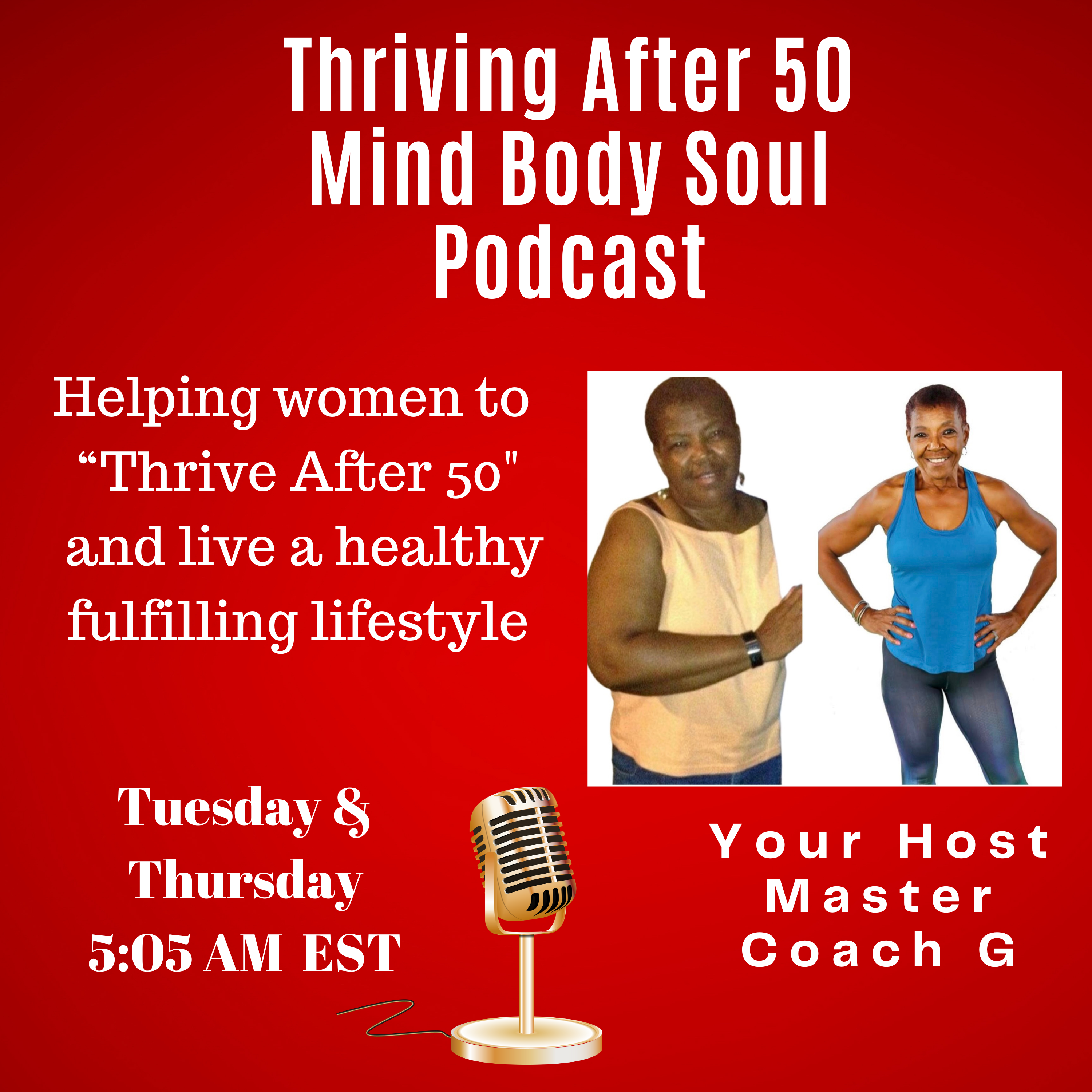
Hey, Master Coach G here, on Thriving After 50 "Mind Body Soul here, join on today's episode I'm talking about how our emotional health affect our physical health.... Why is emotional health important? Emotionally healthy people are typically in control of their thoughts, feelings, and actions and can cope with life's challenges and bounce back from life's setbacks. Being emotionally healthy doesn't mean that we're never sad or angry or frustrated. Having good emotional health is a key part of fostering resiliency, self-awareness, and an overall sense of well-being. Our emotional health also plays a role in how well we interact with others, including how we take in and respond to feedback and criticism, how we give guidance, and how we observe and interpret what others around us are doing and why. Having the skills to maintain good emotional health is key if we want to succeed and thrive in our lives. We're bound to face challenges in our personal lives, so our ability to have skills in place to manage both our positive and negative emotions is key. 1.Emotional health is one big contributor to overall mental health. 2. Processing information vs expressing emotion Emotional health and emotional well-being are about how well we manage our emotions and the impact our emotions have on us and the people around us. For example, if someone loses their job, they may feel angry, betrayed, or afraid. Someone with poor emotional health might give in to their emotions and react in a negative way. This could include lashing out at their boss or loved ones or becoming despondent and withdrawn. This kind of behavior creates a negative spiral that can lead to further difficult situations and painful emotions. Someone with good emotional health might experience all of the same feelings as above. However, they can recognize and acknowledge these feelings while keeping them in perspective to not get out of control and make the situation worse. Neither of these examples has to do with the person's understanding and processing of the facts and timeline: you are being let go, you have 2 weeks. In both of these examples, the individual has understood and processed the information but had two very different emotional reactions. Here are 8 signs that are you maybe struggling with emotional health Stress is a normal part of life, and unfortunately there's no making it go away. However, there's no denying that the better we feel, the better we tend to handle our stress and our emotions. If you're experiencing any of the following, it may be a sign that you're struggling with emotional problems: * You feel drained all the time or have energy than usual * You're either sleeping too much or too little * Your performance at work is beginning to suffer * Taking care of your hygiene and personal health feels like too much * You find that you're eating too much or too little * You're often anxious or irritated with loved ones * You have physical symptoms of stress, like high blood pressure or heart palpitations * Your confidence or self-esteem is affected Here are some characteristics of an emotionally healthy person 1. They're self-aware Someone who is self-aware can perceive themselves accurately and understands how their behavior comes across to others. "self-awareness is the ability to look at your own actions from a perspective outside of yourself." 2. They have emotional agility Emotional agility, similar to cognitive agility, refers to an individual's ability to deal with emotions and the discomfort that comes with it. Emotionally agile people take advantage of the skills of knowing how to draw insights from their feelings and use them to adapt, align, and perform at their best. Rather than ignore or repress their emotions, they accept them, "holding them loosely" and with an open mind. Someone with strong emotional agility shows resilience in the face of adversity and can handle setbacks in a way that doesn't drive them to engage in negative behaviors or coping mechanisms. 3. They have strong coping skills Emotionally healthy individuals tend to have strong and healthy coping skills that help them in testing and trying circumstances. Some of these healthy coping skills include... * Practicing meditation and relaxation techniques. * Spending time with friends. * Finding time for hobbies. * Go for a walk * Do something meaningful *They live with purpose *They manage their emotions levels Everyone will face emotionally moments but, healthy people tend to have successful strategies they can rely on to manage their emotions If you find yourself struggling with your emotions, take some time to identify what thoughts are causing you to feel the emotion Identifying the unwanted emotionmakes it easier to start implementing techniques to better manage these emotions strategies: How to achieve emotional health? 1. Cultivate a positive mindset While you may not always find yourself in positive circumstances, it is always possible to see the positive in every situation, and there are steps you can take to cultivate a positive mindset. The following daily habits can have a positive impact on how we view the world * Scan and notice three new things in the world were grateful for every day for 21 days in a row * Start and maintain an exercise regime * Meditate for a few minutes every day * Carry out random acts of kindness * Journal about a positive experience for two minutes every day Small positive habit changes can dramatically affect the way our brains process the world. Here's a fact that emotional health doesn't mean being happy and positive all the time. Our emotions dictate our baseline levels of happiness, so some elements are outside of our control. But by studying emotional health and implementing healthy habits, we can get to a point where we deal with our emotions in constructive, healthy ways. 2. Smile It's been proven that smiling does, in fact, make us happier and our facial expressions do, in fact, have a small impact on our feelings. 3. Seek or accept help and support from others Whether it's a qualified professional, seeking help from someone you can rely on for support can make all the difference when you're going through a difficult time. 4. Practice gratitude in your daily life Being grateful for your situation shifts your mindset from wanting more to being thankful for what you have. If you want to start cultivating a mindset of gratitude, start with small daily acts. Ways you can do this include: * Start a gratitude journal and add to it every day. * Spend quality time with those close to you * Commit to one day per week where you don't complain about anything What are some examples of emotional health? 1. Curiosity Being curious about your own mind is one way to start actively engaging with your own emotional health. This can be as simple as asking, 'why do I feel or react this way?' when you experience a negative emotion. By doing this, you may begin to uncover some of the reasons causing you to react in a certain way. 2. Sharing feelings appropriately Having someone to confide in can have massive benefits to your emotional health. A professional can help you sort through things. Sharing your feelings can help give you clarity on what you're experiencing, while also giving you someone you can lean on for support. 3. Noticing and facing emotions when they arise Identifying emotions when they arise can be a great way of diffusing that emotion and coming to terms with it. For example, next time you feel yourself getting angry, try and take a step back and actively think about how you want to respond in that situation. If you can get into the habit of noticing bothersome emotions as they come up, you can practice getting into the habit of actively choosing how you respond to certain emotions. If you can notice your emotions as they arise Final thoughts It can be scary to open up about your emotional health. However, the reality is that every single person deals with it. We all have good days and bad days, and we all benefits from making our emotional fitness a priority. Just like physical health conditions, emotional health is an important part of our overall health. That means that when your health is in jeopardy, you should take action — the same as you would for a medical condition. If you find your emotions are getting on top of you, try to ensure you're taking care of your core needs by getting enough sleep, keeping a healthy diet, and exercising regularly. Reach out to your friends, family, or others for social support. Practicing mindfulness and self-care will help you develop new skills and the ability to work through negative thought patterns. If you need further help, never hesitate to reach out to a professional who will be able to give you the right tools and strategies to improve your emotional health. Along with your social connections, a therapist or coach can be an invaluable part of your support network. Managing our emotions is part of being human. Learning to manage your thoughts, feelings, and emotions in the face of stress is a skill that pays dividends — both in your relationships with other and your relationship with yourself. That's what I have for you today, I hope this episode has added value to your life Thank you for joining me today here on Thriving After 50 "Mind Body Soul" If this podcast was a benefit to you subscribe, follow and share it with someone that it may help as well! I appreciate you!! Remember, knowledge applied is power This is Master Coach G and I'll see you on the Next Level!