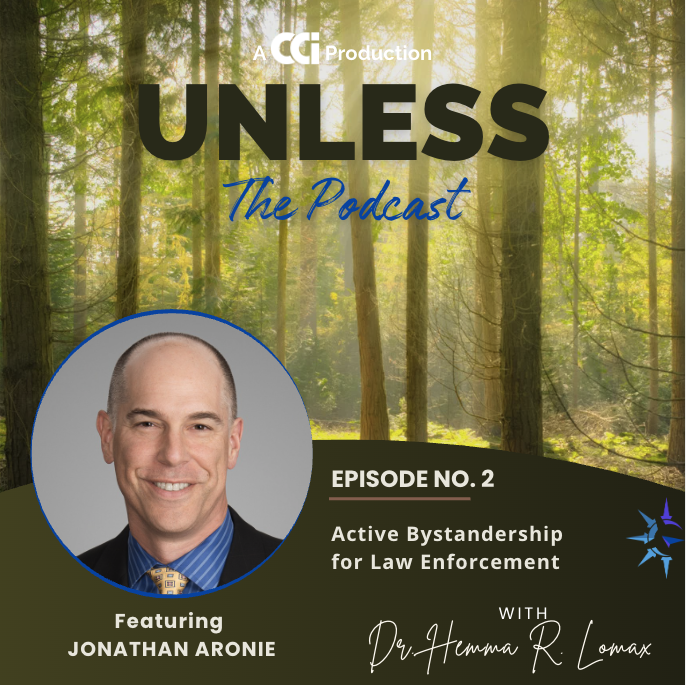
In this episode, Hemma visits with Jonathan Aronie, a partner and practice leader at the law firm Sheppard Mullin, and co-founder of the Active Bystander for Law Enforcement (ABLE) project with Georgetown University Law Center.
Tune in to hear about Jonathan's tireless efforts to reimagine organisational integrity at scale in the context of law enforcement - using research-backed peer intervention techniques which have applications well beyond law enforcement.
Highlights:
Resources:
Active Bystandership for Law Enforcement Project
Timestamps
1:10 - Introducing Jonathan Aronie
5:15 - What is a "pre-mortem", and why are they so important?
10:56 - Defining active bystandership
16:11 - How do we train people to be active bystanders?
21:54 - Jonathan's leukemia diagnosis
25:00 - The creation of ABLE
35:26 - Psychological inhibitors that lead to inaction
44:15 - ABLE's application in different communities
Jonathan's Biography
Jonathan Aronie is the Leader of Sheppard Mullin's Governmental Practice, and the founding member of the firm's Organizational Integrity Group, a cross-disciplinary team of litigators, regulatory specialists, federal monitors, and ex-prosecutors with extensive experience helping organizations prevent and defend against challenges to their organizational integrity. As an outgrowth of his internal investigation practice, Jonathan was appointed in 2013 by the U.S. District Court for the Eastern District of Louisiana as the Federal Monitor over the New Orleans Police Department. In that role, Jonathan leads a team of former police chiefs, internationally-known academics, and other professionals who collectively are responsible for reviewing, assessing, and reporting publicly on the NOPD's compliance with a far-reaching federal Consent Decree. As a corollary to his work in New Orleans, Jonathan co-founded the Georgetown/Sheppard Mullin Active Bystandership for Law Enforcement (ABLE) Project, for which he serves as the pro bono chairperson of the Project's Board of Advisors. Jonathan received his BA in1990 from Brandeis University and his JD in 1993 from Duke University School of Law.