If this episode resonated with you, follow The Jeremy Haselwood Show to stay informed on the latest fundraising strategies. Connect with Jeremy on Instagram @jeremy.haselwood and leave a review to help others find the show.
The 21-Day Digital Fundraising Startup Course
A three-week course designed to equip nonprofits with the tools and strategies needed to launch or refine digital fundraising campaigns quickly and effectively.
The Giving Tuesday Blueprint
A comprehensive guide for nonprofits to plan and execute successful Giving Tuesday campaigns, maximizing impact and donor engagement.
The Digital Fundraising Blueprint
Explore Jeremy's book for an in-depth look at digital fundraising strategies and actionable steps to grow your nonprofit's impact.
JeremyHaselwood.com
Visit for tools, templates, and resources to help your nonprofit prepare for disaster fundraising and more.
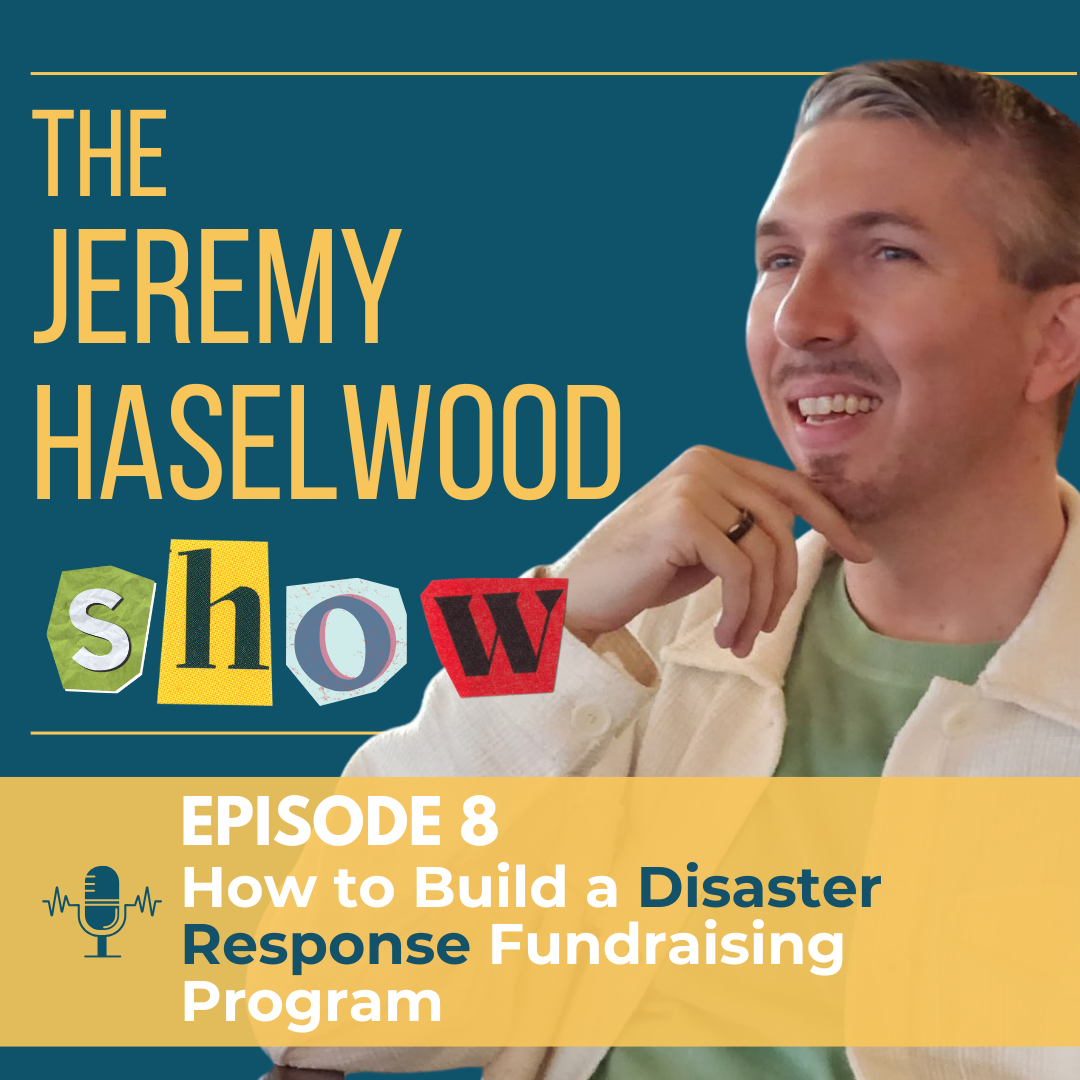
Disasters aren't a matter of if but when. In this episode, Jeremy provides a comprehensive guide for nonprofits to build a disaster response fundraising program. Drawing from his experiences growing up in tornado-prone Oklahoma and working with nonprofits during times of crisis, Jeremy shares a step-by-step framework to prepare, execute, and follow up on fundraising efforts during disasters. Learn how to create a proactive plan that ensures your organization is ready to serve your community when they need it most.
The Importance of Preparedness:
The Three Phases of Disaster Response:
Creative Assets to Prepare:
Engaging Donors Year-Round:
Maintaining Sensitivity: