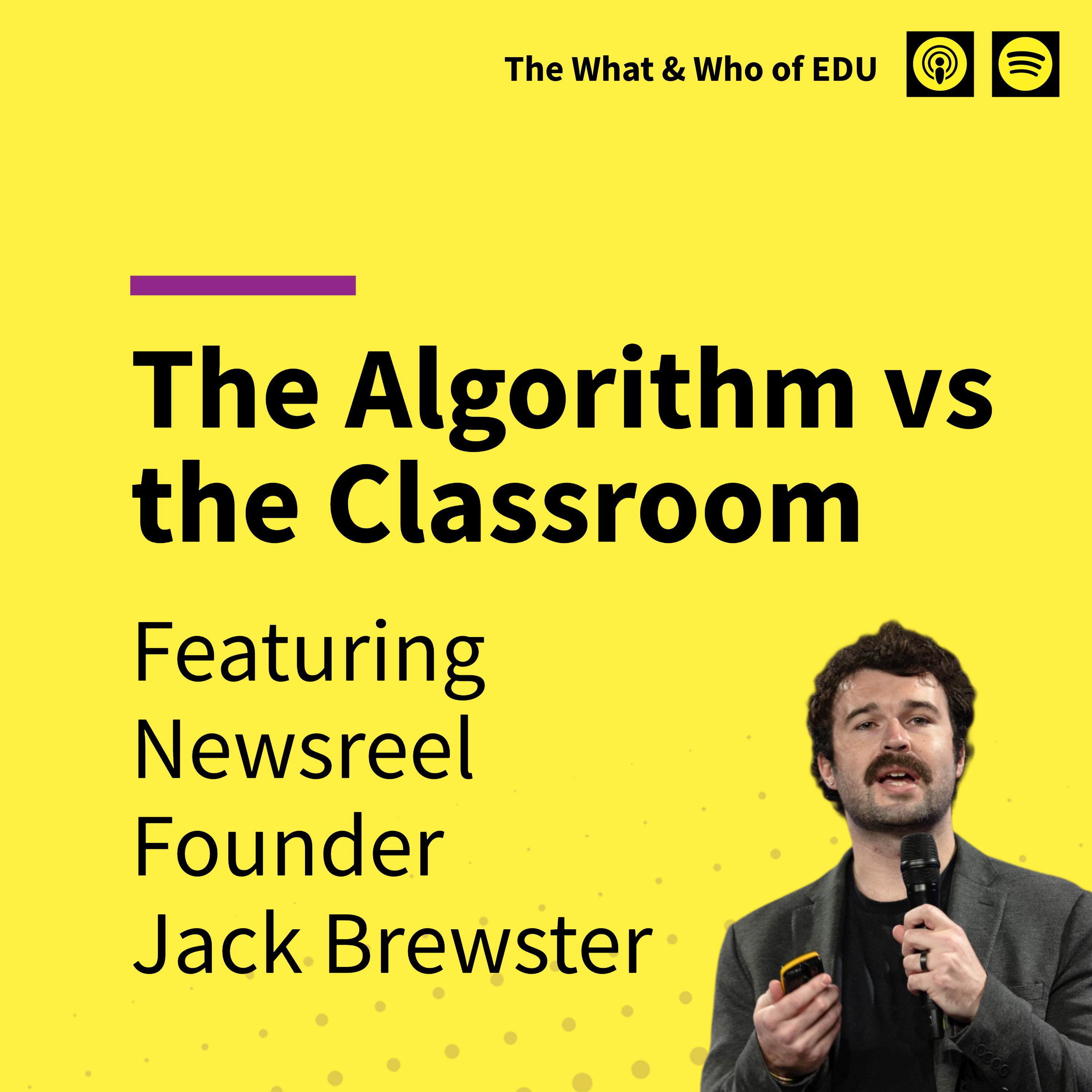
Students aren't waiting for class to start learning science. They're getting it from their feeds first. In this episode of The What & Who of EDU, we sit down with journalist and Newsreel founder Jack Brewster to discuss how algorithms, influencers AI-generated content, and viral misinformation are shaping what students think they know before they ever walk into the classroom.
From the rise of AI-driven feeds to the loss of nuance in science communication, this conversation explores why more access to information hasn't translated into better understanding, and what educators can do to help students question what they see without becoming skeptical of everything.
Brought to you by Macmillan Learning
Lesson Plan + Timestamps
[00:32] Meet Jack Brewster, Founder of Newsreel
[01:01] Where students are actually encountering science today
[02:07] Social media vs the classroom
[04:11] Why it's harder than ever to know what to trust
[05:26] How algorithms really work (and why that matters)
[08:36] Bots, "slop," and content farms
[10:15] Why nuance doesn't survive the feed
[13:26] Attention spans, distractions, and deep thinking
[15:06] Curiosity vs. skepticism
[18:09] It's bigger than science
[20:50] What makes a source trustworthy?
[25:20] What educators can do differently tomorrow
[28:23] AI in education and where the conversation is falling short
[29:40] What we learned today
Featured Guest
Jack Brewster is a journalist, researcher, and Fulbright Scholar focused on media literacy and the future of news. A former reporter at Forbes and NewsGuard, he covered misinformation, foreign propaganda, and the rise of AI-generated content. He is the founder of Newsreel, an interactive, gamified news platform designed to help young people build lasting habits of informed, critical engagement with current events.
Required Reading
Reimagining Science Education Summit
5 Questions Science Educators Should be asking about AI
Science is Changing Fast. What Does that Mean for How We Teach It?