Season 1 · Episode 10 Run time: 44:44 Minutes Host: Michael Dargie Featuring: Dr. Beth Barrett, DVM
Michael has been a cat person his whole life, and for most of it he assumed cats basically ran themselves. Food in the bowl, litter in the box, sunbeam for napping, everyone's happy.
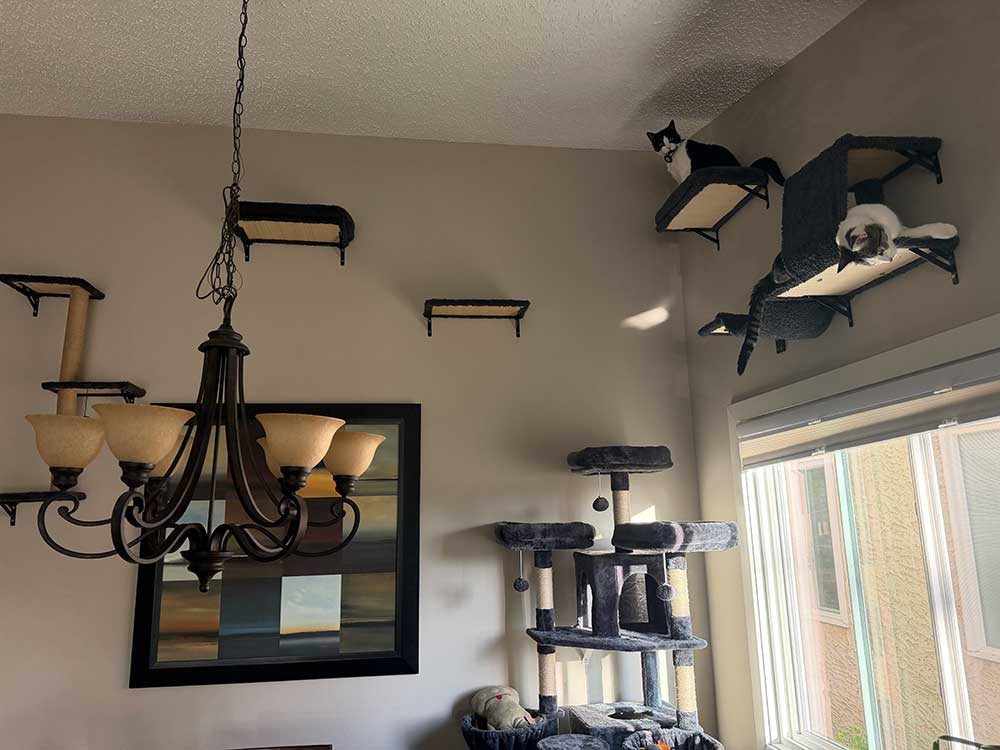
Turns out that under the sleepy little loaf is a tiny tiger — an animal hardwired to spend its day stalking, climbing, and pouncing. And when that brain has nothing to do, it finds its own entertainment.
In this episode, Dr. Beth Barrett makes the case that mental fitness isn't a luxury add-on to cat ownership. It's medicine. A high percentage of the cats she sees in the clinic come in for behavioural reasons, and most of those behaviours trace directly back to a hunting instinct with nowhere to go. Some of those cats never make it home — urinary marking is one of the leading behavioural reasons cats are surrendered to shelters.
The good news: the fix is rarely expensive, and often free.
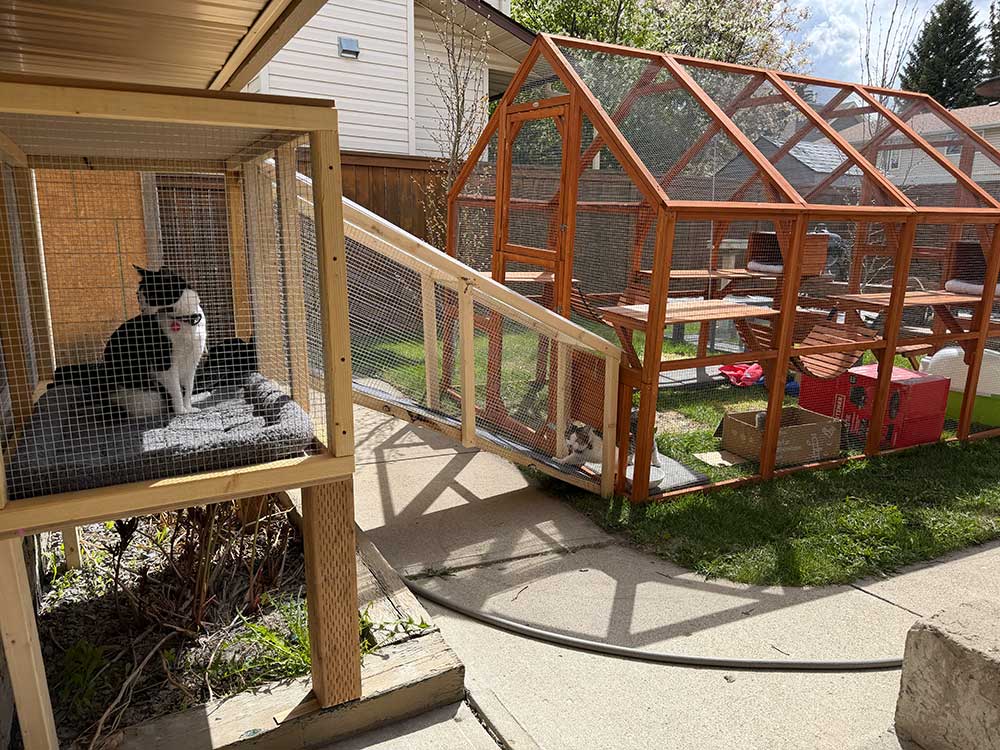 Dr. Beth and Michael cover why "just setting a bowl of food down" does cats a disservice, how to read the behaviours that boredom quietly causes, and how to build a cat's world upward instead of outward. They get into catios, harness walks, why you should never leave a cat tethered outside, the litter box formula (cats plus one, in different rooms), why water belongs away from food, and a study on feline arthritis that changed how Dr. Beth thinks about weight.
And along the way: Snack Hunter, a mouse in a recording studio, six birds down a chimney, and a cat named Steve who learned to operate a touch-activated kitchen tap.
| Time | Segment |
|---|---|
| 00:00 | Cold open & disclaimer |
| 00:34 | Welcome — the tiny tiger asleep on the keyboard |
| 02:36 | Section 1: Why a safe, fed, warm cat still needs a job |
| 02:49 | Having everything handed to you is not a recipe for happiness |
| 03:56 | The world's greatest hunter — and the bowl that takes the job away |
| 04:46 | "Snack Hunter": Michael's freeze-dried salmon scatter |
| 05:35 | Why so many feline vet visits are behavioural, not medical |
| 05:54 | What boredom actually looks like |
| 06:03 | Destructive scratching (and why scratching is hunting maintenance) |
| 06:47 | Overgrooming, bald bellies, and stress dermatitis |
| 07:50 | Urinary issues and marking — the biggest one |
| 08:28 | Play aggression: the pet that turns into a bite |
| 09:52 | Overeating, counter surfing, and the 3 a.m. yell |
| 10:47 | The hard part: cats surrendered and euthanized over litter box issues |
| 11:09 | Charlie, Mabel, and the puzzle feeder Charlie cracked first |
| 13:10 | A mouse in the recording studio |
| 14:21 | Why hunting play looks cruel — and isn't |
| 16:30 | Section 2: Build up, not out |
| 16:32 | Never punish a cat for being a cat (six birds, one open flue) |
| 17:41 | The vertical world: cat trees, wall steps, window shelves, bird TV |
| 20:21 | Small home? The walls are real estate |
| 20:58 | Vertical space in multi-cat homes: exits, height, and keeping the peace |
| 21:48 | Section 3: The outdoors, safely |
| 21:53 | Catios and the Alberta predator problem — coyotes, bobcats, raptors |
| 22:39 | The CE talk: outdoor access reduces behavioural problems |
| 23:02 | Harness walks, and the client who walks his Bengals |
| 23:58 | Michael's tunnel system (and the birdbath maze) |
| 26:08 | Never leave a cat tethered outside |
| 26:50 | Breakaway collars and AirTags |
| 27:04 | Feeding, litter, and water: the three big levers |
| 27:33 | Litter box math: cats plus one, different rooms, different litters |
| 28:31 | Food puzzles — the feeder, the ice cube tray, the empty pop bottle |
| 31:01 | The arthritis study, and why lean cats matter |
| 33:13 | Water away from food; running water; Steve and the touch tap |
| 36:11 | It doesn't have to be complicated |
| 37:22 | Myth or Muzzle? |
| 38:19 | Ask Dr. Beth — "My cat turns into a maniac at 3 a.m." |
| 39:46 | Rotate the environment; don't just keep adding to it |
| 40:39 | Michael's takeaways |
| 42:05 | Enriched cats sleep on your knees |
| 44:00 | Outro |
The claim: "Cats are independent loners. They entertain themselves and don't really need our involvement."
Verdict: MUZZLE IT.
Dr. Beth: cats can be independent, but they have complex social needs. Even a cat who has no interest in sitting on your lap still needs enrichment, engagement, and stimulation to live a good cat life. You don't turn a cat loose in your house and consider the job done.
The question: "My cat turns into a maniac at night — sprinting around, yelling, knocking things off the dresser at 3 a.m. We're exhausted. How do we make it stop?"
Dr. Beth's answer, in short: That behaviour isn't defiance. It's a request.
Michael's addition: Don't just add enrichment — move it. Cats get complacent. Shift the cat tree, relocate the wheel, change the route. Outdoors, a cat's environment changes constantly. Indoors, you have to do that for them.
DIY, free, and works:
Website: barrettvet.ca
Instagram: @barrettveterinarypractice
Email: drbarrettvet@gmail.com
Phone: 403.860.5763
Got a question for Dr. Beth? Send it in—it might be featured in a future Ask Dr. Beth segment.
This podcast is for educational and informational purposes only. Always consult your veterinarian for medical advice specific to your pet.
