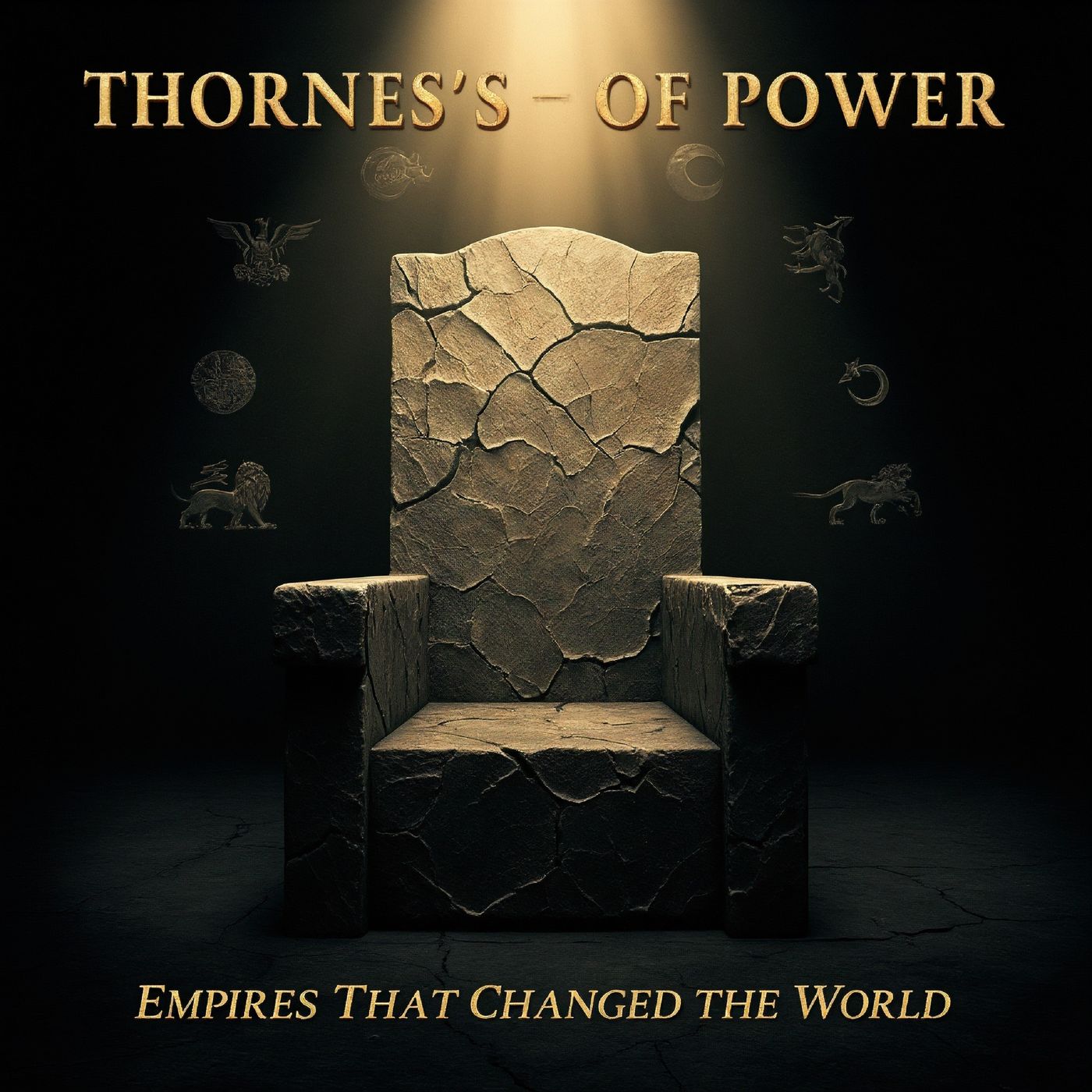
This episode examines the rise of the United States as a modern global empire built not through traditional colonial rule, but through economic influence, military reach, technological dominance, and cultural power. Born from an anti-imperial revolution in 1776, America initially rejected the idea of empire. Yet during the 19th century, it expanded across North America under Manifest Destiny, displacing Native American nations and establishing itself as a continental power. America's first overseas expansion came after the Spanish-American War of 1898, when it gained control of the Philippines, Puerto Rico, and Guam. The turning point toward global dominance occurred in the 20th century. After World War II, the United States emerged as the world's strongest nation, possessing unmatched industrial capacity, nuclear weapons, and a worldwide network of military bases. Rather than ruling through colonies, the United States built systems of influence. It shaped global institutions, made the U.S. dollar the world's leading currency, and dominated trade, finance, education, and technology. Through Hollywood, music, media, and the internet, American culture spread worldwide, creating powerful soft power alongside military strength. During the Cold War, America competed with the Soviet Union through proxy wars and global alliances. While it achieved major strategic successes, conflicts such as the Vietnam War revealed limits to its power. After the Soviet collapse in 1991, the U.S. became the sole superpower, but new challenges soon emerged. The wars in Afghanistan and Iraq, rising economic competition from China, renewed Russian influence, and rapid technological change have weakened America's uncontested dominance. Despite this, the United States remains deeply embedded in global life through finance, digital platforms, science, and security networks. The American Empire is defined by contradiction—promoting freedom while intervening abroad, rejecting imperial labels while exercising imperial power. It represents a new form of empire based on influence rather than direct control, and its future role in a changing multipolar world remains uncertain.