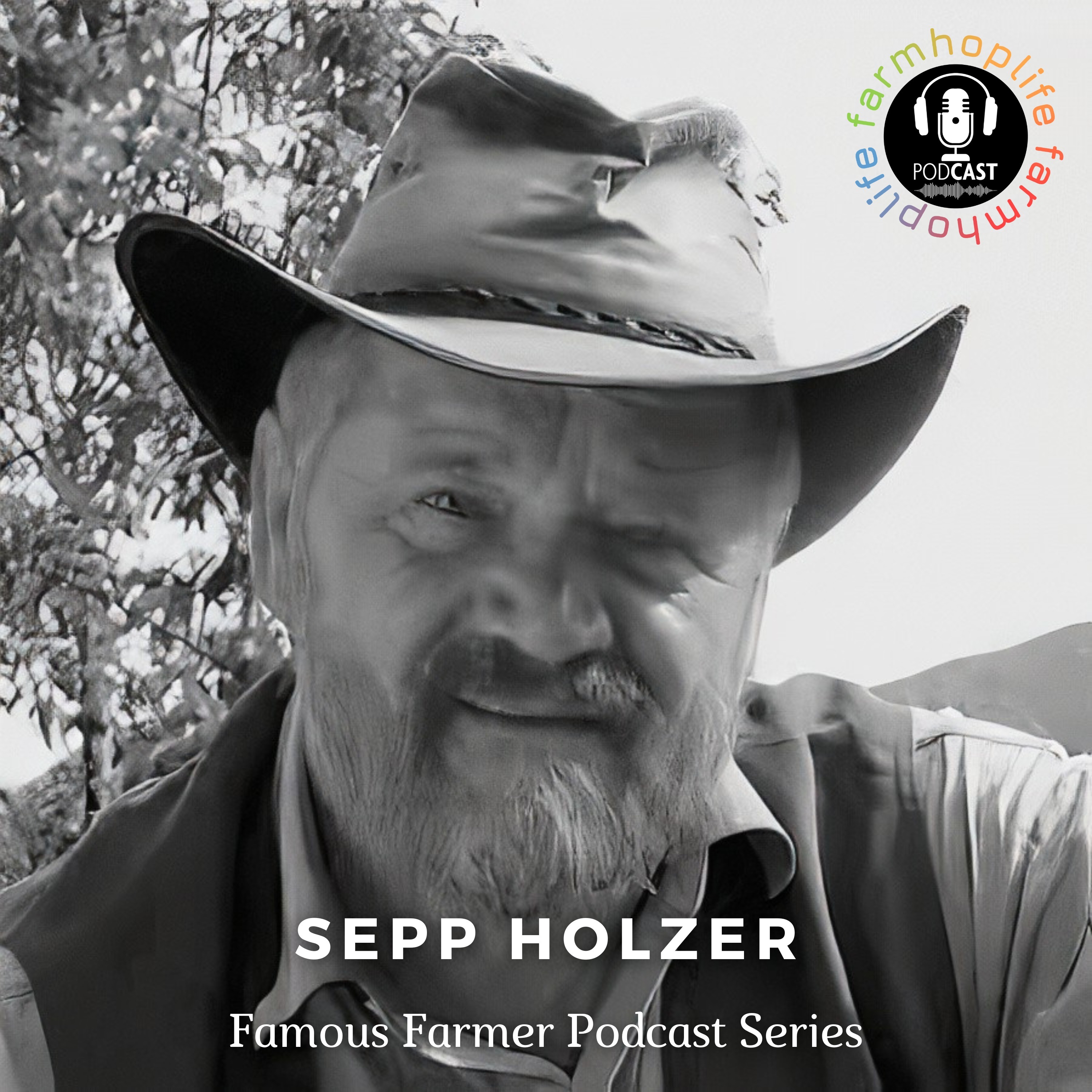
Josef "Sepp" Holzer, born July 24, 1942, in Ramingstein, State of Salzburg, Austria. sometimes referred to as "the Siberia of Austria"
growing up, Sepp had to walk two hours to school everyday. along the way, he would notice the plants, animals, and insects, and how they changed during the seasons. this attention to nature would stick with him throughout the rest of his life.
In Austria, it's customary to give the land to your son when he turns 19, as his father had been operating it with some health problems. So in 1962, Sepp took over the Krameterhof, the family farm, At 3,600 to 4,900 ft altitude.
initially, Sepp had followed his university's methods and would spray chemicals to ensure a good harvest. but this did not work well for Sepp. he quickly ditched conventional farming and focused on learning from nature to give the land what it needs.
the day after his father signed the farm over to him, Sepp had an excavator onsite to install fish ponds. people would say "you're mad! you can't install a fish pond on the side of a mountain" at first, his father was in agreement with the people. in time and as Sepp became successful, his father loved to show people the farm Sepp had built. his parents found it risky. "they're whole lives they didn't spend as much as I did in a couple of years" Sepp said
his neighbor had cleared the land of timber, then sold the property to Sepp, making the Krameterhof a total of 111 acres. it was required of Sepp to reforest the barren acreage by forest laws, so he terraced the land and planted fruit trees. this was not acceptable in the eyes of the forestry. so Sepp removed any tags indicating that they were cherry trees, implied they were berries and they okayed the reforestation efforts.
his neighbor comments about how Sepp isn't careful with the land. Let me explain. Sepp looks to see where the land can tolerate a "wound" using the excavator, but these wounds heal exceptionally fast. A large focus of these restoration efforts is putting water back into the ground.
Sepp has raised pigs, wild cattle, yaks, bison, and Scottish mountain cattle. when his neighbors start doing what he does, he stops doing it to prevent competition. if someone copies him, he changes what he's doing. this way, you keep things interesting and always learning, he says
he started planting his fruit trees at the bottom of his Austrian mountain-side property, and they thrived! so he kept terracing and planting higher and higher all the way to the edge of the property and everything is doing well. he believes it could work at even higher elevations. Sepp harvests apricots to eucalyptus, figs to kiwi fruit, peaches to wheat, just to name a few.
Sepp often refers to using raised beds in his terraces, but those raised beds are much different than you're probably thinking. he's using traditional Hugelkultur, burying timber and mounding soil on top at a steep pile, oriented 90 degrees perpendicular to the wind.
A method to his madness is Sepp's plant guilds, using beneficial root systems and earthworms for support. "If the plants are healthy, then the animals and humans are healthy too. and that is our foundation. whoever destroys it and treats it irresponsibly needs to be told to his face promptly, that's a crime and has no right to act that way, and he's too dumb to enjoy life"
Another technique for food production at high altitudes is his use of rocks. Sepp shows off a patch of pumpkins growing around a large rock. The rock absorbs heat throughout the day and radiates it out at night to help keep frost away. this acts as a thermal battery for plants and extend the growing season
The name Agro Rebel, or Rebel Farmer given to Sepp comes from a comment from a professor visiting the Krameterhof in the documentary titled "The Agro Rebel" from 2001. "People say about Holzer that he is stubborn headed. Which he can also be when necessary. but that this stubborn head demonstrates such a flexibility, well, basically, he is an agro rebel. you have to be when you take such an unusual path. He isn't eligible for any of the subsidy programs. He doesn't fit into any of the schemes of the bureaucrats in charge of farming. for this reason he's forced to rebel”
In 2009 Sepp Holzer left the Krameterhof in the hands of his son Josef Andreas Holzer. Since 2013 Sepp Holzer lives on his new farm - the Holzerhof farm - in the Burgenland, Austria. Sepp is currently 81 years old.
Long Live Sepp Holzer
Source 1, Source 2, Water Stories, Agro Rebel
Image Credit: au.permacultureprinciples.com