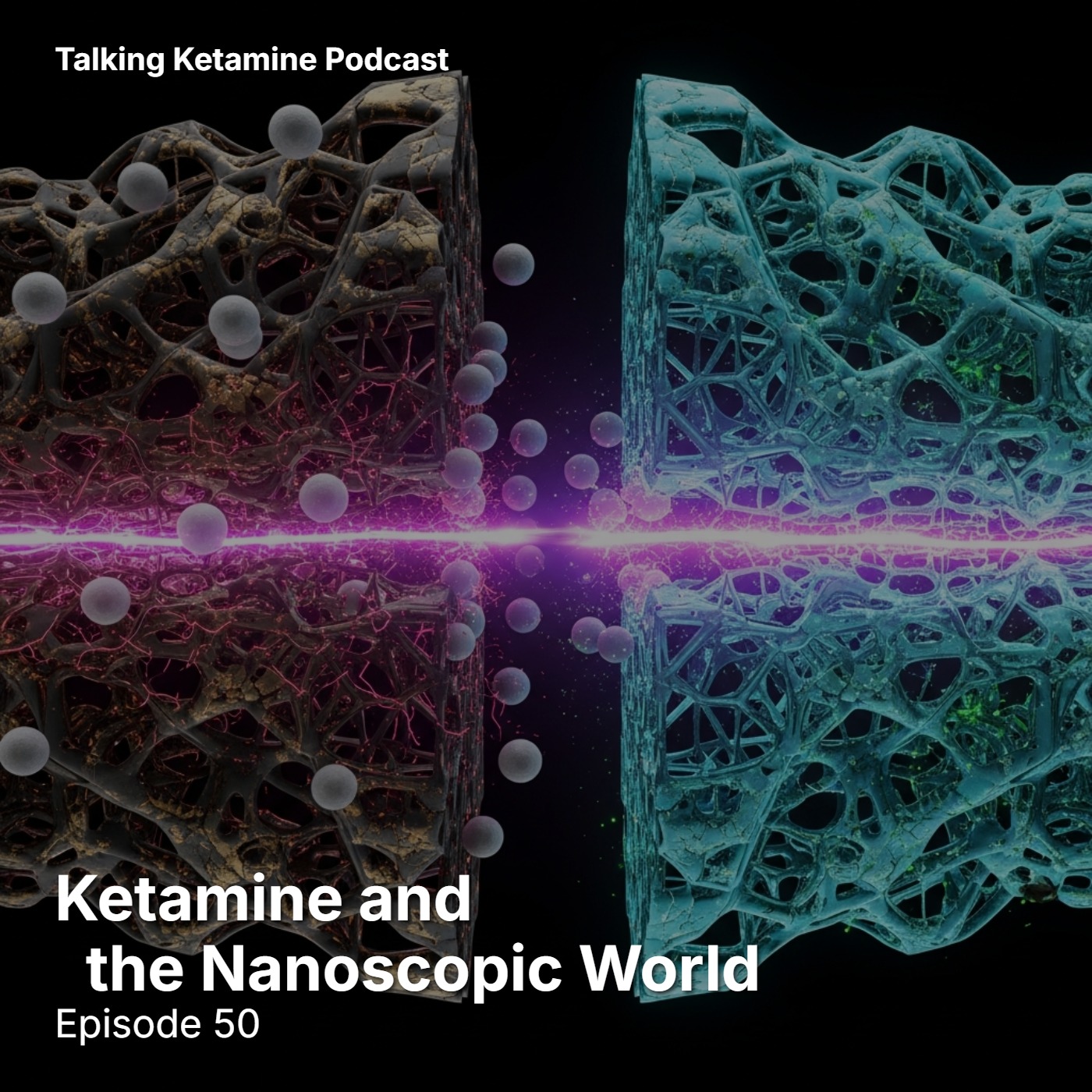
For decades, we’ve imagined the synapse as a "chemical soup"—a messy place where one neuron sprays neurotransmitters at another, hoping for a connection. But in this milestone 50th episode, we use the lens of the groundbreaking book Nano-Organization of the Synapse to reveal the stunning reality: the synapse is actually a piece of high-precision Swiss watchmaking.
We explore the revolution in super-resolution microscopy (like STORM and cryo-electron tomography) that has allowed us to see the nanocolumn—a dedicated architectural alignment where a presynaptic "launch pad" (controlled by the protein Munc13) sits perfectly opposite a postsynaptic "receiver slot" (held by PSD95). This "trans-synaptic alignment" ensures that every signal is a sniper shot, not a sprinkler spray.
The episode dives into the three modes of transmission—synchronous (the fast lane), asynchronous (the stutter), and the critical spontaneous release (the "ghost in the machine"). We discuss the theory that depression is a failure of this nanoscopic geometry, where the "ghost" signal reinforces a broken state. Finally, we explain how ketamine acts as a rapid repair crew: by silencing the spontaneous noise at NMDA receptors, it triggers a panic-like "homeostatic plasticity" that forces the neuron to realign its columns, add more AMPA receptors (volume knobs), and restore the "liquid crystal" dance of the synapse.
Reference:
Kavalali, E. T. (Ed.). (2026). Nano-organization of the synapse: From structure to function (Vol. 48). Springer Nature Switzerland. https://doi.org/10.1007/978-3-032-12594-1