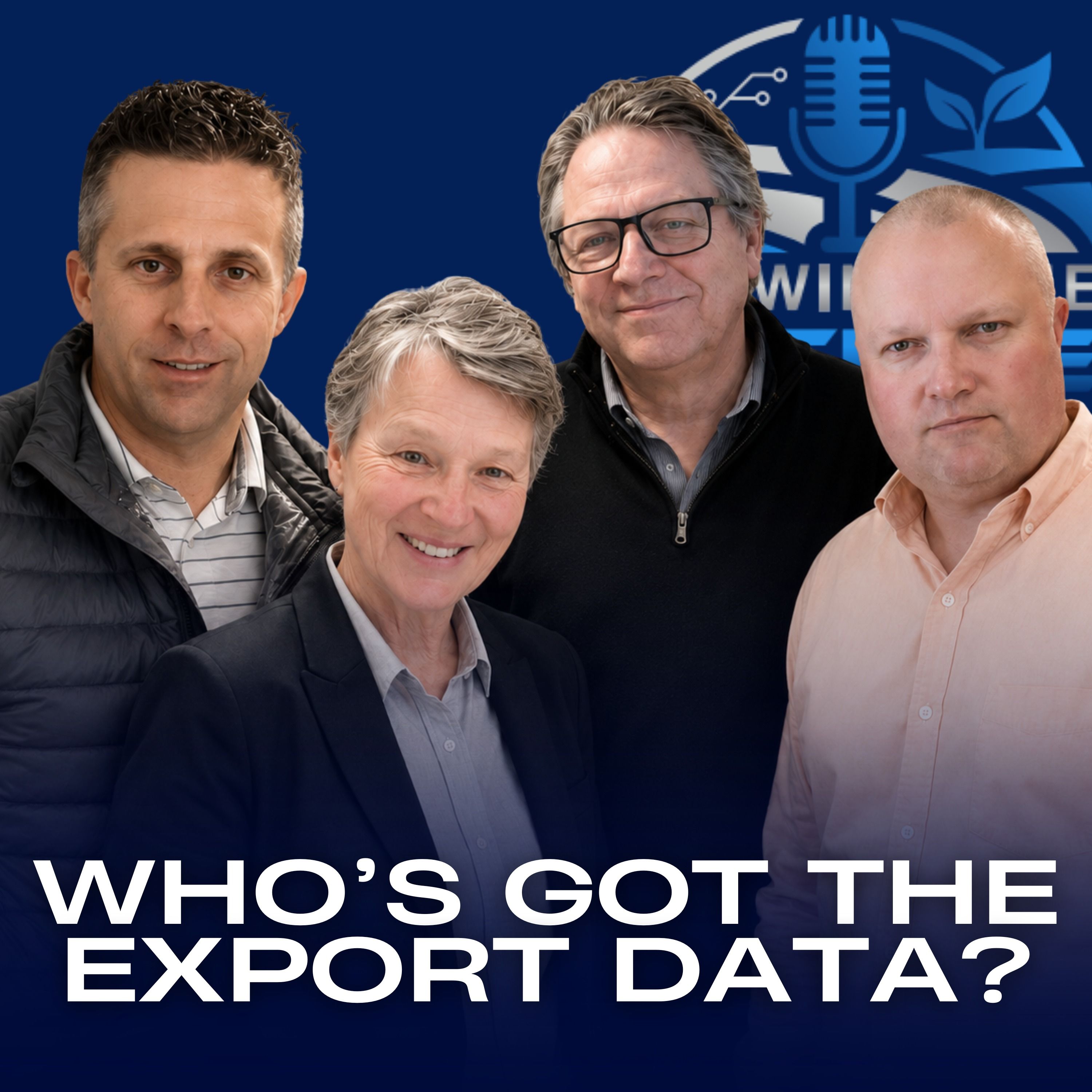
Dan opens with a Call of Duty analogy that lands: you keep getting smoked because they can see you, but you cannot see them. That is the position of a Canadian canola or wheat farmer every time they price grain. The buyers on the other side of the trade know what has been sold, where it is going, when it ships, and what it cleared for. The farmer does not. In the United States, any large grain sale must be reported to the USDA within 24 hours, and the weekly export sales report has been publicly available since 1973 - a direct response to the Great Grain Robbery, when U.S. grain companies oversold and nearly emptied the country's supply. Canada never built the equivalent. The port load data that used to come out of Vancouver every Friday - commodity, volume, destination - disappeared when the Wheat Board ended. The room has less data than it had 20 years ago.
Marlene Boersch, who has spent her career studying the architecture of how Canadian grain moves, presented findings from two commissioned reports. The 2021 "Data Requirements for Transparent Markets" study mapped what data growers would find useful and found near-zero timely information on the export side - Stats Canada data runs 2-3 months behind execution, 4-6 months behind the farm decision. The 2024 supply chain impact study tried to put a number on the silence. Using U.S. data as a simulation proxy, it found that a 5% improvement in data availability translates to a minimum of 5 cents per acre in wheat, and that export sale announcements in the U.S. improve basis by 6-14 cents per bushel for 1-3 weeks following publication. Across Canada's export volumes, the conservative estimate is $56.5 million per year in foregone farm income. Boersch emphasized these were the most conservative assumptions possible - one variable, one commodity window.
John De Pape, who was trading from a Vancouver Cargill desk in 1984 and watched the market explode past $700 per ton because no one knew what anyone else had sold, made the structural argument plainly: this will not be solved by private industry because grain companies have grain company hats on. When he built pdqinfo.ca after the Wheat Board ended - a price transparency tool that aggregated posted bids from seven major grain companies - it required Jerry Ritz to explicitly threaten legislation before the companies cooperated. The current moment, with Bunge-Viterra merged and Grains Connect folded into P&H, makes the concentration problem worse, not better. De Pape also flagged target contracts specifically: when a farmer signs a good-till-cancel grain pricing order with one company, they are selling a call option without receiving a premium, while the buyer covers a hidden export position and no one in the market knows the trade happened. Short-duration GPOs only, or none at all.
Key Topics
Resources Mentioned
Connect
Register for the Convergence Conference at convergence.ag and stay updated by subscribing to the Growing the Future Podcast at growingthefuturepodcast.ca.