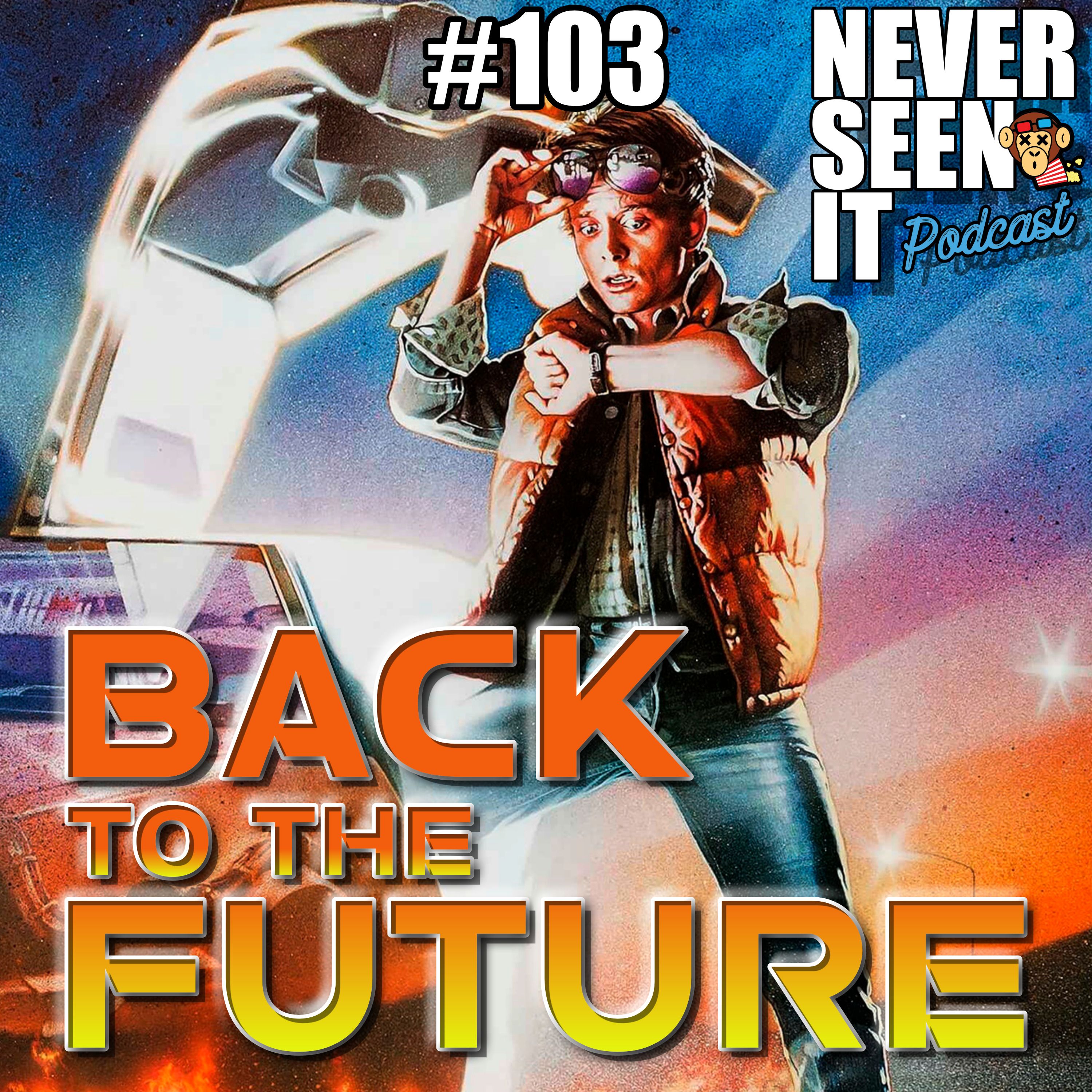
We finally go back to 1985 for a deep dive into Back to the Future, Robert Zemeckis' beloved time-travel classic starring Michael J. Fox as Marty McFly and Christopher Lloyd as Doc Brown.
For some of us, Back to the Future is a movie we've seen dozens of times. For others, this was a first-time watch. That gives us a chance to look at the movie from both sides: the nostalgia of growing up with Marty McFly and the DeLorean, and the experience of discovering a movie that has become so deeply embedded in pop culture that we've all seen its references before we've even seen the movie itself.
We talk about why Back to the Future still holds up, especially when it comes to its screenplay, pacing, visual storytelling, practical effects, VFX, character introductions, and attention to detail. The opening sequence alone gives us plenty to discuss, from Doc Brown's clocks and inventions to the subtle pieces of exposition that establish the story before Marty even appears.
We also break down the time-travel mechanics and the butterfly-effect consequences of Marty traveling back to 1955. How does changing his parents' relationship affect the future? Does the movie successfully explain its own rules? What happens to Marty's memories when he returns to a completely different version of his family? And does the movie wisely avoid over-explaining its time-travel mythology?
The performances are another major part of the conversation. We discuss Michael J. Fox's iconic performance as Marty McFly, Christopher Lloyd's surprisingly grounded take on Doc Brown, Crispin Glover's George McFly, Thomas F. Wilson's Biff Tannen, and the chemistry between the cast. We also get into the fascinating production history behind Michael J. Fox replacing Eric Stoltz after a significant amount of filming had already been completed.
As movie nerds, we couldn't skip the filmmaking details. We talk about the DeLorean as one of the most recognizable movie cars ever, the original idea of using a refrigerator as the time machine, the practical effects and miniature work, the aging makeup used on the characters, and why some of the visual effects still impress decades later.
From a screenwriting perspective, we discuss why Back to the Future is such a useful movie to study. The film constantly plants information, establishes characters and objects, sets up jokes and details, and then pays those elements off later. We also break down whether Marty actually follows a traditional hero's journey or whether George McFly is the character who experiences the more traditional transformation.
And, of course, we get into some of the movie's stranger elements, including Marty accidentally becoming the object of his mother's affection, the Libyan terrorists, the movie's portrayal of 1950s culture, the racial language of the era, the infamous Crispin Glover lawsuit, the influence of Back to the Future on later pop culture, and the connections people see between Doc and Marty and shows like Rick and Morty.
We also discuss the ending and what it means for Marty when he returns to a dramatically different version of his family. Is it really a perfect happy ending, or does the movie leave us with some fascinating questions about alternate timelines, memories, identity and the consequences of changing the past?
Finally, we talk about our favorite scenes, the Johnny B. Goode sequence, the soundtrack, the movie's incredible rewatchability, and whether Back to the Future still deserves its status as a classic.
If you've never seen Back to the Future, grew up watching the trilogy, love time-travel movies, or are interested in how a great screenplay puts together setup and payoff, this episode has plenty to dig into.