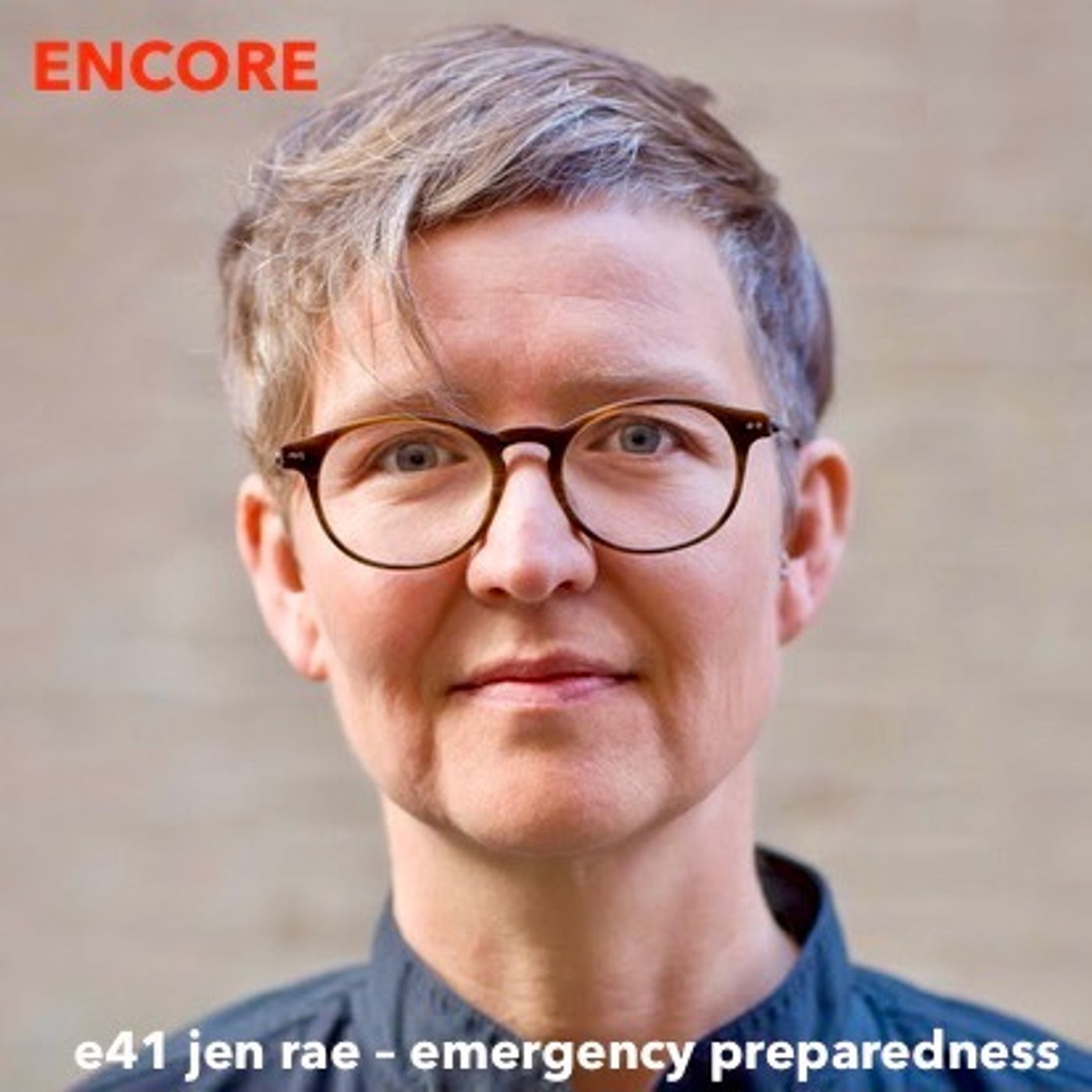
Welcome to another ENCORE episode of conscient podcast.
I do this because if you missed an episode the first time it was published you can hear it again.
However this is the last ENCORE episode for a while because I’m taking break from the production of this podcast, of its sister French language version, balado conscient as well as my a calm presence Substack for what looks like undetermined period of time.
I wrote about this in my last Substack posting called pressing pause.
My plan is to meditate on my next steps in this ongoing learning and unlearning journey and do a bit of self-care as I learned to do during the Zen and the Art of Saving the Planet course last fall.
But before pressing pause, so to speak, I wanted to publish this ENCORE episode because it’s about an issue that we will be talking about increasingly in the months and years to come: which is, how do we, as artists and cultural workers, respond more effectively to emergency situations and to ongoing societal disruption.
And who better that Jen Rae, a Melbourne, Australia based artist, researcher, facilitator and educator of Canadian Red River Métis and Scottish descent.
And before going any further I want to acknowledge that Jen Rae lives, creates and works on the unceded traditional lands of the Wurundjeri, Boon Wurrung, Woi Wurrung, and Wathaurong people of the Kulin Nation and offers deep respect to their elders - past, present and emerging.
So, this 47-minute conversation was recorded, remotely, on May 10, 2021. Jen and I talked about a wide range of issues including the intersection between art, emergency preparedness, disaster risk-reduction and resilience.
Here are some of the questions that were raised:
You’ll find some answers, also more questions, at the The Centre for Reworlding in Australia, where Jen is the creative research lead.
I’m also publishing this ENCORE episode to listen back to conversations recorded during the COVID pandemic.
For artists, in particular, it was a tough time. For a few of us it created opportunities for new forms of digital engagement but for most artists it was a nightmare of lost income, isolation and disconnection.
COVID, difficult as it was, can be thought of as a kind of test run for larger scale emergencies that will come as the climate crisis and related disasters unfold. So I’m grateful that artists like Jen Rae and The Centre for Reworlding are proactively are working, and this is a quote from their web site, to ‘advocate for the mainstream integration of culture & the arts in climate action and disaster management discourses, policy frameworks and all-years education’.
So let’s go back to 2021. And, as I did with all of my episodes at that time, you’ll hear excerpts from previous episodes that try to connect the thinking of my guests with some previous guests and that’s a lot of fun. It was a lot or work but then I had a lot of time on my hands.
So without further ado, episode 41 ENCORE. Warm thanks to Jen for this 2021 conversation and hopefully we’ll talk again if and when I come back to producing this podcast.
For more information on Jen’s work, see https://www.jenraeis.com, http://www.fairsharefare.com/ and The Centre for Reworlding.
Links to a selection of Jen’s work mentioned in this episode:
*
END NOTES FOR ALL EPISODES
Note : I'm currently 'pressing pause' and am not producing new content until further notice.
Hey conscient listeners,
I’ve been producing the conscient podcast as a learning and unlearning journey since May 2020. It’s my way to give back.
This Indigenous Land Acknowledgementstatement was developed by members of the Algonquin community for my former employer the Canada Council for the Arts. I have adapted slightly to make it my own.
In parallel with the production of the conscient podcast and its francophone counterpart, balado conscient, I Ipublish a free ‘a calm presence' monthly Substack see https://acalmpresence.substack.com.
Your feedback is always welcome at claude [at] conscient [dot] ca and/or on social media: Facebook, Instagram, Linkedin, Threads,BlueSky, Mastodon, Tik Tok, YouTube andSubstack.
Share what you like, etc
I am grateful and accountable to the earth and the human labour that provided me with the privilege of producing this podcast, including the toxic materials and extractive processes behind the computers, recorders, transportation systems and infrastructure that made this production possible.
Thanks for listening.
Claude Schryer
Latest update on March 21, 2026