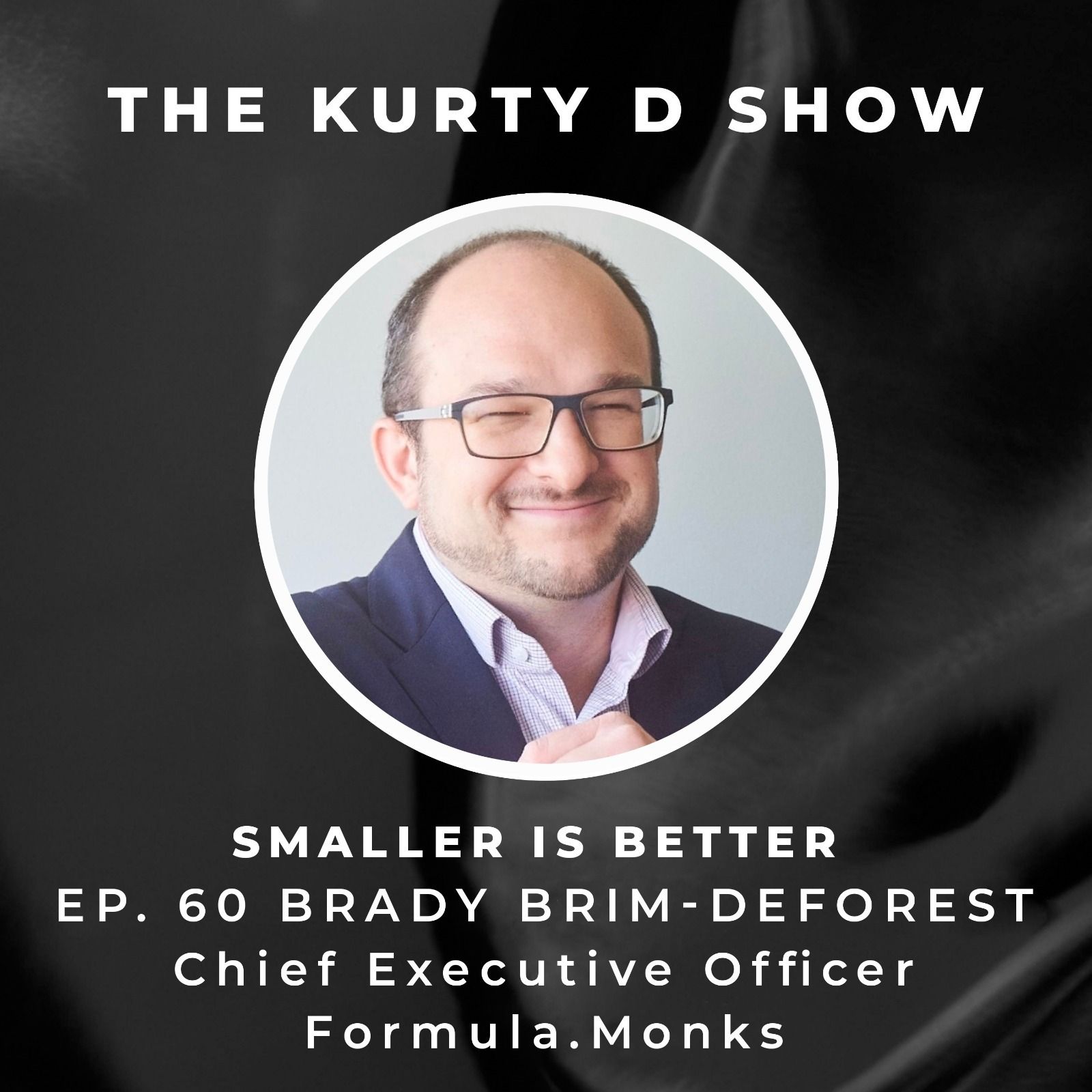
Episode Highlights:
- Small is Better: How small, autonomous teams can spearhead targeted missions.
- The Paradox of Failure and Success
- Breaking the Fear of Failure: A New Mindset for Organizations
- How to be adaptable and nimble in taking risks
- The need to change mindsets within organizations
- Taking risks in many different places in the organization
Tweetable Quotes:
- “Time is linear. Knowledge is exponential. And a book is a great way to memorialize that knowledge and make it accessible.” — Brady Brim-DeForest
- “Vulnerability is such a powerful medicine.” — Brady Brim-DeForest
- “Failure is a necessary ingredient for success.” — Brady Brim-DeForest
- “I think the nest real value in cross-functional is that you have unbounded thinking, and it encourages first principle reasoning too. ” — Brady Brim-DeForest
- “The closer you are to the higher density information, the more efficient your decision will be.” — Brady Brim-DeForest
- “Large organizations tend to concentrate on resources, human resources, and capital, but they are also the breeding ground for innovation.” — Brady Brim-DeForest
- “Autonomy doesn’t just mean at the edge; it is a way of efficiency and decision making.” — Brady Brim-DeForest
- “None of us can accurately predict the outcomes of any hypotheses we’re testing. So, the only way to proceed is to take the risk.” — Brady Brim-DeForest
- “Risk comes along with failure.” — Brady Brim-DeForest
- “Increasing the speed at which you fail is the critical path and requirement to succeed.” — Brady Brim-DeForest
- “We see failure as a negative thing and must change our mindset and the organization we work to embrace failure. ” — Brady Brim-DeForest
- “You will never reach the upside if you don’t stumble along the way.” — Brady Brim-DeForest
- “Waste is the byproduct of experimentation.” — Brady Brim-DeForest
- “People have the freedom to fail because that’s where sort of improvisation in the ensemble happens.” — Kurt Daradics
- “We all could be looking at the exact same information and come to totally different conclusions, but that only happens if we are looking at the same set of data.” — Brady Brim-DeForest
Links Mentioned: