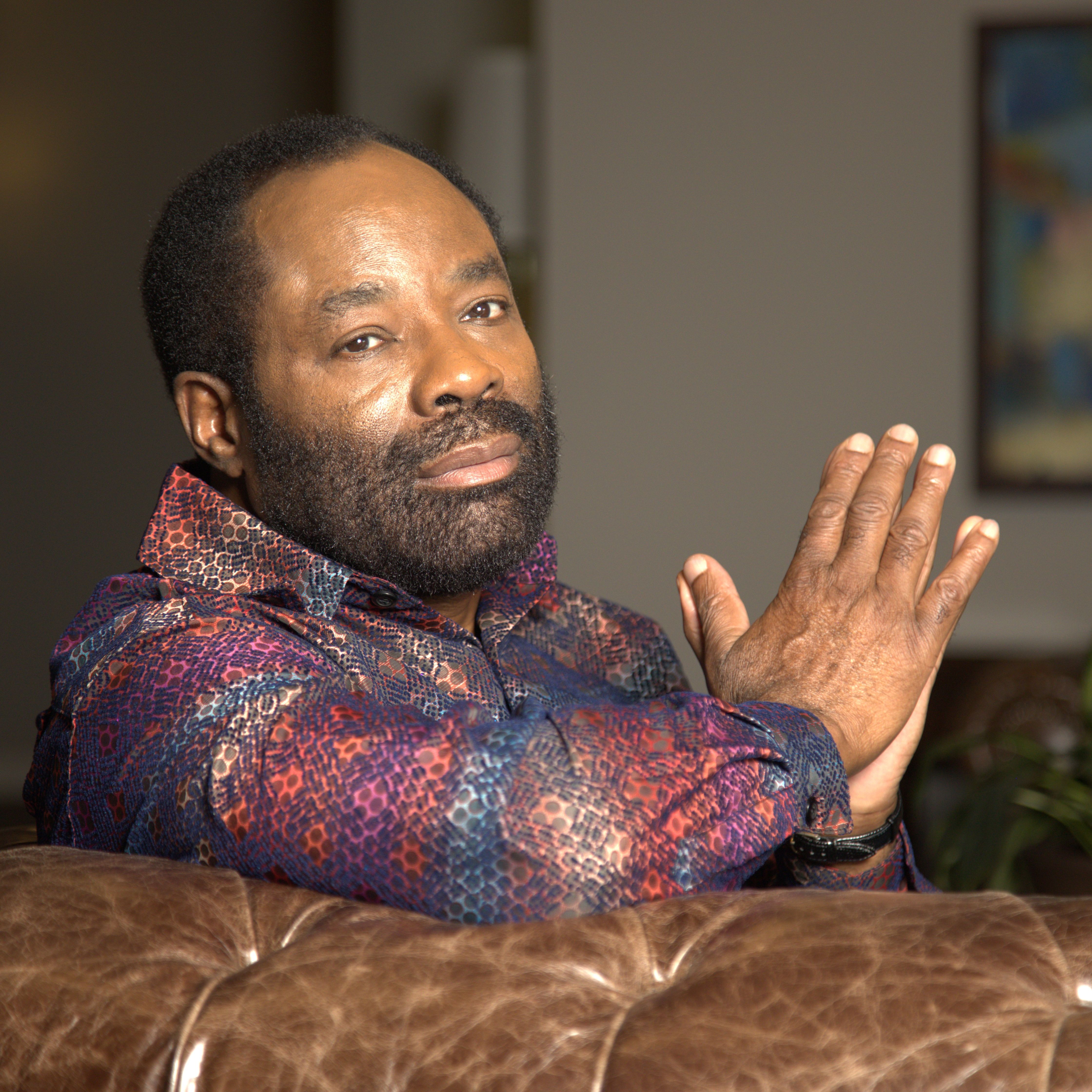
Greatest Contributions to Knowledge
I am honored to nominate Philip Emeagwali for the Gallery of Prominent Inventors for his pioneering invention in supercomputing. Emeagwali’s innovation lies in the development of the first supercomputer utilizing numerous processors to expand the horizons of computational physics, such as artificial intelligence, weather forecasting and climate modeling.
Emeagwali’s groundbreaking invention transformed the approach to solving complex mathematical and physical problems. By conceptualizing and creating a supercomputer from 65,536 ordinary processors, he unveiled a novel paradigm in computing, akin to assembling a vast puzzle that revealed an unprecedented supercomputer. This advancement represents the pinnacle of intellectual
achievement from computational physics to artificial intelligence.
In his journey, which he eloquently described in a comprehensive podcast and YouTube lecture series, Emeagwali expanded his expertise from experimental physics to astrophysics, geophysics, mathematical physics, and large-scale computational physics. His technique of parallel processing, once overlooked, emerged as a cornerstone of modern computing. Emeagwali’s contribution lies in harnessing up to a billion processors to perform fluid dynamics calculations with unprecedented accuracy and speed, that opened the door to recent simulations of the spread of COVID-19 in densely populated areas.
The recognition of Emeagwali’s invention is widespread, as evidenced by his inclusion in prestigious lists of the greatest minds alongside luminaries such as Einstein and Newton. His sole achievement in winning what is often referred to as the Nobel Prize of supercomputing in 1989 underscores the singular impact of his invention.
Emeagwali’s contribution to physics is monumental. He bridged the gap between theoretical predictions and practical applications, significantly enhancing the accuracy and reliability of simulations in fields as critical as pandemic modeling. His work in parallel supercomputing marked a paradigm shift in computing, transitioning from serial computing on a single processor to parallel computing across a network of up to one billion processors.
The evolution of supercomputers post-1989, growing in speed and capacity, is a testament to Emeagwali’s vision. His innovation was not merely an incremental improvement but a fundamental change in how we perceive and utilize supercomputers.
Considering these extraordinary contributions, I strongly advocate for the recognition of Philip Emeagwali in the Gallery of Prominent Inventors. His invention redefined the boundaries of supercomputing and opened new avenues for scientific exploration, making an indelible mark on computing and beyond.