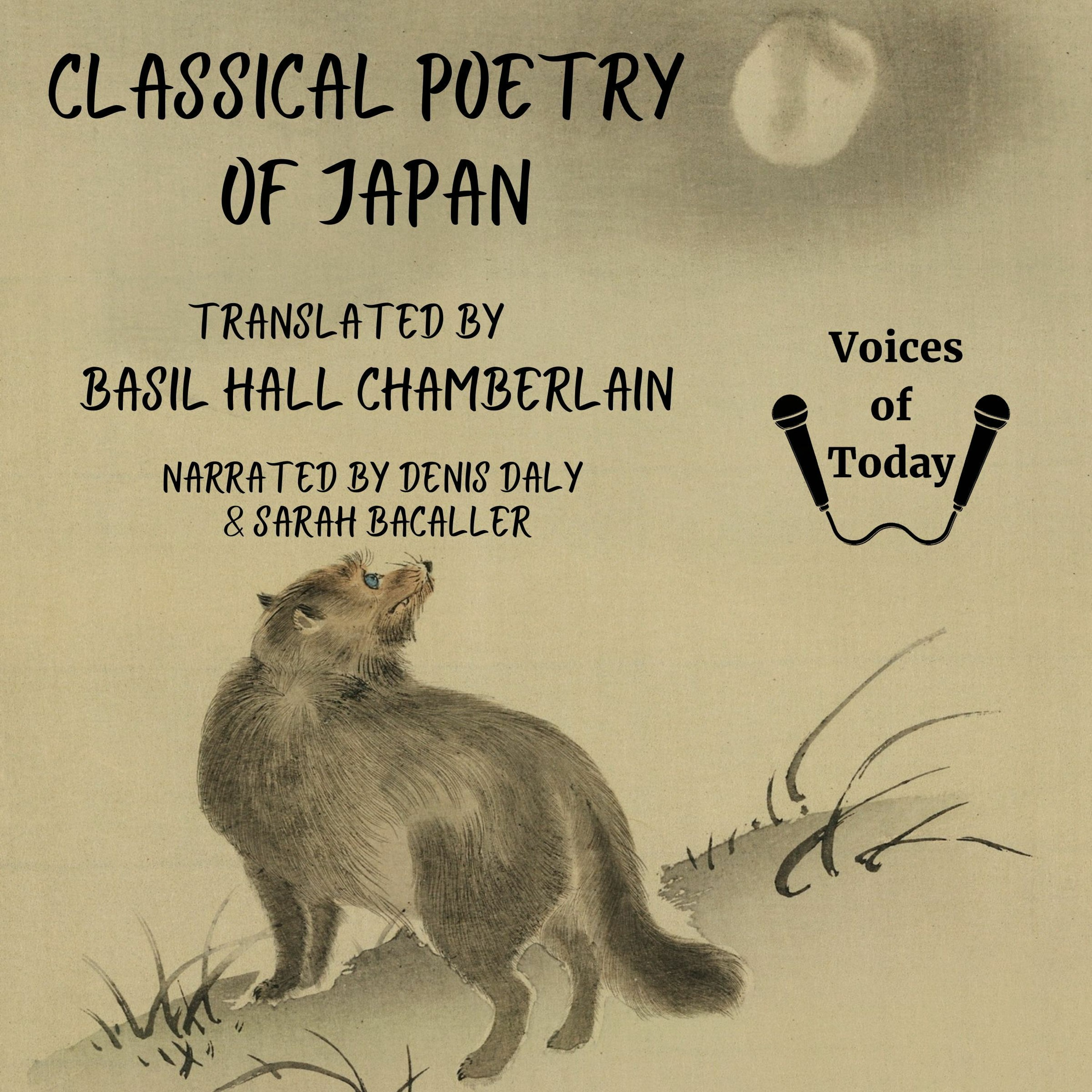
The complete audiobook is available for purchase at Audible.com:
voicesoftoday.net/CLP
Classical Poetry of Japan
Translated by Basil Hall Chamberlain
Introduction by Epiphanius Wilson.
Read by Denis Daly and Sarah Bacaller
This collection of Japanese poetry was compiled and translated into English from an anthology known as "The Collection of Myriad Leaves," and from a number of other anthologies made by imperial decree between the tenth and fifteenth centuries. This period has come to be considered the golden age of Japanese literature, and these ancient anthologies were often drawn upon as inspiration for poets of more recent times.
In those days the cultivation of verse was especially considered the privilege of the princely and aristocratic. A poem written by a man of obscure rank was sometimes included in the royal collections, but the name of the author was omitted as a matter of course. The distinctive qualities of classic Japanese poetry are undoubtedly due to the air in which it flourished. The verse is never religious, and sometimes is even immoral, but it is always suffused with a certain hue of courtliness, even gentleness. The language is of the most refined delicacy; the thought is never boorish or rude; there is the self-collectedness which we find in the poetry of France and Italy during the Renaissance, and in England during the reign of Queen Anne. It exhibits the most exquisite polish, allied with an avoidance of every shocking or perturbing theme. It seems to combine the enduring lustre of a precious metal with the tenuity of gold-leaf; the more vivid emotions of grief and love, as well as the horrors of war, are either avoided or referred to by some elegant periphrasis.