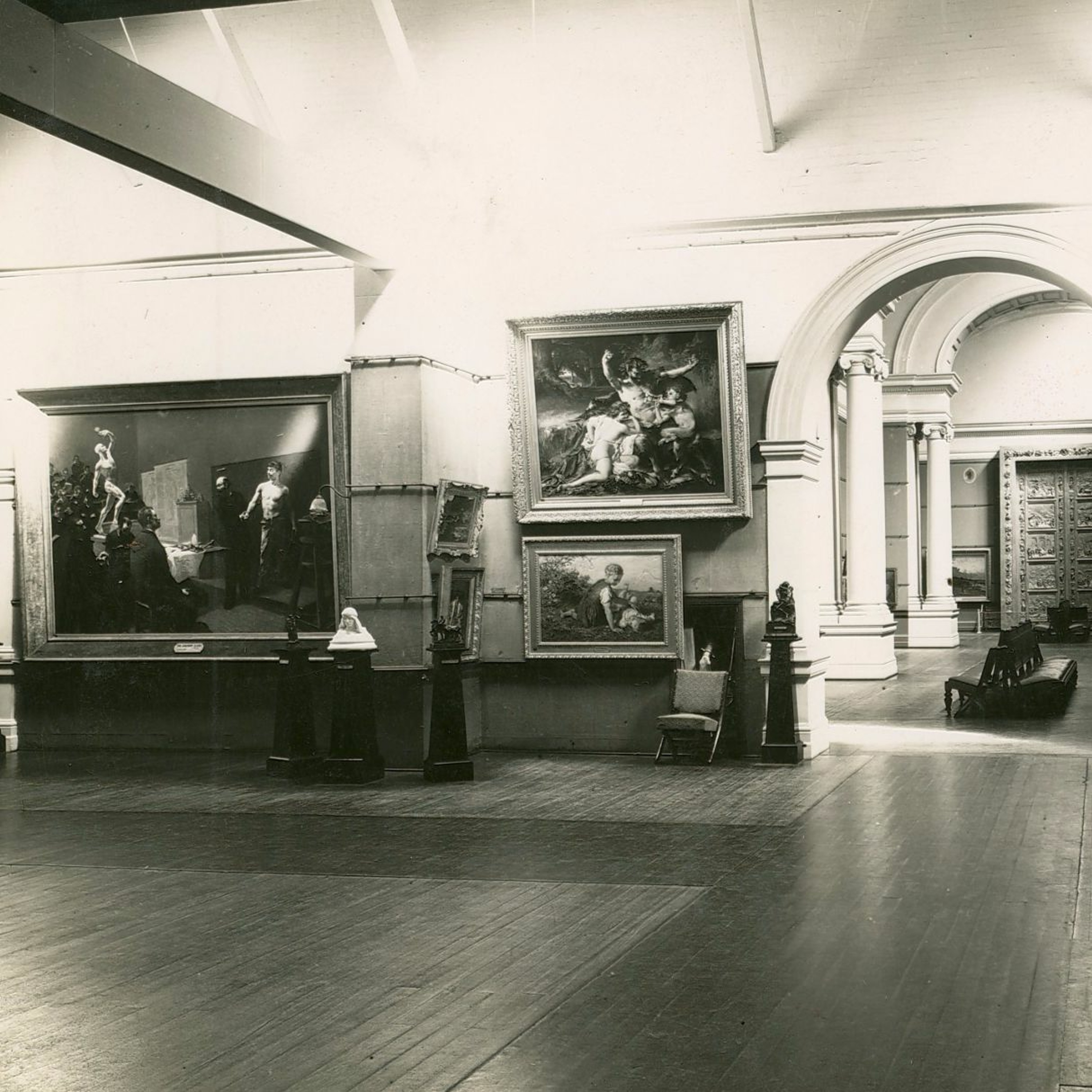
Artists have no real career progression: little basis on which to charge more fees or expect higher sale prices, and very few methods with which to distinguish themselves from their peers. How can you tell if an artist is more established, less ‘emerging’ than another? Arguably, the main traditional marker of an artists career is exhibitions in galleries - objects ostensibly created by individual artists and exhibited in public places for criticism, sale and edification.
But for an increasing number of artists, the traditional gallery system no longer works - and although some galleries are responding, many remain stuck in early twentieth century languages of display that exclude some artists and some practices from public attention.
Galleries as they currently exist are a fairly novel invention - as little as 150 years ago, audiences would routinely pay to view art in exhibitions put on by artists themselves in venues hired for the occasion. The Royal Academy was one of the few public venues where usually wealthy, elite audiences could view work, and artists’ livelihoods were mostly based on commissions. Even more recently, art fairs and biennials have somewhat taken over as the predominant spaces to experience new, international art, but exhibitions in galleries - publicly funded or commercial - remain a crucial step in an artist’s career.
But what if an artist’s work doesn’t fit - architecturally, conceptually, traditionally - within a gallery’s programme? Increasing numbers of artists working in socially engaged practice - where communities and individual people, often unrelated to the arts, form the material and outcome of a practice. Many are involved in this work as a reaction to the elite audiences who still mostly attend art galleries in the UK. Performance and moving image have long been difficult to place in galleries - from audience low engagement to alienating and uncomfortable display methods - with digital work almost entirely ignored. If artists need galleries to validate their careers, to increase reputations and garner more work, then a diverse base of practices must be reflected in their programmes for the benefit of audiences and artists alike. Artists themselves are frequently sidelined in this dynamic: those with socially engaged practices tend to find themselves in museums and gallery education departments rather than the exhibition halls themselves.
Of course, it’s not all one way. Artists also have to understand the financial and political pressures that galleries have to negotiate, treading a fine line between the popular and the critical in their work. Galleries provide a crucial and expensive infrastructure for artists, and must act as gatekeepers to ensure scant resources are properly allocated. And their curators and directors can often understand the stage of a career when an exhibition is needed, or when it would provide only a distraction or stress. Audiences rely on galleries to choose the work they are shown. Without this competitive selection, artists wouldn’t value exhibitions as milestones in their careers.
New galleries are still being built, but generally along the same architectural lines as over the last 200 years. Galleries may be architecturally daring and exciting on the outside while the conventions of the white cube is maintained inside. How can gallery architecture respond to the demands of new art practices while ensuring traditional media can still be shown? And how far should galleries be dictated to by artistic practice which may change with technology and fashion?