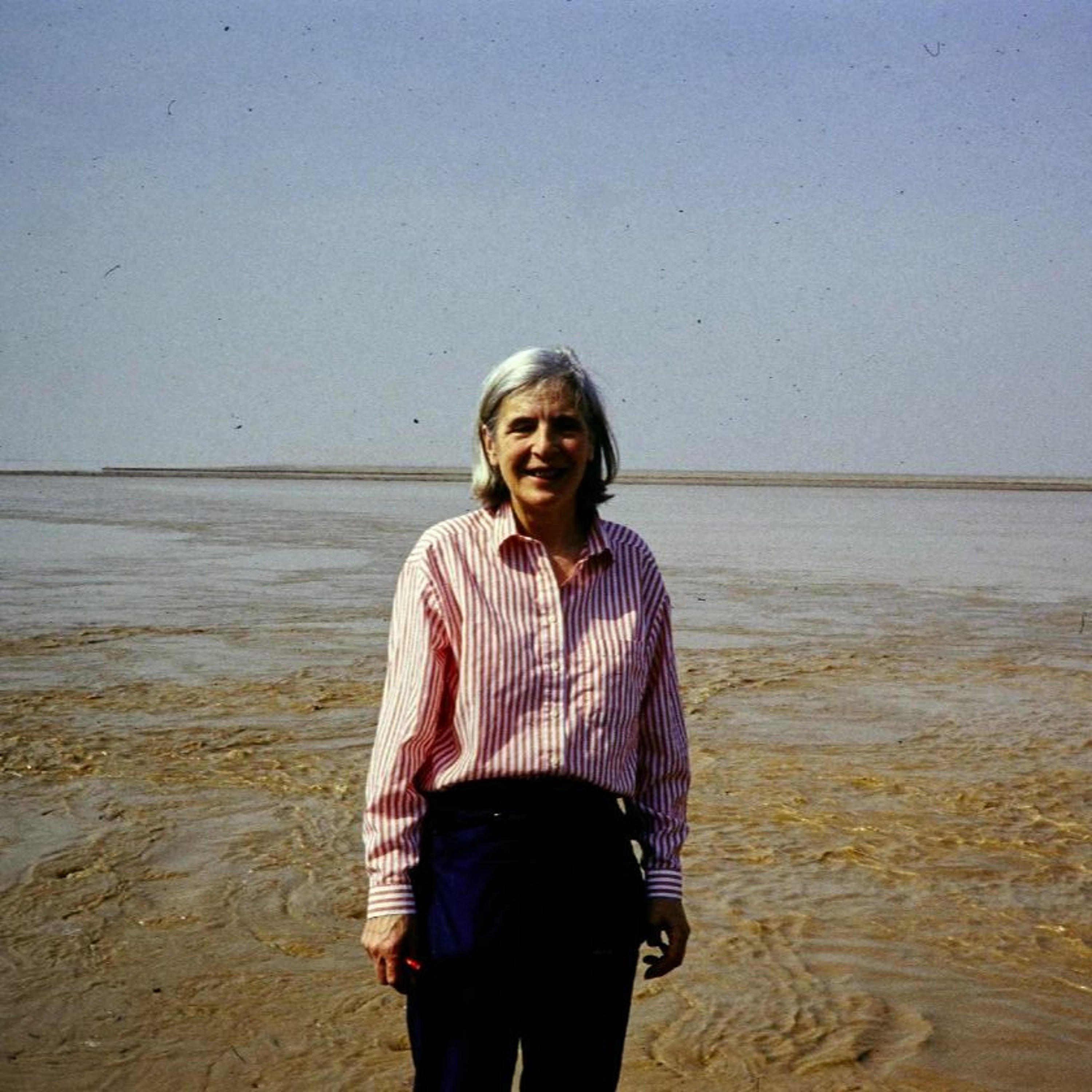
The family of Ann Paludan has generously shared an audio recording of Ann talking about her interests and life experiences. Ann was interviewed by her friend and neighbour Eric Griffiths for nearly 15 hours about her life and work between October 2012 to January 2013. This oral history section has distilled these recordings into 45 minutes of linked segments which showcase key moments in her life that inspired and drove her in the field of historical sculptures in China.
Ann had an international outlook from an early age and a proficiency in languages. While living in Beijing in the 1970s she was determined to learn Chinese and studied at the Beijing Languages Institute, which had just reopened after the Cultural Revolution. She was part of a small group of foreigners admitted to the Institute for the first time.
Ann and her husband Janus had a unique opportunity to travel throughout China when Janus was the Danish Ambassador in Beijing. They spent many happy times at the Ming Tombs just outside Beijing, picnicking and birdwatching, and these trips awakened Ann’s interest in researching the statuary there. This interest was further stimulated by frequent trips back to China after she left the country. In these recordings, Ann describes the Han and Tang tombs around Xi’an and she talks about the extraordinary experience of encountering tomb statuary standing silently in fields, unheeded for decades.
When stationed at their next diplomatic post in Cairo, Ann started to write her first book, The Imperial Ming Tombs. She had difficulty living in Cairo due to the dust and the Danish Foreign Office suggested she lived apart from Janus. Ann quotes Janus’ loving words “Ann is like a bird with a broken wing, where she cannot fly I cannot live”. At their final diplomatic posting in Reykjavik Ann proofread The Imperial Ming Tombs (1981).
On Janus’ retirement, Ann and Janus settled in Cumbria, northwest England and Ann continued to write; The Chinese Spirit Road was published in 1991. Ann’s final book, Chinese Sculpture (2006) encompassed “everything she knew” about Chinese statuary and sculpture. This keynote book presented a different perspective on Chinese sculpture from previous accounts in that it went beyond sculpture’s associations with Buddhism. Finally, Ann talks about the daunting adventures of lecturing at SOAS and in the United States.
Credit line: Audio courtesy of the family of Ann Paludan.