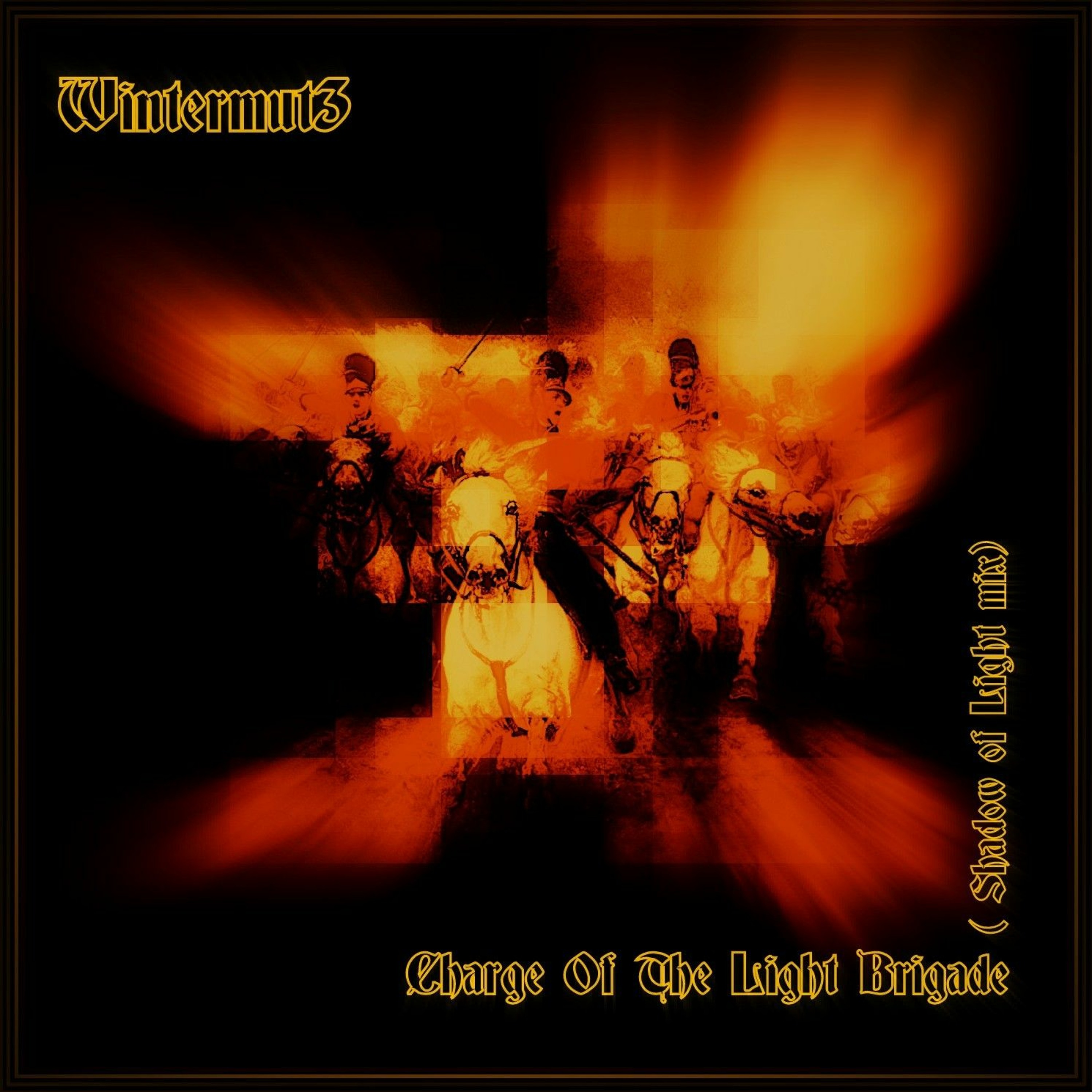
As I was working on "the Trooper" and as I learned more about infamous "Charge of the Light Brigade" I decided I want to create an all Wintermut3 song that not only personified the ill fated charge which became a symbol for the "valor of sacrifice" for eons especially due to Alfred Tennyson's romantic and epic poem. I wanted this song to echo the same futility that led to the failed charge and others like it (Pickett's Charge comes to mind) that were not carved forever in history due to nobility, valor, or the like... but serve as the constant reminder of the fragility of humankind and its fleeting ideas...
So this is a song that not only lets you feel the powerlessness of the instance your going to die because of an error.. but the blood-lust and glory that drove them on despite this glimmer of reason.... to the moment you feel them die... all. in an explosive crescendo of themes and sound that result in what I feel the power of music can do... .it can make you feel... it can make you remember.... it can push you past your life's experience.... it can make you feel what it feels to experience death through William Shakespeare's play Macbeth's:
"Life’s but a walking shadow, a poor player
That struts and frets his hour upon the stage
And then is heard no more. It is a tale
Told by an idiot, full of sound and fury,"
this song... is the "Fury" of death...
the Light Brigade was instead sent on a frontal assault against a different artillery battery, one well-prepared with excellent fields of defensive fire. They reached the battery under withering direct fire and scattered some of the gunners, but they were forced to retreat immediately. Thus, the assault ended with very high British casualties and no decisive gains.
The events were the subject of Alfred, Lord Tennyson's narrative poem "The Charge of the Light Brigade" (1854), published just six weeks after the event. Its lines emphasize the valor of the cavalry in bravely carrying out their orders, regardless of the obvious outcome. Blame for the miscommunication has remained controversial, as the original order itself was vague, and the officer who delivered the written orders with some verbal interpretation died in the first minute of the assault.